Thoughtfully chosen plant guides
The right plants, working together.
Build a regional shortlist that feeds wildlife through the seasons—and still has something useful to offer in winter.
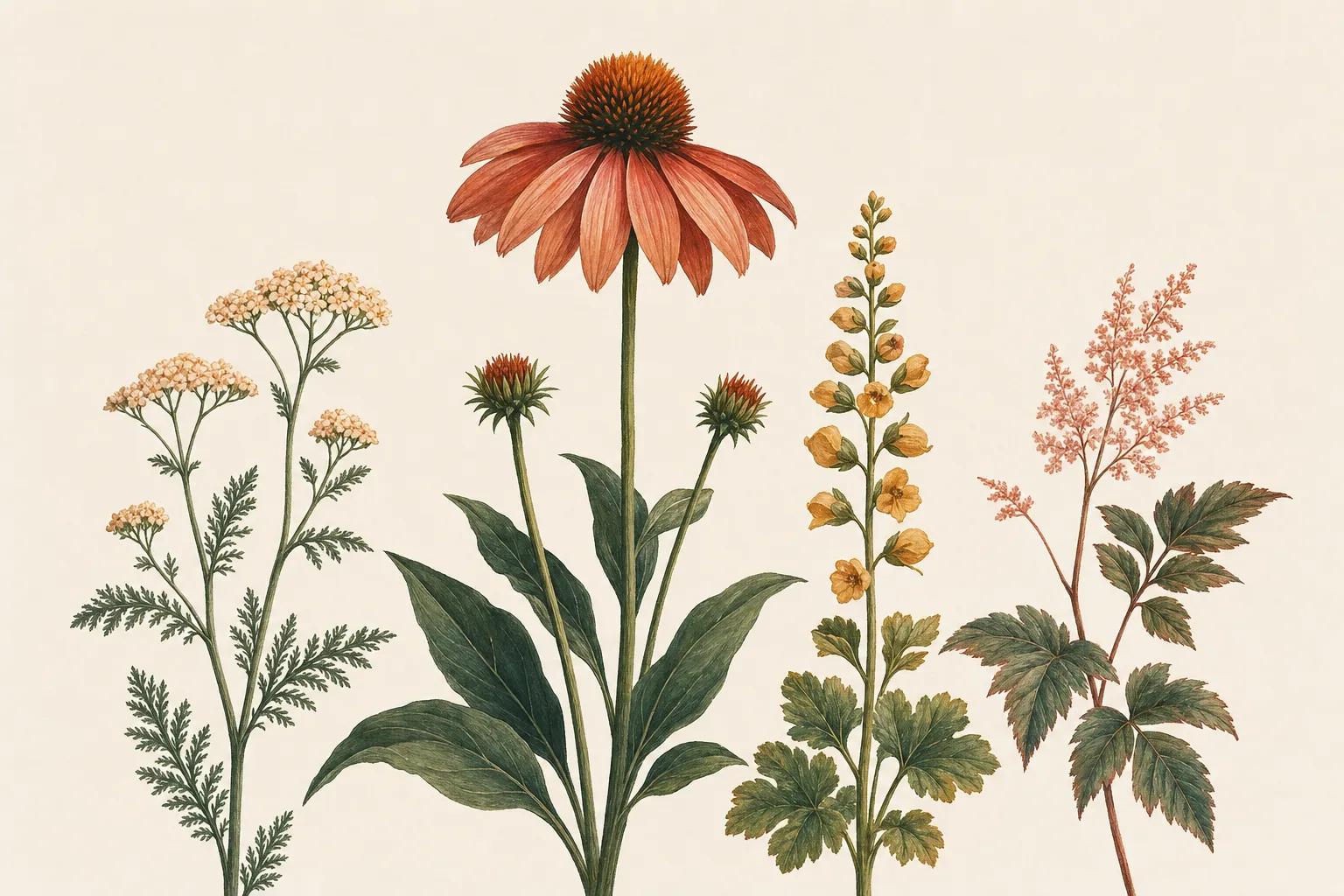
Plan the whole season
Start where your garden has a gap.
Start the year
Early season
Willows, spring ephemerals, and early flowers for the first active pollinators.
Sustain the peak
Mid season
A deep middle season of flowers and larval host plants.
Finish strong
Late season
Late flowers, seeds, and structure that carry habitat toward winter.
Choose your region
Better than a continent-wide list.
Each guide starts with exact species in a trusted regional guide. Use the local ecoregion tool before buying.
Go more local
North American native lists by city and state.
City pages narrow the view to plants documented near a specific place. State pages combine every unique plant from the covered cities and show how widely each one appears.
Five-role habitat framework
What “best” means: useful roles across the year
Choose plants that work together: steady flowers, host relationships, later food, layered cover, and structure that remains useful after the growing season.
01 · Spring through fall
Nectar & pollen
Bridge gaps with flowers from spring through fall.
02 · Breeding and larval seasons
Host plants & nestling food
Support caterpillars and the birds that depend on them.
03 · Late season into winter
Seeds & berries
Carry food beyond bloom with fruit and retained seed heads.
04 · Year-round
Layered cover
Combine ground, shrub, and tree layers for shelter and foraging.
05 · Fall through spring
Winter structure
Keep stems, seed heads, leaves, wood, and some bare soil in place.
How we choose
A useful shortlist, with its reasoning attached.
Conditions and local guidance still decide what belongs in your garden.
- 01
Exact species
A genus or cultivar does not inherit a claim automatically.
- 02
Regional guidance
A trusted regional guide determines which species qualify.
- 03
Five-role order
Complementary roles are brought forward so the first plants form a more useful set.
- 04
Visible reasoning
Every card names the supported roles and the source behind them.
Research notes and sources
- 1.Pollinator Partnership ecoregional planting guides — Why plant choice must be narrowed to an ecoregion rather than treated as continent-wide.
- 2.Find Your Roots native plant selection tool — The recommended next step for a ZIP-code and ecoregion-specific plant list.
- 3.Keystone Plants by Ecoregion — Why caterpillar host plants and specialist-bee pollen plants are treated as distinct ecological roles.
- 4.Planting for Pollinators — Support for planning a succession of bloom from early spring through fall.
- 5.Gardens reduce seasonal hunger gaps for farmland pollinators — Garden nectar was especially important during early- and late-season gaps; modeled resource timing improved bumblebee colony growth and survival.
- 6.Nonnative plants reduce population growth of an insectivorous bird — Links plant composition, caterpillar and spider availability, and Carolina chickadee reproduction in residential yards.
- 7.Few keystone plant genera support the majority of Lepidoptera species — Supports prioritizing high-leverage host-plant genera rather than treating every plant as ecologically interchangeable.
- 8.Having our yards and sharing them too: the collective effects of yards on native bird species in an urban landscape — In Chicago-area neighborhoods, fruit- and berry-bearing plants and the evergreen-to-deciduous tree ratio were positively associated with native bird richness.
- 9.The ecological role of native-plant landscaping in residential yards to birds during the nonbreeding period — Connects native tree and shrub cover and leaf litter with winter bird abundance and feeding activity in residential yards.
- 10.Nesting & Overwintering Habitat for Pollinators & Other Beneficial Insects — Guidance for retaining natural nesting and overwintering features such as stems, seed heads, wood, soil, and leaf litter.
- 11.National Wildlife Federation Native Plant Finder methodology — Ranks locally native plant genera by the butterflies and moths they host, connecting host plants to caterpillars and the birds that eat them.
- 12.Soft Landings: layered habitat beneath native trees — Guidance for combining native trees, understory plants, and leaf litter into sheltered habitat where insects can complete their life cycles.
- 13.Creating a multi-purpose landscape — Connects fruit- and seed-bearing plants, retained flower heads, shrubs, and grasses with food, shelter, and winter structure for birds.
- 14.Nature’s Best Hope: A New Approach to Conservation That Starts in Your Yard — The practical conservation context that inspired Sow’s five-role habitat framework.