The Story
Plant Bio
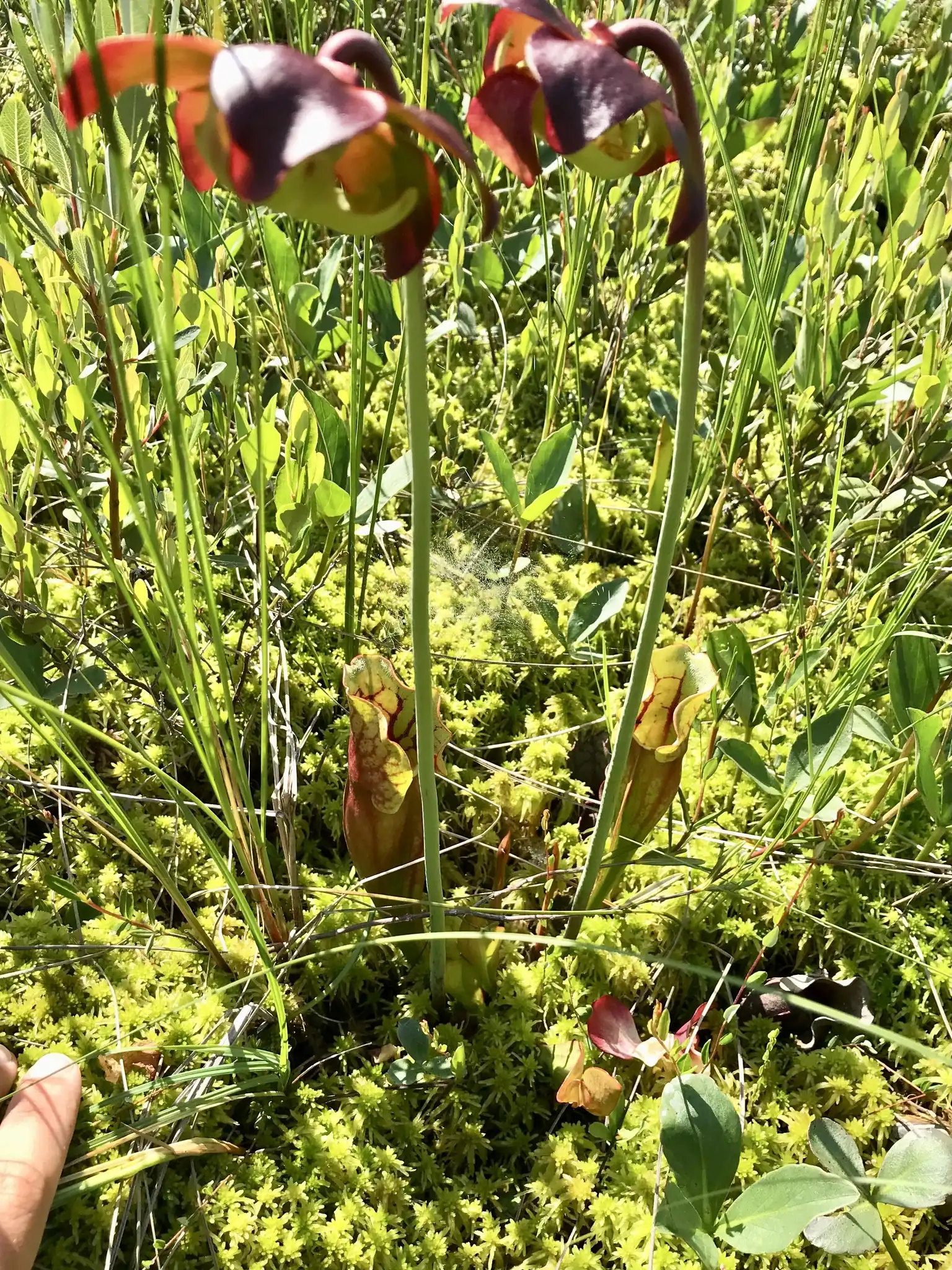
Sarracenia purpurea, the purple pitcher plant, is a carnivorous perennial forming a rosette of squat, bulbous pitchers. These pitchers are typically green with red or purple veining and feature an upright, wavy-edged hood that allows rainwater to collect inside. Unique, nodding, reddish-purple flowers appear on leafless stalks in spring.
Unlike many other Sarracenia species, its upright hood allows rainwater to fill the pitchers. It relies on a symbiotic community of aquatic microorganisms within this water to digest trapped prey, rather than solely its own enzymes. The pitchers are evergreen, often deepening in color in fall and winter.
Uses & Benefits:
Essentials
At a Glance
Plant Type
Perennial
Height
8"
Width
12"
Light
Full Sun, Partial Sun
Zones
7, 8, 9
Water
Distilled or rainwater
Humidity
High
Lifespan
Multiple years with proper care
Native To
Eastern North America
Toxicity
Non-toxic
Bloom period
Late spring – Late fall
In flower about 7 months of the year
Planting
How to Grow
- Tuck seeds or divisions into moist, acidic soil in early spring.
- Mist cuttings regularly to keep humidity high.
- Position in full sun for optimal pitcher coloration.
- Water with distilled or rainwater to avoid mineral buildup.
- Fertilize lightly with dilute orchid fertilizer monthly during active growth.
- Monitor for pests like aphids and treat organically if needed.
Pro Tip
Use distilled water and avoid fertilizers; mimic natural bog conditions.
Keep It Thriving
Care Guide
Do
- Keep soil moist with distilled or rainwater 🌱
- Provide full sun for vibrant pitchers
- Mulch with peat moss to retain moisture
Don't
- Avoid tap water, which can harm the plant ❌
- Don’t over-fertilize; it can harm the roots
- Do not place in low light conditions
Seasonal Care Calendar
| Task | Jan | Feb | Mar | Apr | May | Jun | Jul | Aug | Sep | Oct | Nov | Dec |
|---|---|---|---|---|---|---|---|---|---|---|---|---|
| Divide | ||||||||||||
| Fertilize | ||||||||||||
| Plant | ||||||||||||
| Spring Cleanup | ||||||||||||
| Winter Prep |
Watch Out For
Pests & Diseases
Common Pests
Common Diseases
In the Garden
Landscape Uses & Companions
Landscape Uses
Companion Plants
Multiply
Propagation Methods
Good to Know
Common Questions
Purple Pitcher Plant questions
What zones can Purple Pitcher Plant grow in?
Purple Pitcher Plant is hardy in USDA Zones 7–9. Inside that range it survives winter in the ground; outside it, grow it as an annual or a container plant you protect.
Is Purple Pitcher Plant deer resistant?
Not reliably. Deer may browse Purple Pitcher Plant, especially tender spring growth — plan on repellents or fencing where pressure is high.
When does Purple Pitcher Plant bloom?
Purple Pitcher Plant typically blooms in late spring through late fall. Exact timing shifts a week or two with your zone — Sow's bloom calendar maps it to your garden.
Does Purple Pitcher Plant need full sun?
Purple Pitcher Plant does best in full sun to part shade. In hot climates, afternoon shade keeps blooms fresher longer.
More Sarracenia to compare
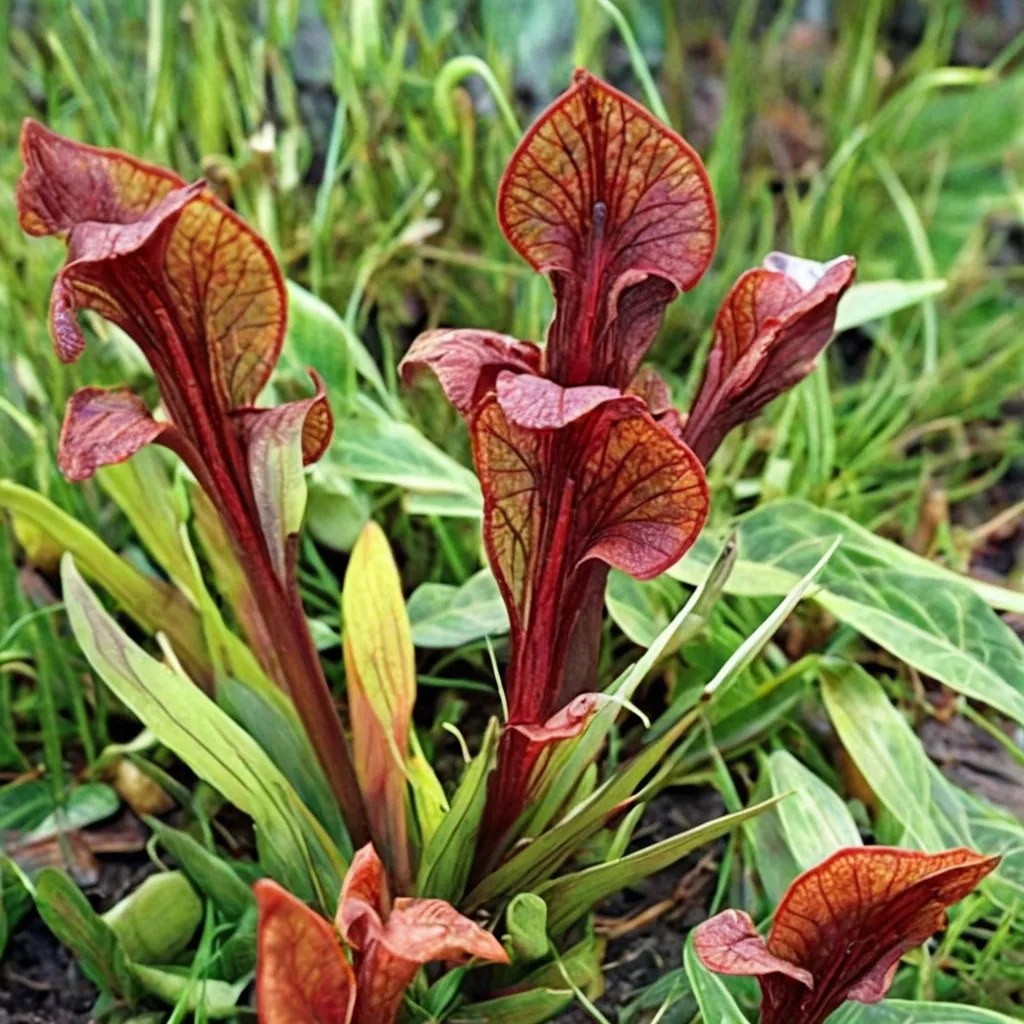
Catesby's Pitcher Plant
Sarracenia x catesbaei
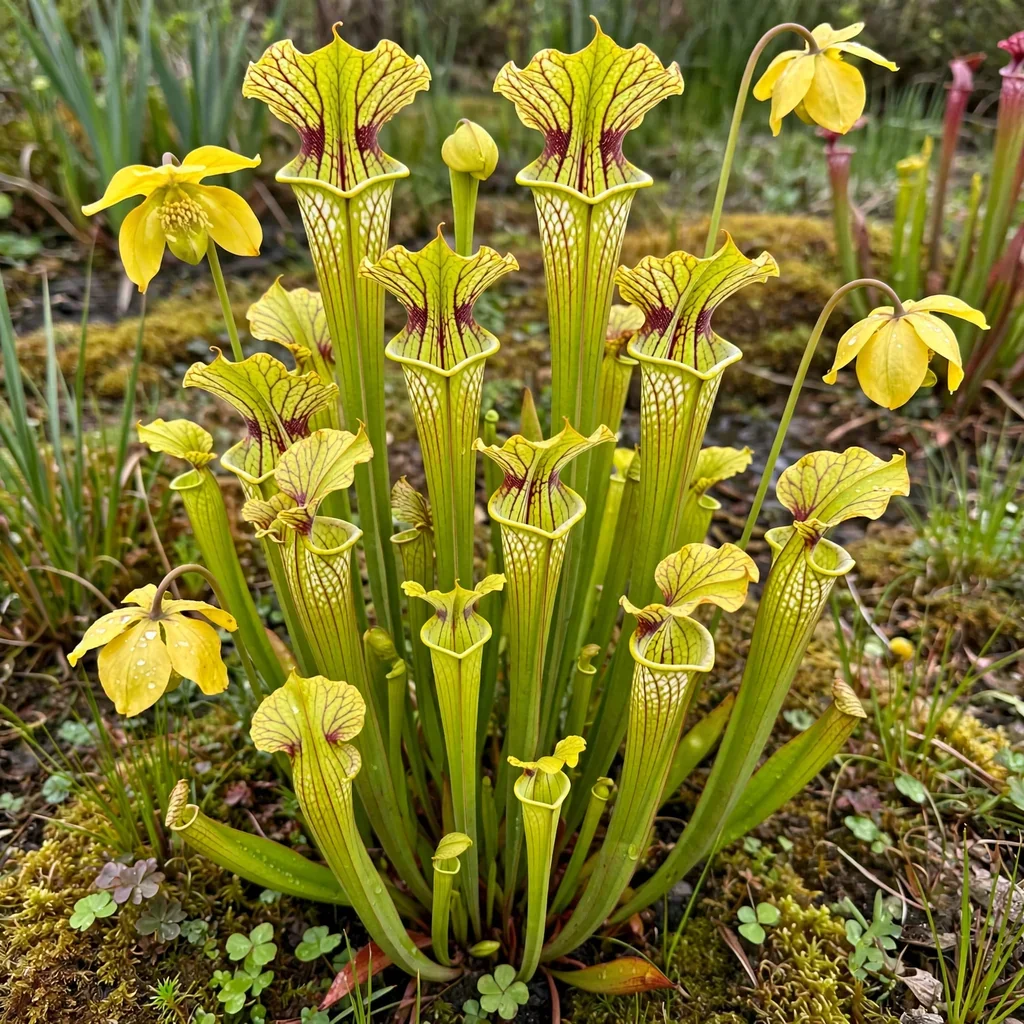
Sarracenia Flava 'Flies Demise'
Sarracenia flava 'Flies Demise'
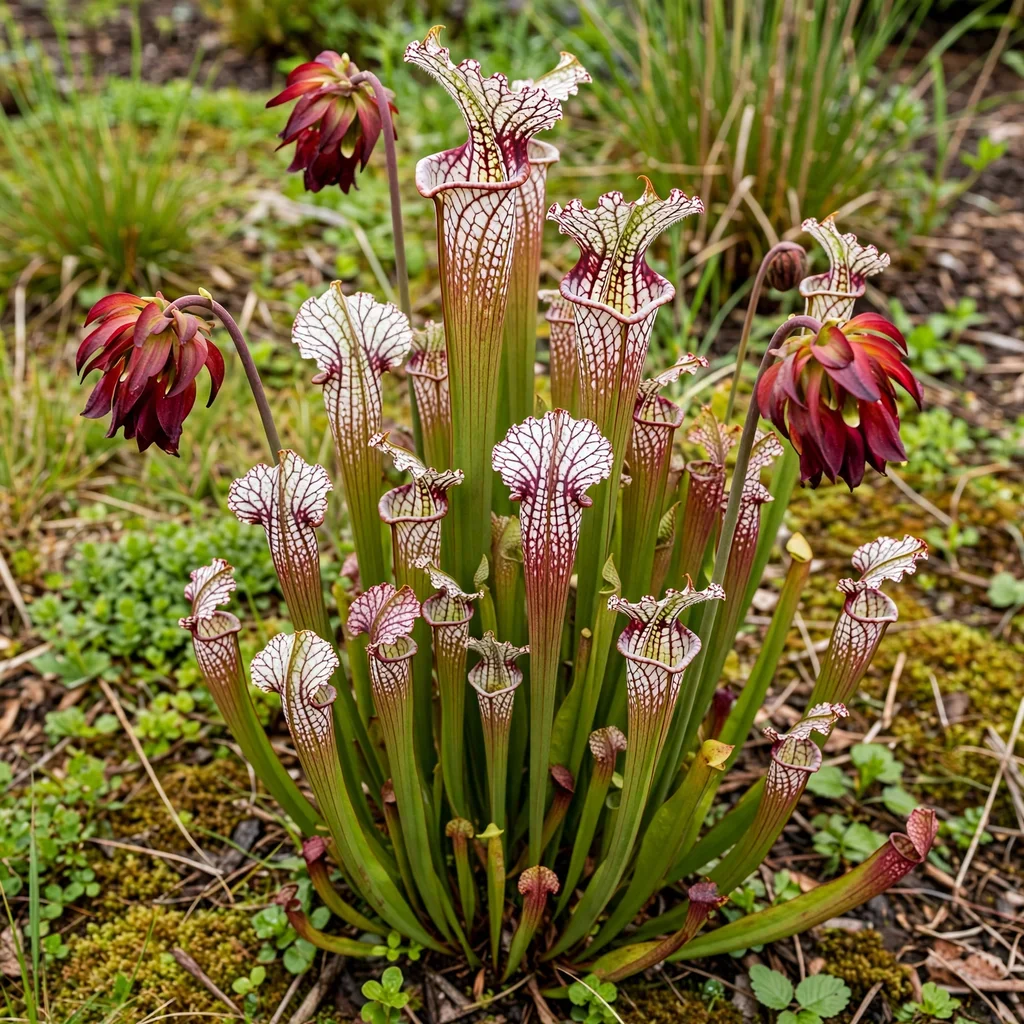
White Pitcher Plant
Sarracenia leucophylla
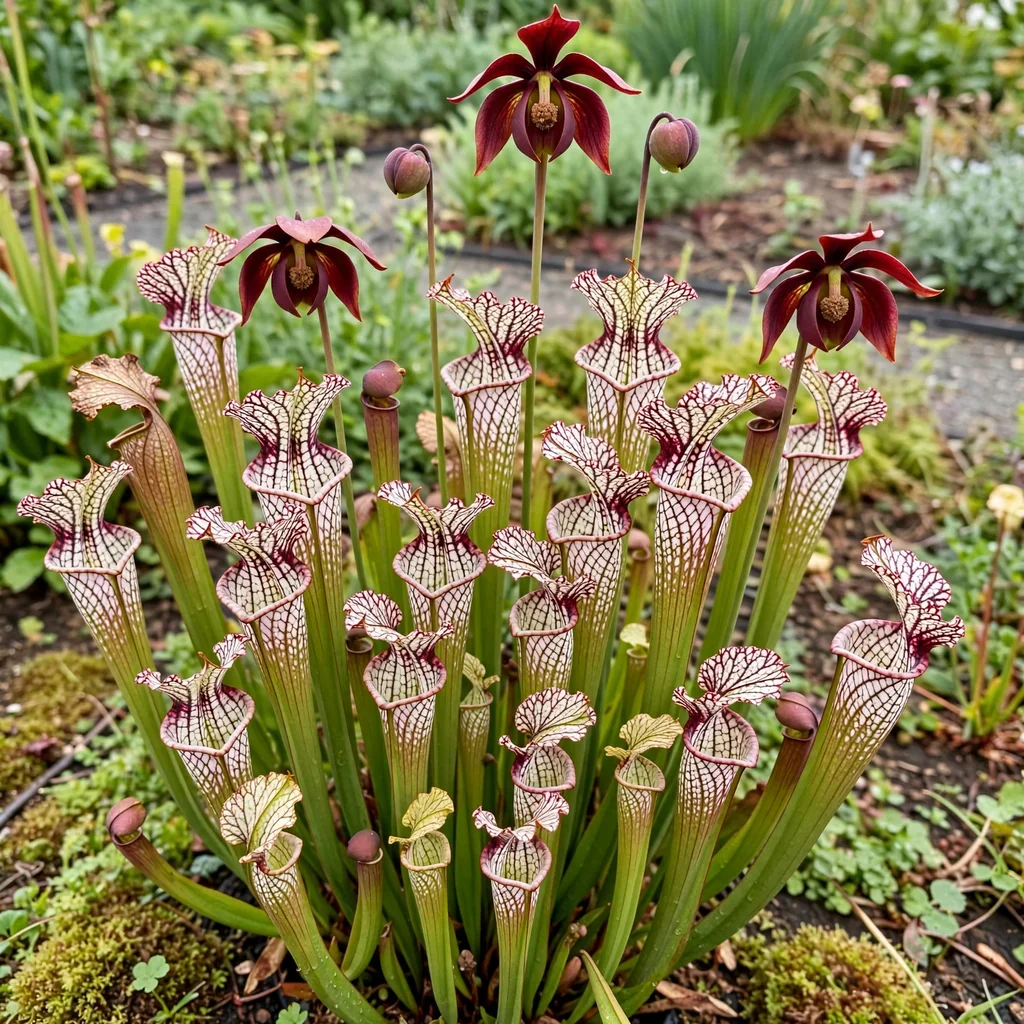
Dixie Lace Pitcher Plant
Sarracenia minor 'Dixie Lace'
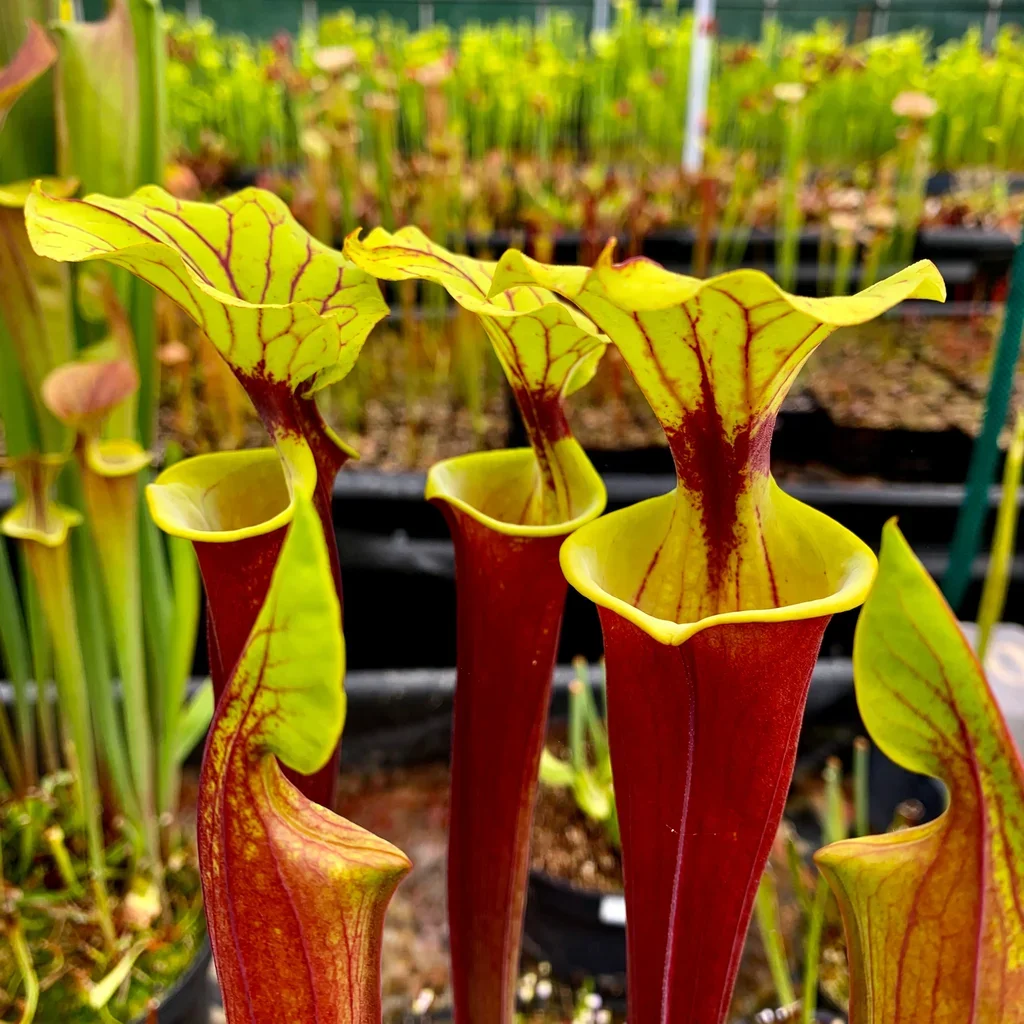
Red Tube Yellow Pitcher Plant
Sarracenia flava 'Red Tube'
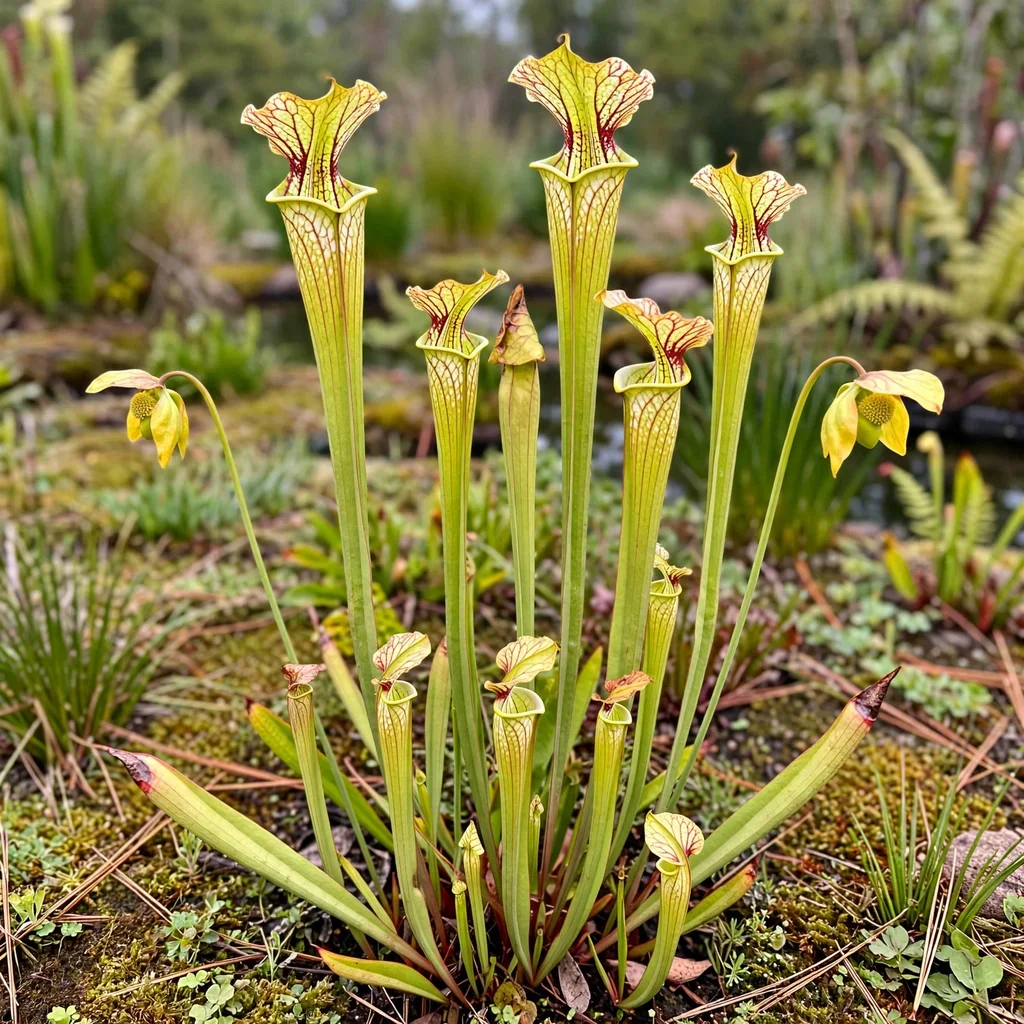
Yellow Pitcher Plant
Sarracenia flava
Keep exploring
Explore the genus
Hardy in your zone?
Grow Purple Pitcher Plant with confidence
See it in a design of your actual yard, get zone-matched care reminders, and track it season by season in your garden journal.