The Story
Plant Bio
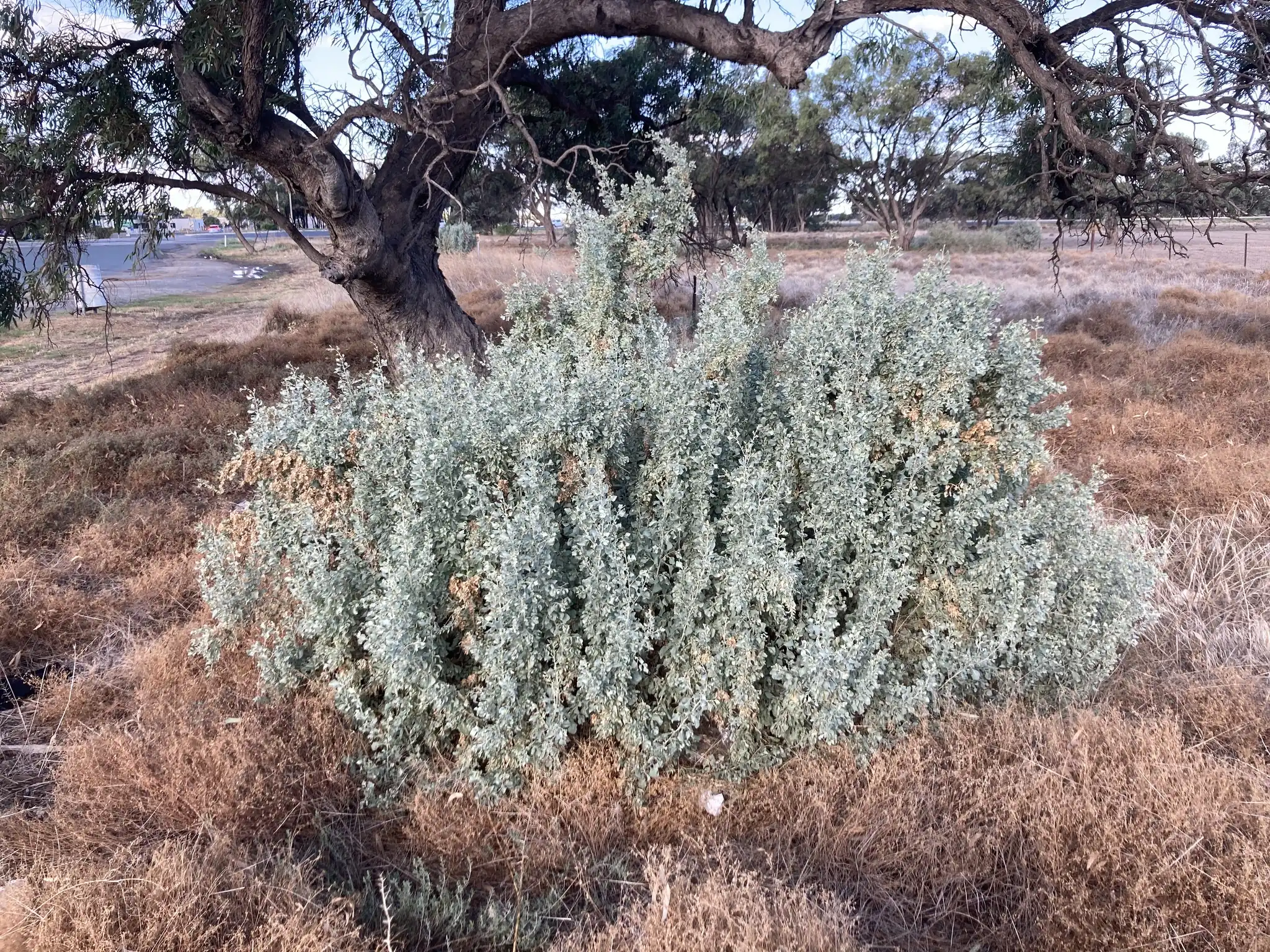
Atriplex nummularia is a large, densely branching evergreen shrub native to the arid inland regions of Australia, characterized by its rounded, spreading form and exceptional drought tolerance. The thick, semi-succulent leaves are covered in a scaly, silver-grey coating that reflects intense sunlight and conserves moisture.
This dioecious species produces inconspicuous, wind-pollinated flowers, with male and female structures occurring on separate plants. The foliage is highly salt-tolerant, accumulating sodium in specialized leaf cells to survive in highly saline or sodic soils.
Uses & Benefits:
Essentials
At a Glance
Plant Type
Shrub
Height
118"
Width
157"
Light
Full Sun
Zones
8, 9, 10
Water
Low
Humidity
Low
Lifespan
Long-lived
Native To
Australia
Toxicity
Non-toxic
Bloom period
Spring – Summer
In flower about 6 months of the year
Planting
How to Grow
- Select a site in full sun with absolute exposure to light, as this species cannot tolerate shade.
- Plant in any soil type from sand to heavy clay, ensuring the location has adequate drainage to prevent prolonged waterlogging.
- Water regularly during the first growing season to establish a deep root system, then transition to natural rainfall.
- Prune heavily in late winter or early spring to maintain a dense, compact shape and prevent the center from becoming woody.
Pro Tip
Do not relegate this shrub to dry, sterile sand; it naturally thrives in heavy clay floodplains and responds vigorously to deep watering and nutrient-rich soils as long as water does not stagnate.
Keep It Thriving
Care Guide
Do
- Prune hard into old wood to rejuvenate sparse or leggy growth.
- Soak seeds for at least an hour or rub them under running water before sowing to remove germination inhibitors.
- Grow in highly alkaline or saline soils where other shrubs fail.
Don't
- Do not apply fertilizers, as this species thrives in nutrient-poor or high-fertility matrices without supplemental feeding.
- Do not plant in heavily shaded areas, which leads to weak growth and decline.
- Do not allow soil to remain chronically wet and poorly drained, which triggers root rot.
Seasonal Care Calendar
| Task | Jan | Feb | Mar | Apr | May | Jun | Jul | Aug | Sep | Oct | Nov | Dec |
|---|---|---|---|---|---|---|---|---|---|---|---|---|
| Pest Check | ||||||||||||
| Plant | ||||||||||||
| Propagate | ||||||||||||
| Prune |
Watch Out For
Pests & Diseases
Common Pests
Common Diseases
In the Garden
Landscape Uses & Companions
Landscape Uses
Companion Plants
Multiply
Propagation Methods
Good to Know
Common Questions
Old Man Saltbush questions
What zones can Old Man Saltbush grow in?
Old Man Saltbush is hardy in USDA Zones 8–10. Inside that range it survives winter in the ground; outside it, grow it as an annual or a container plant you protect.
Is Old Man Saltbush deer resistant?
Not reliably. Deer may browse Old Man Saltbush, especially tender spring growth — plan on repellents or fencing where pressure is high.
When does Old Man Saltbush bloom?
Old Man Saltbush typically blooms in spring through summer. Exact timing shifts a week or two with your zone — Sow's bloom calendar maps it to your garden.
Does Old Man Saltbush need full sun?
Old Man Saltbush does best in full sun (6+ hours).
Is Old Man Saltbush drought tolerant?
Yes — once established (usually after the first full season), Old Man Saltbush handles dry spells with minimal watering. Water deeply its first year to build the root system that makes that possible.
More Atriplex to compare
Keep exploring
Explore the genus
Hardy in your zone?
Grow Old Man Saltbush with confidence
See it in a design of your actual yard, get zone-matched care reminders, and track it season by season in your garden journal.