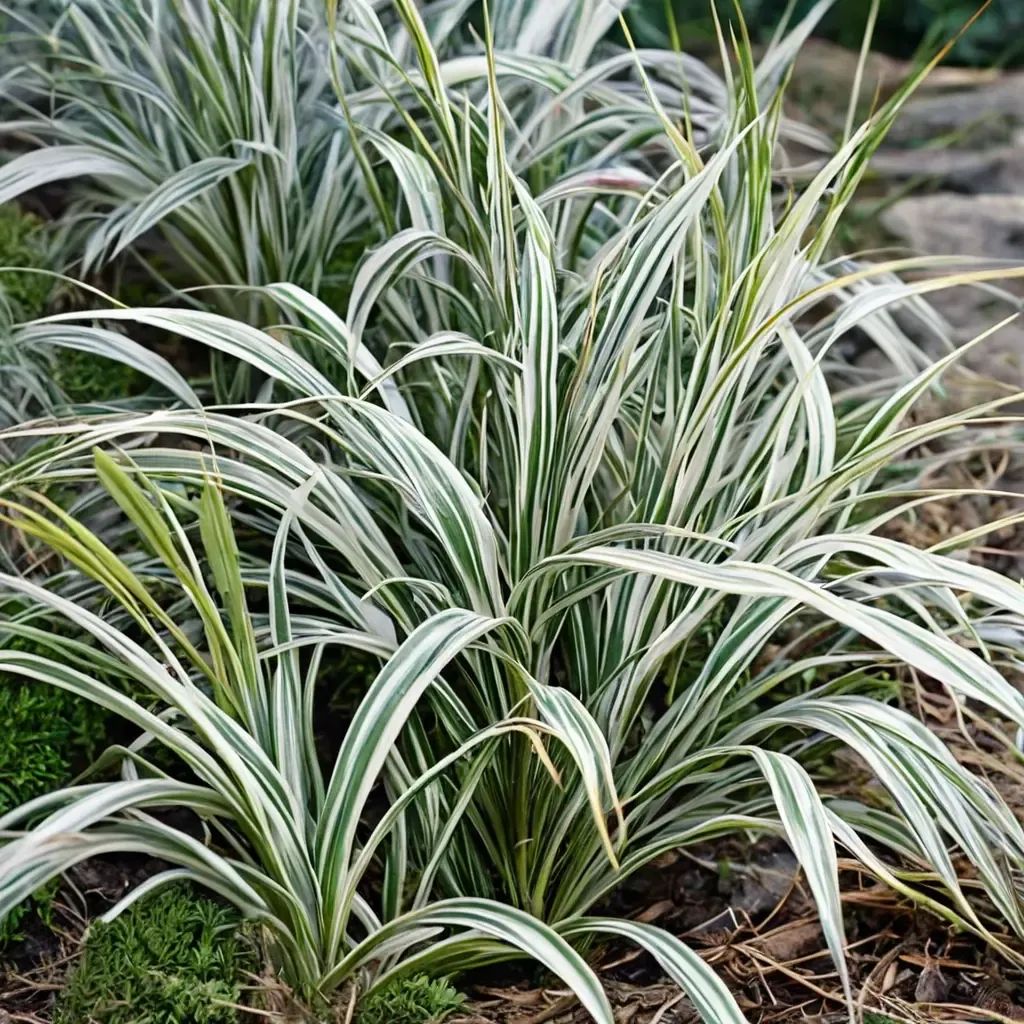
EverColor Everest Sedge
Carex morowii 'EverColor Everest'
Essentials
At a Glance
Plant Type
Perennial
Height
15 inches
Width
18 inches
Light
Partial Sun, Shade
Zones
5, 6, 7, 8, 9
Water
Regular moisture
Humidity
Moderate
Lifespan
Perennial
Native To
Japan
Toxicity
Non-toxic to pets
The Story
Plant Bio
'Everest' is a cultivar of Carex oshimensis, a clump-forming, evergreen sedge from Japan, valued for its fine-textured, grass-like foliage. This cultivar features distinctive dark green leaves with clear white margins. It forms a neat, arching mound, making it an excellent choice for brightening shady areas, containers, or as an edger.
Bloom Period:
Uses & Benefits:
Marketplace
Where to Buy
Shipping costs Year-round shipping Free shipping
Planting
How to Grow
- Tuck the roots into well-draining soil and water thoroughly.
- Mist cuttings regularly to maintain humidity and encourage rooting.
- Plant in partial shade for optimal growth.
- Mulch around the base to retain moisture and suppress weeds.
- Fertilize in early spring with a balanced, slow-release fertilizer.
- Divide clumps every 2-3 years to promote healthy growth.
Pro Tip
Ensure soil remains consistently moist for best establishment and vibrant foliage.
Keep It Thriving
Care Guide
Do
- Water regularly to keep soil moist but not waterlogged 🌱
- Prune dead or damaged leaves to maintain appearance
- Apply a balanced fertilizer in spring
Don't
- Avoid letting soil dry out completely ❌
- Don't fertilize late in the season to prevent weak growth
- Never ignore signs of pests or disease
Seasonal Care Calendar
| Task | Jan | Feb | Mar | Apr | May | Jun | Jul | Aug | Sep | Oct | Nov | Dec |
|---|---|---|---|---|---|---|---|---|---|---|---|---|
| Divide | ||||||||||||
| Mulch | ||||||||||||
| Plant | ||||||||||||
| Spring Cleanup |
Watch Out For
Pests & Diseases
Common Pests
Common Diseases
In the Garden
Landscape Uses & Companions
Landscape Uses
Companion Plants
Multiply
Propagation Methods
Good to Know