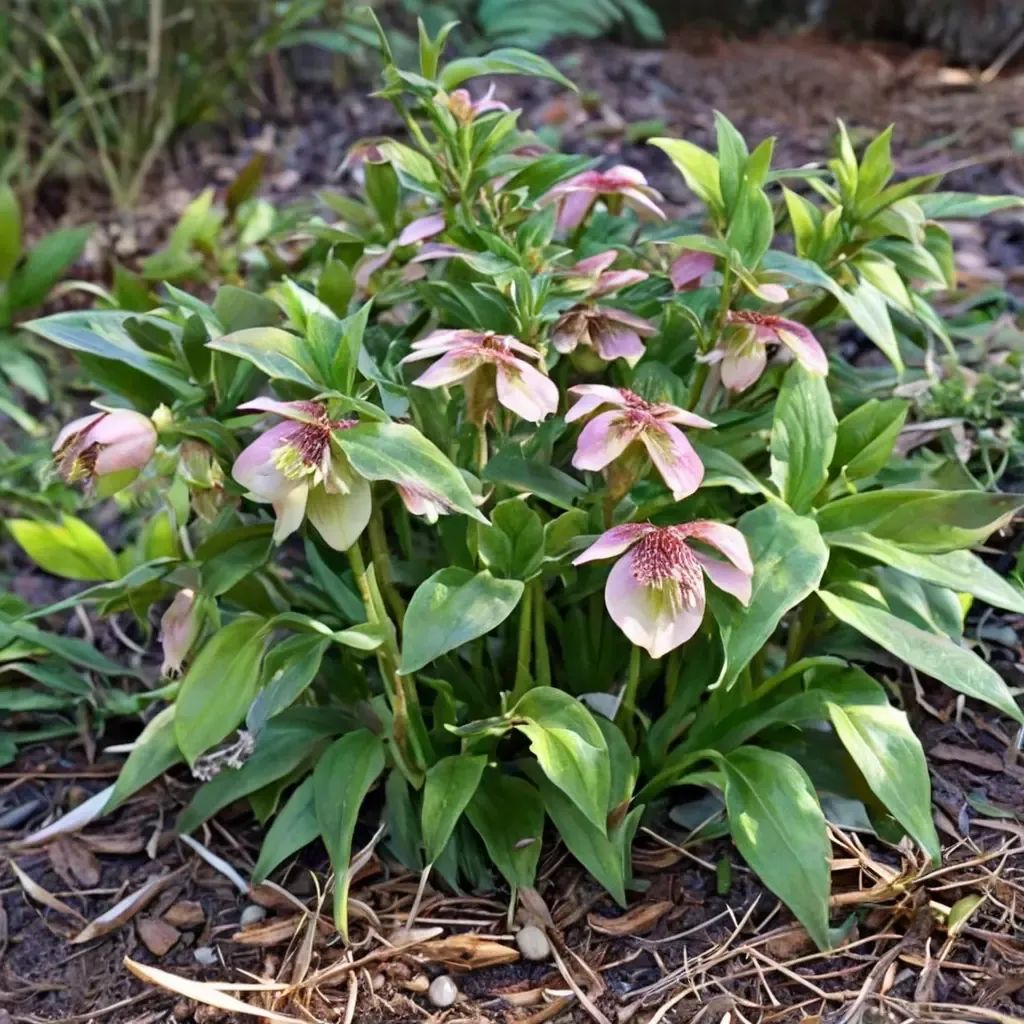
Lenten Rose Hellebore
Helleborus x hybrida
Not currently listed at our partner nurseries.
Essentials
At a Glance
Plant Type
Perennial
Height
15 inches
Width
24 inches
Light
Partial Sun, Shade
Zones
4, 5, 6, 7, 8, 9
Water
Moderate
Humidity
Average to high
Lifespan
10+ years
Native To
Europe and Asia
Toxicity
Toxic to pets and humans if ingested
The Story
Plant Bio
Helleborus hybridus is known for its stunning, large, cup-shaped flowers that are often nodding. The foliage is basal and evergreen, providing year-round interest. This hybrid is particularly valued for its wide range of flower color, including various shades of purple, pink, white, and green.
Bloom Period:
Uses & Benefits:
Marketplace
Where to Buy
We couldn't find this plant listed online right now.
Shipping costs Year-round shipping Free shipping
Planting
How to Grow
- Select a shady spot with well-drained, humus-rich soil.
- Tuck young plants into the ground in early spring or fall.
- Water thoroughly after planting to settle the soil.
- Mulch around the base to retain moisture and suppress weeds.
- Fertilize twice a year with a balanced slow-release fertilizer.
- Prune dead or damaged leaves in late winter to early spring.
Pro Tip
Plant hellebores at the same depth as in their nursery containers for best growth.
Keep It Thriving
Care Guide
Do
- Water regularly to keep soil moist but not waterlogged 🌱
- Apply mulch annually to conserve moisture and regulate soil temperature
- Prune dead or damaged leaves in late winter or early spring
- Feed with a balanced fertilizer in early spring
- Provide shade during hot summer afternoons
Don't
- Avoid overwatering which can cause root rot ❌
- Don’t expose plants to harsh, direct afternoon sun in summer
- Refrain from disturbing roots during dormancy
- Don’t prune in late summer as it may reduce next year’s blooms
- Avoid planting in heavy, poorly-drained soils
Seasonal Care Calendar
| Task | Jan | Feb | Mar | Apr | May | Jun | Jul | Aug | Sep | Oct | Nov | Dec |
|---|---|---|---|---|---|---|---|---|---|---|---|---|
| Deadhead | ||||||||||||
| Fertilize | ||||||||||||
| Plant | ||||||||||||
| Spring Cleanup |
Watch Out For
Pests & Diseases
Common Pests
Common Diseases
In the Garden
Landscape Uses & Companions
Landscape Uses
Companion Plants
Multiply
Propagation Methods
Good to Know