The Story
Plant Bio
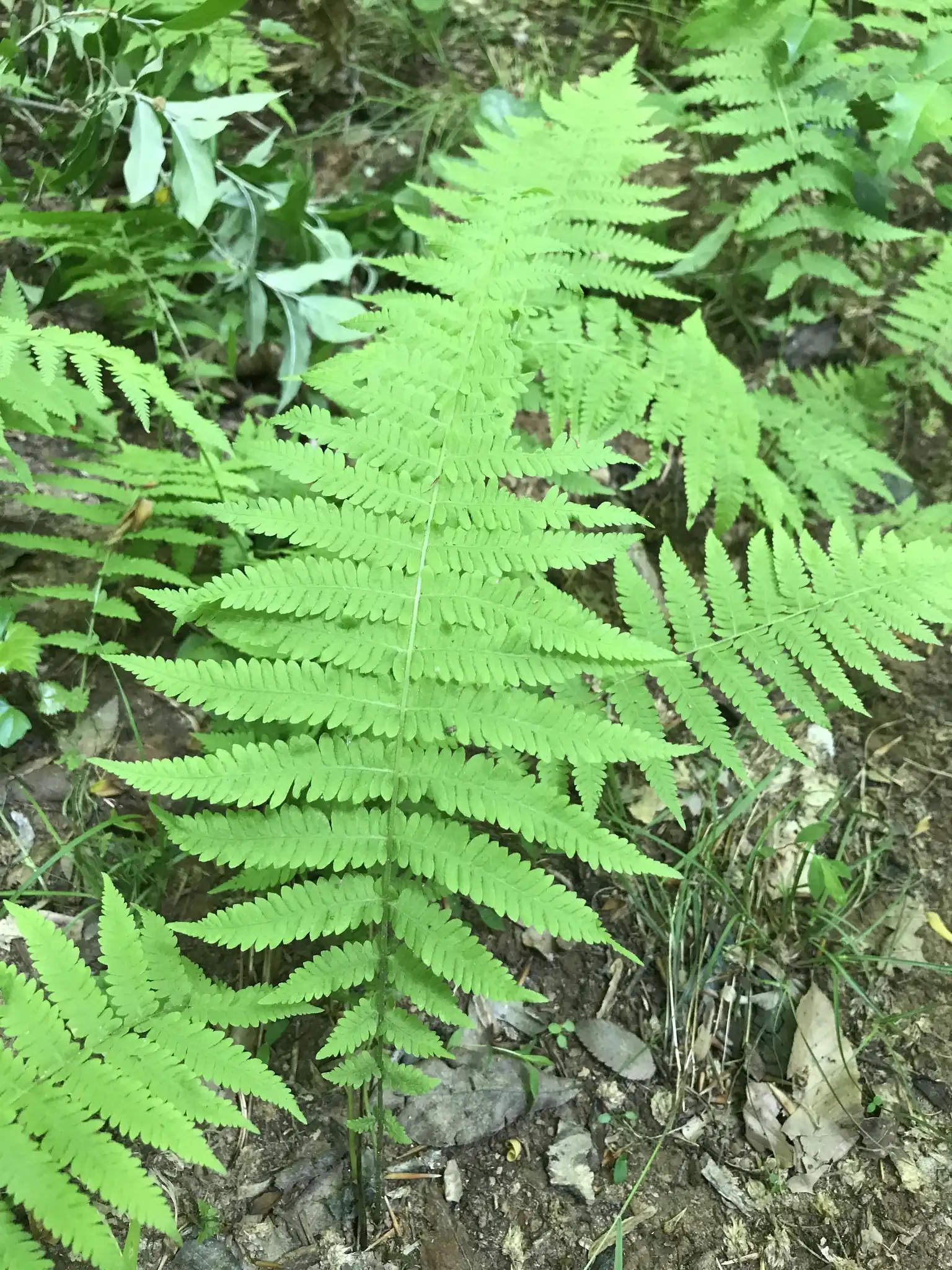
Parathelypteris noveboracensis is a deciduous fern native to eastern North America. It spreads via rhizomes to form extensive, lush colonies of delicate, light green fronds in woodland settings.
This fern is easily identified by its unique frond shape, which tapers significantly at both the tip and the base, giving it a distinctive 'twice-tapered' appearance. This feature distinguishes it from many other common ferns.
Uses & Benefits:
Essentials
At a Glance
Plant Type
Fern
Height
18"
Width
24"
Light
Partial Sun, Shade
Zones
4, 5, 6, 7, 8
Water
Medium to high
Humidity
High
Lifespan
Long-lived perennial
Native To
Eastern North America
Toxicity
Non-toxic
Planting
How to Grow
- Select a shady spot with moist, acidic, humus-rich soil.
- Incorporate compost or leaf mold to improve soil structure.
- Dig a hole as deep and twice as wide as the pot.
- Gently remove the fern and place it in the hole at soil level.
- Backfill with amended soil and water in well.
- Maintain consistent moisture, especially during the first year.
Pro Tip
To control its spread in a mixed border, install a rhizome barrier or plant it in a contained area.
Keep It Thriving
Care Guide
Do
- Provide consistently moist soil.
- Allow it to naturalize in woodland or shade gardens.
- Amend soil with organic matter annually.
- Leave fallen leaves around the plant to act as a natural mulch.
Don't
- Do not plant in full sun, as fronds will scorch.
- Avoid letting the soil dry out completely.
- Do not plant in small, formal beds unless you can contain its spread.
- Avoid using strong chemical fertilizers; compost is sufficient.
Seasonal Care Calendar
| Task | Jan | Feb | Mar | Apr | May | Jun | Jul | Aug | Sep | Oct | Nov | Dec |
|---|---|---|---|---|---|---|---|---|---|---|---|---|
| Mulch | ||||||||||||
| Plant | ||||||||||||
| Spring Cleanup |
Watch Out For
Pests & Diseases
Common Pests
Common Diseases
In the Garden
Landscape Uses & Companions
Landscape Uses
Multiply
Propagation Methods
Good to Know
Common Questions
New York Fern questions
What zones can New York Fern grow in?
New York Fern is hardy in USDA Zones 4–8. Inside that range it survives winter in the ground; outside it, grow it as an annual or a container plant you protect.
Is New York Fern deer resistant?
Yes — New York Fern is rated deer-resistant. Deer typically pass it over, though extreme hunger can override any plant's defenses.
Does New York Fern need full sun?
New York Fern does best in part shade.
Keep exploring
Explore the genus
Hardy in your zone?
Grow New York Fern with confidence
See it in a design of your actual yard, get zone-matched care reminders, and track it season by season in your garden journal.