perennialN. America Native
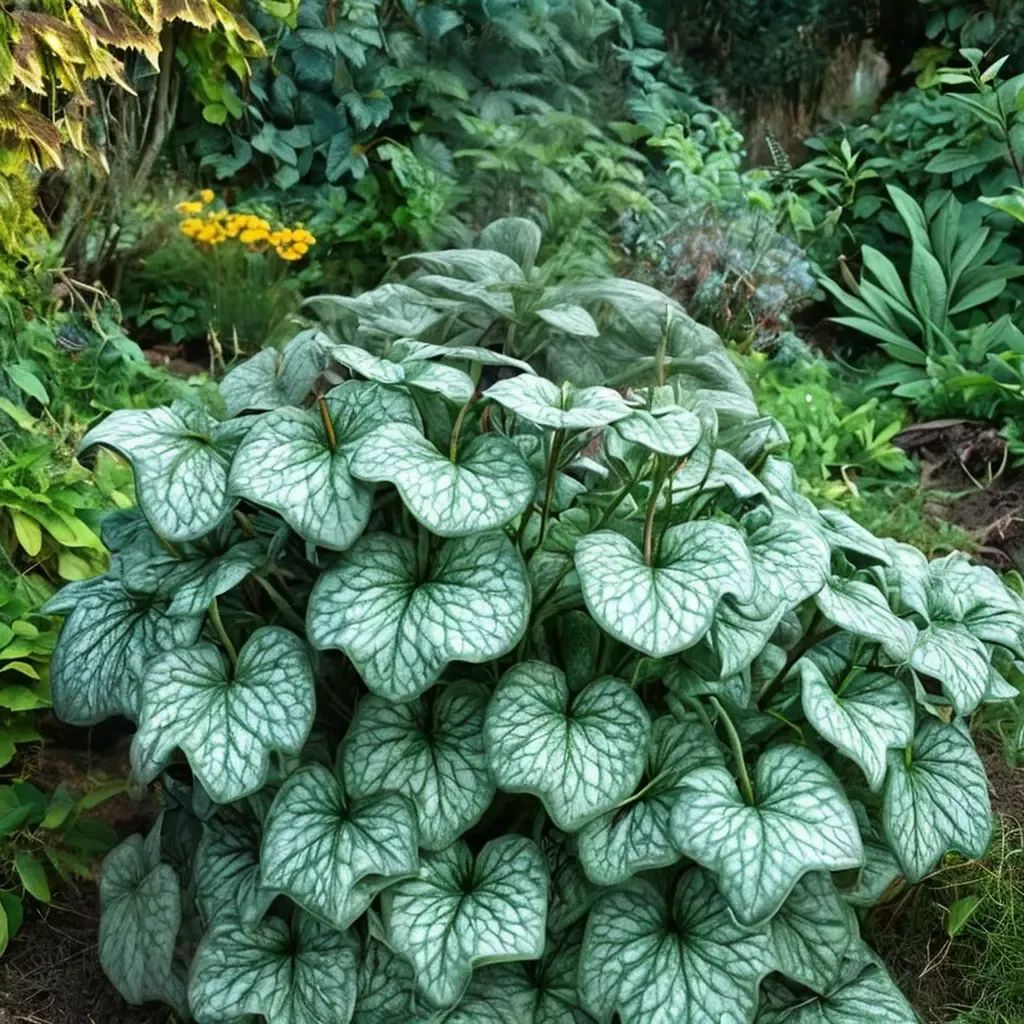
Alexander's Great Siberian Bugloss
Brunnera macrophylla 'Alexanders Great'
Not currently listed at our partner nurseries.
Expertly Curated
Real-Time Pricing
Loved by Designers
Essentials
At a Glance
Plant Type
Perennial
Height
15 inches
Width
28 inches
Light
Partial Sun, Shade
Zones
4, 5, 6, 7, 8
Water
Consistently moist
Humidity
Prefers moderate humidity
Lifespan
Perennial
Native To
Caucasus
Toxicity
Non-toxic to humans and pets
The Story
Plant Bio
Large-leaved perennial with striking blue flowers. Features exceptionally large leaves providing excellent ground cover.
Bloom Period:
J
F
M
A
M
J
J
A
S
O
N
D
EarlyLate
Uses & Benefits:
Brunnera macrophylla offers stunning silver and green foliage that brightens shady areas, with attractive blue flowers in spring.
Acts as an effective groundcover, suppressing weeds and stabilizing soil in shaded gardens.
Provides nectar for early pollinators and habitat for beneficial insects.
Marketplace
Where to Buy
We couldn't find this plant listed online right now.
Shipping costs Year-round shipping Free shipping
Planting
How to Grow
- Tuck seedlings into moist soil in early spring for best growth.
- Mist cuttings regularly to maintain humidity during propagation.
- Apply a layer of compost around roots to promote healthy development.
- Water consistently, especially during dry spells, to keep soil moist.
- Prune after flowering to encourage new growth and maintain shape.
- Divide clumps every 3-4 years in early spring for rejuvenation.
Pro Tip
Plant in partial shade with rich, well-draining soil for optimal growth.
Keep It Thriving
Care Guide
Do
- Water regularly to keep soil consistently moist 🌱
- Mulch around plants to retain moisture and suppress weeds
- Fertilize in early spring with a balanced slow-release fertilizer
- Deadhead spent flowers to promote continuous blooming
Don't
- Avoid overwatering which can cause root rot ❌
- Do not expose to full sun, as it can scorch the leaves
- Refrain from neglecting pruning after flowering
- Don’t plant in heavy, poorly-draining clay soil without amendments
Seasonal Care Calendar
| Task | Jan | Feb | Mar | Apr | May | Jun | Jul | Aug | Sep | Oct | Nov | Dec |
|---|---|---|---|---|---|---|---|---|---|---|---|---|
| Deadhead | ||||||||||||
| Mulch | ||||||||||||
| Spring Cleanup |
Watch Out For
Pests & Diseases
Common Pests
Common Diseases
In the Garden
Landscape Uses & Companions
Landscape Uses
Shady woodland border with silvery foliageGroundcover beneath trees for a lush carpetSoftening edges of garden paths with lush greenery
Companion Plants
Hostas Ferns Astilbes Heucheras Trilliums
Multiply
Propagation Methods
Good to Know