The Story
Plant Bio
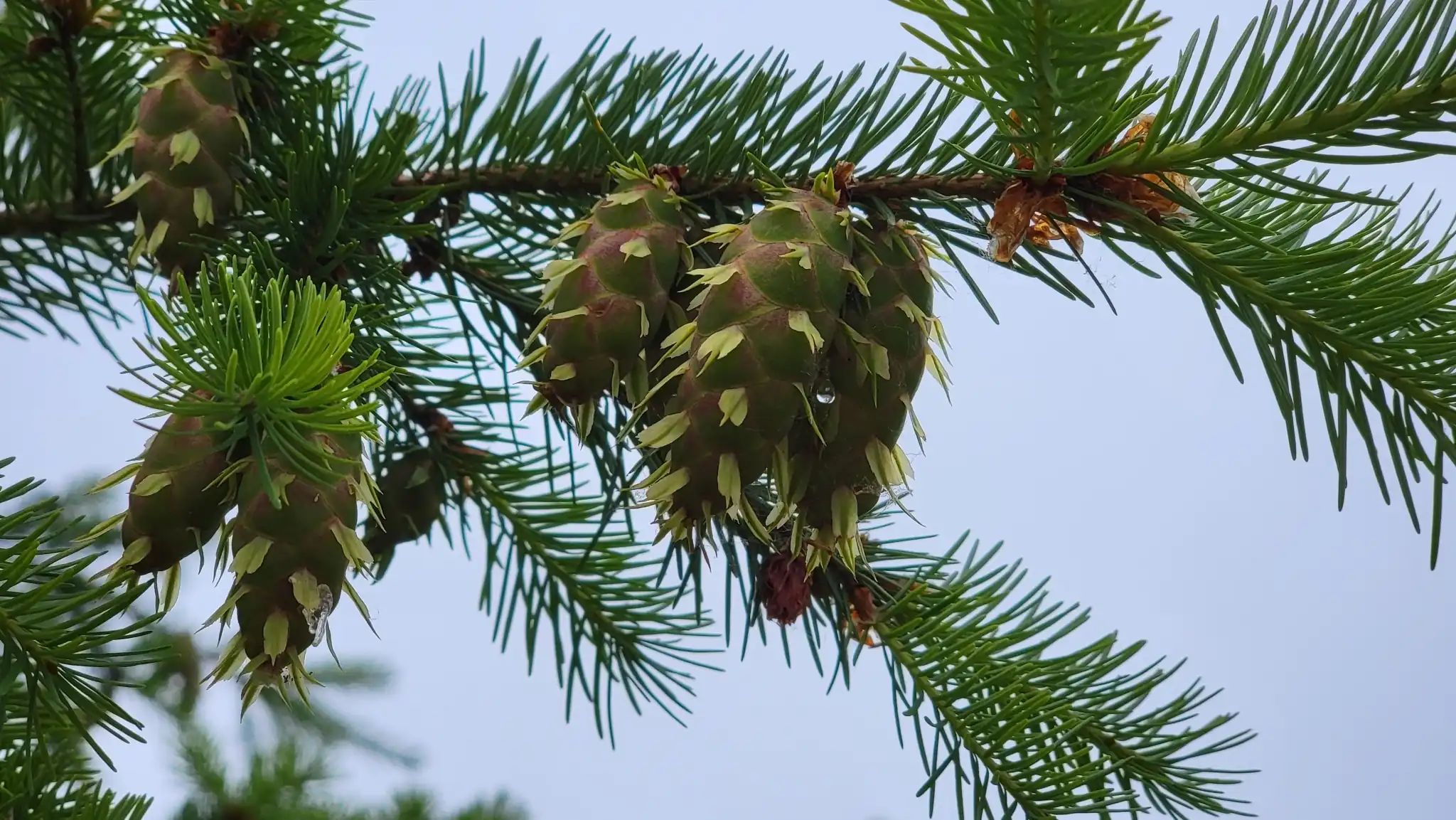
Pseudotsuga menziesii is a majestic, large evergreen conifer native to western North America, forming a dense, pyramidal shape when young and becoming more open with age. Its soft, fragrant needles and unique cones with three-pointed bracts are key identifiers.
This species is one of the world's most important timber trees and is also widely used as a Christmas tree due to its classic shape and good needle retention. The foliage has a sweet, citrus-like fragrance when crushed.
Uses & Benefits:
Essentials
At a Glance
Plant Type
Tree
Height
840"
Width
216"
Light
Full Sun
Zones
4, 5, 6
Water
Medium
Humidity
Prefers low to moderate
Lifespan
Very long-lived tree
Native To
Western North America
Toxicity
Non-toxic
Bloom period
Mid-spring
In flower about 1 month of the year
Marketplace
Where to Buy
Shipping costs Year-round shipping Free shipping
Planting
How to Grow
- Choose a site in full sun with moist, well-drained, acidic soil.
- Dig a hole two to three times wider than the root ball.
- Set the tree so the top of the root ball is level with the ground.
- Backfill the hole with the original soil.
- Water deeply after planting to settle the soil.
- Mulch with 2-3 inches of organic matter, avoiding the trunk.
Pro Tip
Avoid planting in the hot and humid climates of the southeastern US, where it struggles with heat and disease.
Keep It Thriving
Care Guide
Do
- Provide consistent moisture, especially during establishment.
- Ensure the soil is well-drained.
- Give it plenty of space to reach its large mature size.
- Plant in a location with good air circulation.
Don't
- Do not plant in alkaline or compacted soils.
- Avoid sites with poor air circulation, which can encourage needle diseases.
- Do not let the soil dry out completely.
- Avoid planting in areas with hot, humid summers.
Seasonal Care Calendar
| Task | Jan | Feb | Mar | Apr | May | Jun | Jul | Aug | Sep | Oct | Nov | Dec |
|---|---|---|---|---|---|---|---|---|---|---|---|---|
| Pest Check | ||||||||||||
| Plant | ||||||||||||
| Prune |
Watch Out For
Pests & Diseases
Common Pests
Common Diseases
In the Garden
Landscape Uses & Companions
Landscape Uses
Multiply
Propagation Methods
Good to Know
Common Questions
Douglas Fir questions
What zones can Douglas Fir grow in?
Douglas Fir is hardy in USDA Zones 4–6. Inside that range it survives winter in the ground; outside it, grow it as an annual or a container plant you protect.
Is Douglas Fir deer resistant?
Yes — Douglas Fir is rated deer-resistant. Deer typically pass it over, though extreme hunger can override any plant's defenses.
When does Douglas Fir bloom?
Douglas Fir typically blooms in mid-spring through mid-spring. Exact timing shifts a week or two with your zone — Sow's bloom calendar maps it to your garden.
Does Douglas Fir need full sun?
Douglas Fir does best in full sun (6+ hours).
Keep exploring
Explore the genus
Hardy in your zone?
Grow Douglas Fir with confidence
See it in a design of your actual yard, get zone-matched care reminders, and track it season by season in your garden journal.