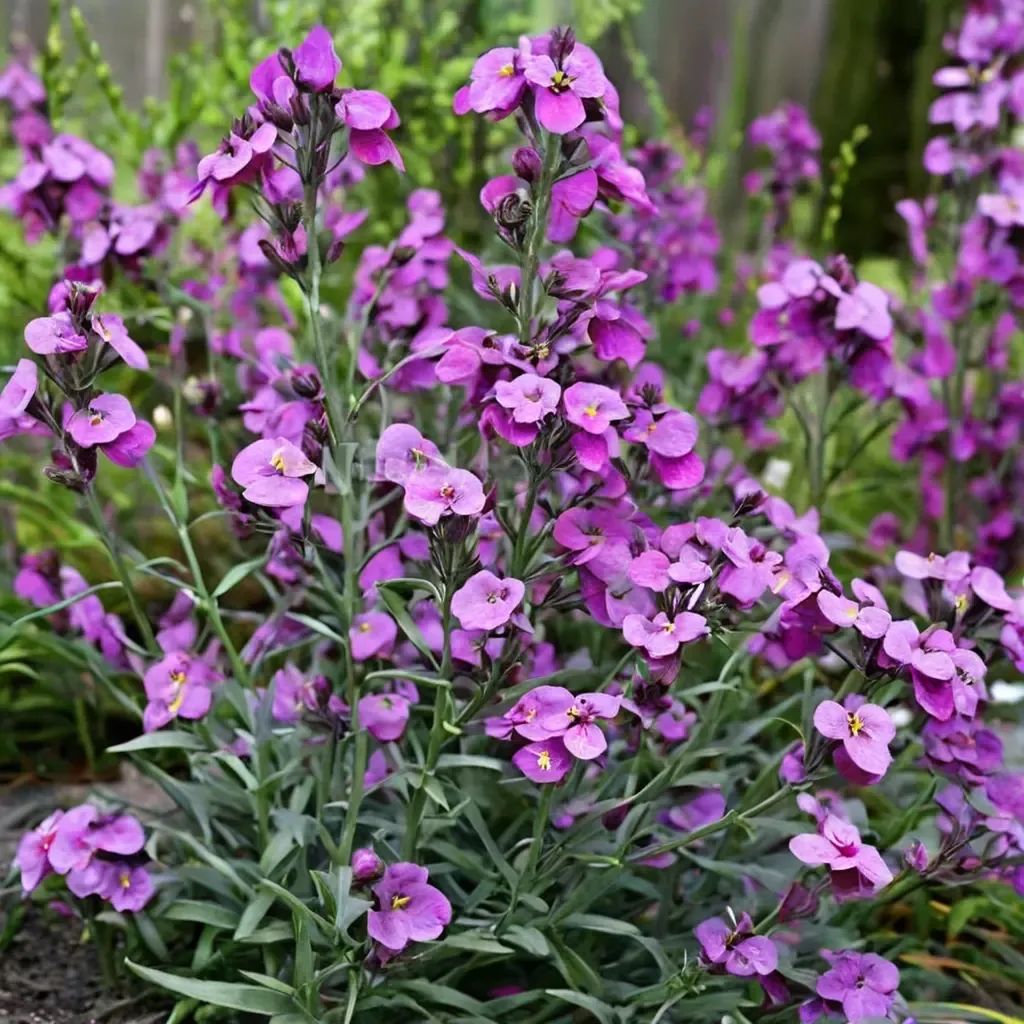
Bowles's Mauve Wallflower
Erysimum cheiri 'Bowles Mauve'
Essentials
At a Glance
Plant Type
Perennial
Height
24 inches
Width
24 inches
Light
Full Sun, Partial Sun
Zones
6, 7, 8, 9
Water
Drought tolerant once established
Humidity
Prefers dry to moderate humidity
Lifespan
Short-lived perennial
Native To
Southern Europe (parentage)
Toxicity
All parts are toxic if ingested.
The Story
Plant Bio
Erysimum cheiri 'Bowles Mauve' is a compact perennial known for its long-lasting purple flowers and attractive foliage. Famous for its exceptionally long flowering period, often producing fragrant, mauve-purple flowers from spring through fall.
Uses & Benefits:
Marketplace
Where to Buy
Shipping costs Year-round shipping Free shipping
Planting
How to Grow
- Tuck seeds into well-drained soil in early spring for best germination.
- Mist cuttings regularly to maintain humidity and promote root growth.
- Transplant seedlings after the last frost when they are strong enough to handle.
- Fertilize lightly in early spring with a balanced fertilizer for vigorous growth.
- Prune after flowering to encourage bushier growth and more blooms.
- Mulch around plants to retain moisture and suppress weeds.
Pro Tip
Use well-draining soil and avoid overwatering to prevent root rot.
Keep It Thriving
Care Guide
Do
- Water regularly during dry spells 🌱
- Prune after blooming to shape the plant
- Apply balanced fertilizer in spring
- Mulch to conserve moisture
- Provide full sun for optimal flowering
Don't
- Avoid overwatering to prevent root rot ❌
- Don’t prune in late fall or winter
- Skip fertilizing during dormant periods
- Don’t plant in heavy, poorly-drained soil
- Avoid excessive shade which reduces flowering
Seasonal Care Calendar
| Task | Jan | Feb | Mar | Apr | May | Jun | Jul | Aug | Sep | Oct | Nov | Dec |
|---|---|---|---|---|---|---|---|---|---|---|---|---|
| Deadhead | ||||||||||||
| Pest Check | ||||||||||||
| Propagate |
Watch Out For
Pests & Diseases
Common Pests
Common Diseases
In the Garden
Landscape Uses & Companions
Landscape Uses
Companion Plants
Multiply
Propagation Methods
Good to Know