The Story
Plant Bio
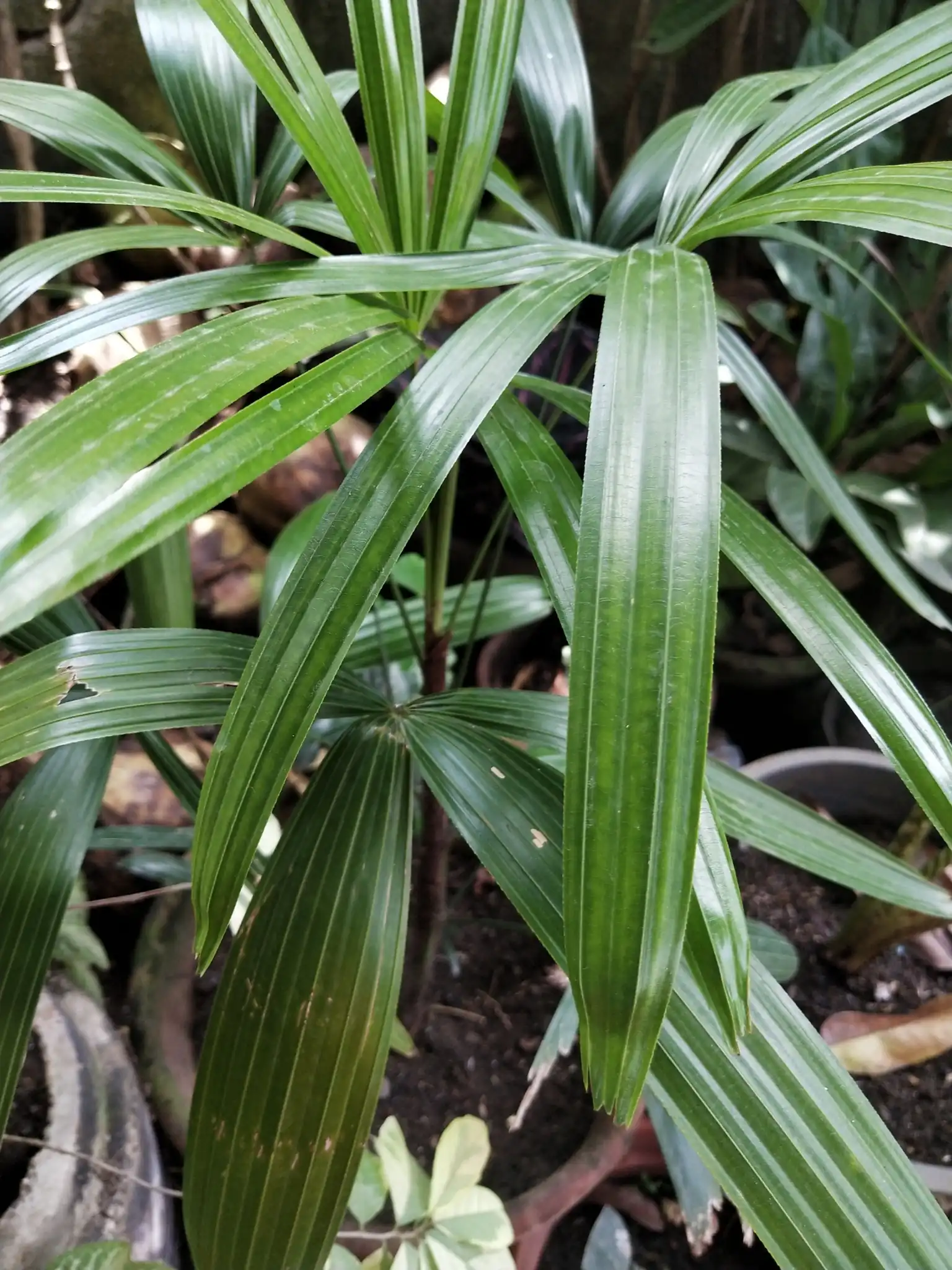
Rhapis excelsa is a small, clumping fan palm that grows from multiple fibrous, cane-like stems. It features glossy, dark green, fan-shaped leaves that are divided into broad, ribbed segments, creating an elegant, tropical effect.
The Lady Palm is exceptionally tolerant of low light conditions, making it one of the best palms for indoor cultivation. Its slow growth and graceful, multi-stemmed habit make it a popular and long-lived houseplant.
Uses & Benefits:
Essentials
At a Glance
Plant Type
Tree
Height
96"
Width
84"
Light
Partial Sun, Shade
Zones
9, 10
Water
Moderate
Humidity
Average to high
Lifespan
Very long-lived
Native To
Southern China, Taiwan
Toxicity
Non-toxic, safe for pets.
Bloom period
Late spring – Early summer
In flower about 2 months of the year
Marketplace
Where to Buy
Shipping costs Year-round shipping Free shipping
Planting
How to Grow
- Choose a pot with excellent drainage, only slightly larger than the root ball.
- Use a high-quality, peat-based potting mix.
- Place in a location with bright, indirect light; avoid direct sun.
- Water thoroughly when the top inch of soil feels dry.
- Allow water to drain completely; do not let it sit in a saucer of water.
- Fertilize lightly during the growing season from spring to summer.
Pro Tip
Brown leaf tips are common and can be caused by dry air or chemicals in tap water. Use filtered water and trim off only the brown tips.
Keep It Thriving
Care Guide
Do
- Provide bright, indirect light.
- Allow the top inch of soil to dry before watering again.
- Wipe leaves with a damp cloth to keep them dust-free.
- Repot only when severely root-bound, every 2-4 years.
Don't
- Do not place in direct sunlight, which will scorch the leaves.
- Do not overwater or let the plant sit in a saucer of water.
- Do not expose to drafts or temperatures below 50 F.
- Do not over-fertilize, especially in winter.
Seasonal Care Calendar
| Task | Jan | Feb | Mar | Apr | May | Jun | Jul | Aug | Sep | Oct | Nov | Dec |
|---|---|---|---|---|---|---|---|---|---|---|---|---|
| Fertilize | ||||||||||||
| Pest Check |
Watch Out For
Pests & Diseases
Common Pests
Common Diseases
In the Garden
Landscape Uses & Companions
Landscape Uses
Multiply
Propagation Methods
Good to Know
Common Questions
Lady Palm questions
What zones can Lady Palm grow in?
Lady Palm is hardy in USDA Zones 9–10. Inside that range it survives winter in the ground; outside it, grow it as an annual or a container plant you protect.
Is Lady Palm deer resistant?
Not reliably. Deer may browse Lady Palm, especially tender spring growth — plan on repellents or fencing where pressure is high.
When does Lady Palm bloom?
Lady Palm typically blooms in late spring through early summer. Exact timing shifts a week or two with your zone — Sow's bloom calendar maps it to your garden.
Does Lady Palm need full sun?
Lady Palm does best in part shade.
Keep exploring
Explore the genus
Hardy in your zone?
Grow Lady Palm with confidence
See it in a design of your actual yard, get zone-matched care reminders, and track it season by season in your garden journal.