The Story
Plant Bio
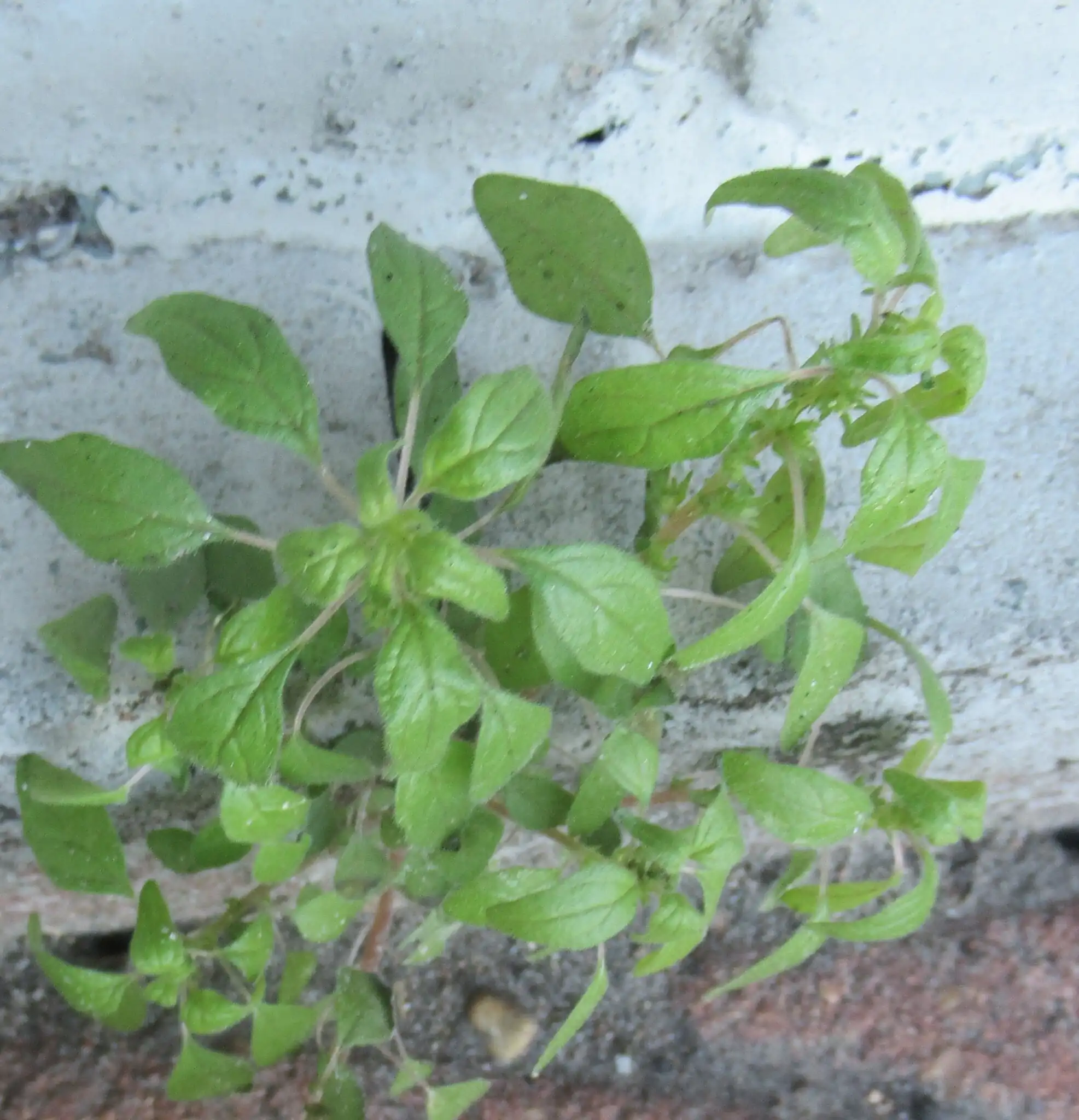
Parietaria pensylvanica is a delicate, low-growing annual herb native to North America, often forming localized colonies in shaded woodlands, rock crevices, and disturbed areas. The slender, four-angled stems are finely pubescent and support thin, alternate, lanceolate leaves with smooth margins.
Unlike many other members of the nettle family, this species completely lacks stinging hairs, though contact with the foliage can cause mild skin irritation in sensitive individuals. The tiny, apetalous green flowers are clustered tightly in the leaf axils and are surrounded by small, hairy bracts.
Uses & Benefits:
Essentials
At a Glance
Plant Type
Annual
Height
18"
Width
12"
Light
Partial Sun, Shade
Zones
4, 5, 6, 7, 8, 9
Water
Medium to High
Humidity
Moderate to High
Lifespan
Annual
Native To
North America
Toxicity
Mild skin irritant
Bloom period
Spring – Summer
In flower about 6 months of the year
Planting
How to Grow
- Select a site with light to partial shade and moist, organic-rich soil.
- Sow seeds directly on the soil surface in early spring, as they require light to germinate.
- Maintain consistent soil moisture during the spring and summer growing seasons to prevent early decline.
- Hand-pull plants before they drop seed if you wish to limit their self-seeding spread.
Pro Tip
Control unwanted spreading in garden beds by manually pulling or hoeing the shallow-rooted plants in late spring before they set seed.
Keep It Thriving
Care Guide
Do
- Grow in shaded, damp microclimates to mimic its natural woodland habitat.
- Keep soil consistently moist, especially during hot summer spells.
- Wear gloves when handling if you have sensitive skin to avoid potential mild dermatitis.
Don't
- Do not plant in poorly drained, stagnant soils where root rot can develop.
- Do not allow the plant to go to seed if you want to prevent it from colonizing nearby turf or landscape beds.
Seasonal Care Calendar
| Task | Jan | Feb | Mar | Apr | May | Jun | Jul | Aug | Sep | Oct | Nov | Dec |
|---|---|---|---|---|---|---|---|---|---|---|---|---|
| Pest Check | ||||||||||||
| Plant | ||||||||||||
| Propagate | ||||||||||||
| Spring Cleanup |
Watch Out For
Pests & Diseases
Common Pests
Common Diseases
In the Garden
Landscape Uses & Companions
Landscape Uses
Companion Plants
Multiply
Propagation Methods
Good to Know
Common Questions
Pennsylvania Pellitory questions
What zones can Pennsylvania Pellitory grow in?
Pennsylvania Pellitory is hardy in USDA Zones 4–9. Inside that range it survives winter in the ground; outside it, grow it as an annual or a container plant you protect.
When does Pennsylvania Pellitory bloom?
Pennsylvania Pellitory typically blooms in spring through summer. Exact timing shifts a week or two with your zone — Sow's bloom calendar maps it to your garden.
Does Pennsylvania Pellitory need full sun?
Pennsylvania Pellitory does best in part shade.
More Parietaria to compare
Keep exploring
Explore the genus
Grow Pennsylvania Pellitory with confidence
See it in a design of your actual yard, get zone-matched care reminders, and track it season by season in your garden journal.