The Story
Plant Bio
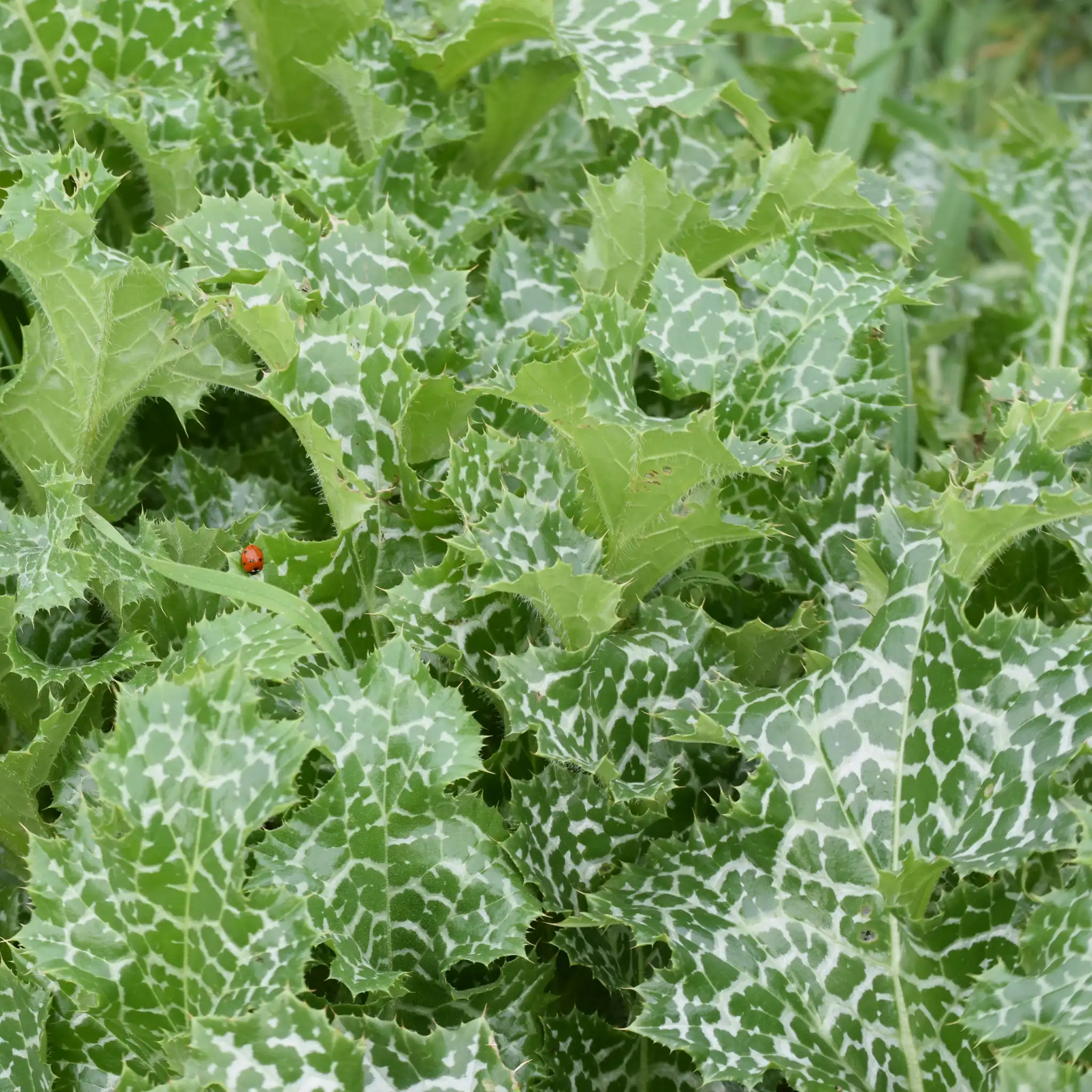
Silybum marianum, commonly known as milk thistle, is an upright annual or biennial herb that forms a massive, spiny basal rosette in its first year before bolting to produce a tall, hollow flowering stem. The shiny dark green leaves feature prominent milk-white veins and deeply lobed margins armed with sharp, yellow-tipped spines.
This species is distinguished by its large, solitary flower heads of red-purple tubular florets surrounded by rigid, spine-tipped bracts. The plant is highly drought-tolerant once established and adapts readily to poor, disturbed soils across USDA zones 5 through 9.
Uses & Benefits:
Essentials
At a Glance
Plant Type
Annual
Height
79"
Width
63"
Light
Full Sun
Zones
5, 6, 7, 8, 9
Water
Low
Humidity
Moderate
Lifespan
Annual or Biennial
Native To
Mediterranean region
Toxicity
Toxic to livestock; sharp spines cause physical irritation
Bloom period
Summer
In flower about 3 months of the year
Planting
How to Grow
- Sow seeds directly into well-drained soil in a full-sun location during early spring.
- Maintain light moisture until germination, which occurs across a wide temperature range.
- Avoid applying supplemental fertilizer, as this species thrives in poor, low-nutrient soils.
- Monitor the plant during its second year and cut back the flowering stems before seeds mature to control spreading.
Pro Tip
Remove spent flower heads immediately after blooming to prevent self-seeding, as the seeds remain viable in the soil bank for up to nine years and can rapidly colonize garden beds.
Keep It Thriving
Care Guide
Do
- Wear heavy leather gloves when handling the plant to protect against the extremely sharp marginal spines.
- Grow in a dedicated, contained area if cultivating for herbal use to prevent unwanted spread.
- Ensure the planting site has excellent drainage to prevent root rot.
Don't
- Do not apply supplemental fertilizer, as the plant easily tolerates and prefers low-fertility soils.
- Do not allow flower heads to dry on the plant if you wish to avoid a persistent, multi-year seed bank.
- Do not plant near pastures or livestock areas, as the foliage can accumulate toxic levels of nitrates under stress.
Seasonal Care Calendar
| Task | Jan | Feb | Mar | Apr | May | Jun | Jul | Aug | Sep | Oct | Nov | Dec |
|---|---|---|---|---|---|---|---|---|---|---|---|---|
| Deadhead | ||||||||||||
| Pest Check | ||||||||||||
| Plant | ||||||||||||
| Winter Prep |
Watch Out For
Pests & Diseases
Common Pests
Common Diseases
In the Garden
Landscape Uses & Companions
Landscape Uses
Companion Plants
Multiply
Propagation Methods
Good to Know
Common Questions
Milk Thistle questions
What zones can Milk Thistle grow in?
Milk Thistle is hardy in USDA Zones 5–9. Inside that range it survives winter in the ground; outside it, grow it as an annual or a container plant you protect.
When does Milk Thistle bloom?
Milk Thistle typically blooms in summer through summer. Exact timing shifts a week or two with your zone — Sow's bloom calendar maps it to your garden.
Does Milk Thistle need full sun?
Milk Thistle does best in full sun (6+ hours).
Is Milk Thistle drought tolerant?
Yes — once established (usually after the first full season), Milk Thistle handles dry spells with minimal watering. Water deeply its first year to build the root system that makes that possible.
Keep exploring
Explore the genus
Hardy in your zone?
Grow Milk Thistle with confidence
See it in a design of your actual yard, get zone-matched care reminders, and track it season by season in your garden journal.