The Story
Plant Bio
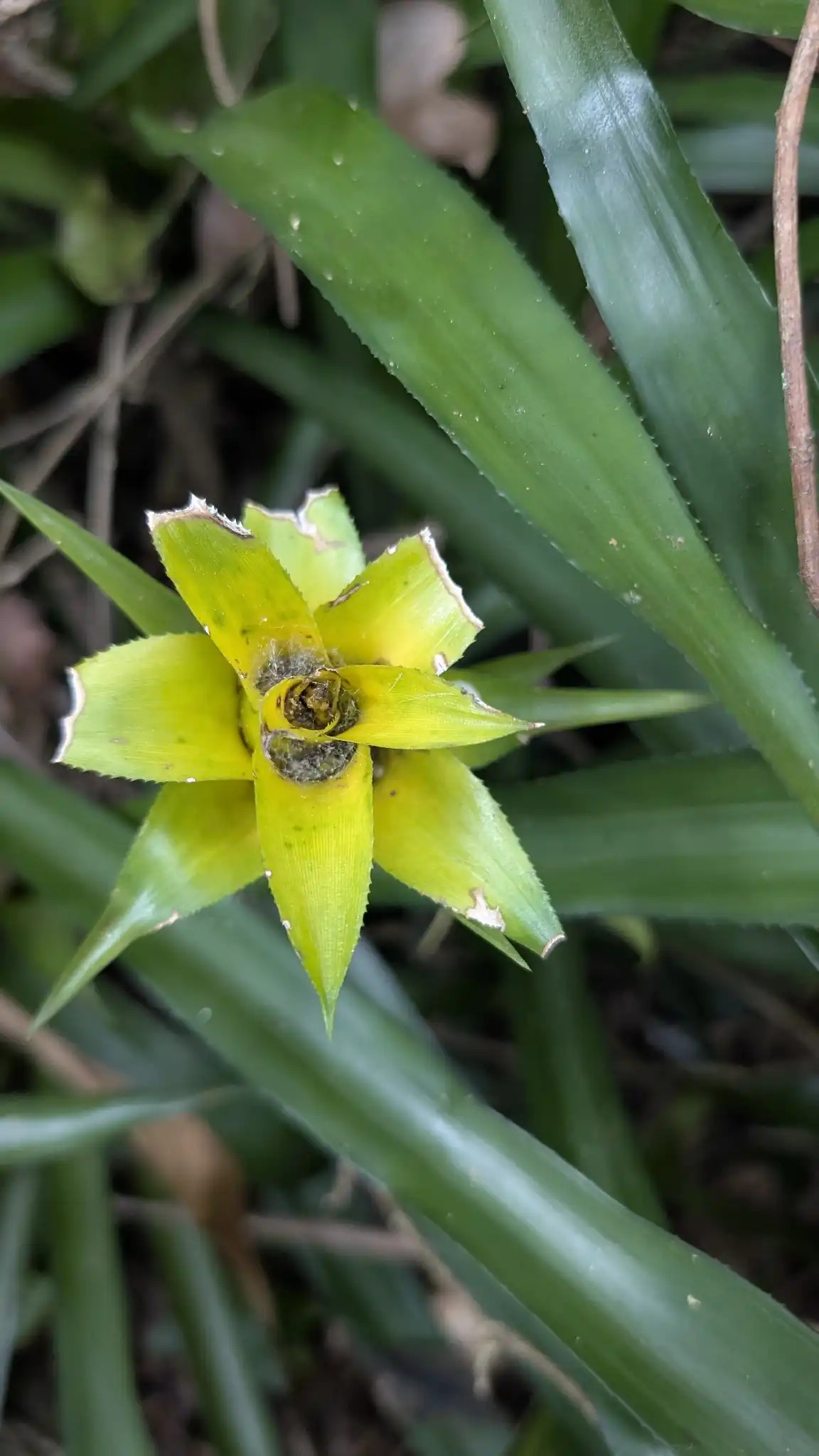
Canistropsis billbergioides is a compact, stemless epiphytic bromeliad native to the Atlantic Forest of Brazil. The plant forms a tight, upright-arching rosette of strap-shaped, glossy green leaves that create a central water-holding reservoir.
The central foliage transitions to brilliant yellow, orange, or scarlet primary bracts at maturity, nesting a sunken head of small white to pale blue flowers. This species is highly adapted to low-light understory environments, making it an exceptional indoor or shade-garden subject.
Uses & Benefits:
Essentials
At a Glance
Plant Type
Tropical
Height
18"
Width
18"
Light
Partial Sun, Shade
Zones
10
Water
Moderate
Humidity
High
Lifespan
Perennial
Native To
Brazil
Toxicity
Non-toxic
Bloom period
Spring – Summer
In flower about 6 months of the year
Planting
How to Grow
- Select a highly porous, fast-draining potting medium such as an orchid bark mix combined with peat, perlite, and coarse sand.
- Position the plant in a location that receives partial to full shade, completely protected from direct, harsh afternoon sunlight.
- Fill the central rosette cup with clean, mineral-free water, flushing and replacing it every few weeks to prevent stagnation.
- Water the potting medium lightly only when the top inch of soil has dried out completely, ensuring exceptional drainage.
Pro Tip
Keep the central water cup filled with fresh, clean water while allowing the highly porous, bark-based potting medium to dry slightly between waterings to prevent root rot.
Keep It Thriving
Care Guide
Do
- Flush the central water reservoir regularly with fresh water to prevent salt and debris buildup.
- Use a highly aerated, acidic to slightly acidic potting mix with a pH between 4.5 and 6.0.
- Maintain high humidity around the foliage, especially when growing indoors in heated environments.
Don't
- Do not allow the root system to sit in standing water or heavy, waterlogged garden loam.
- Never apply fertilizer directly into the central water cup, as this can burn the tender inner leaves.
- Avoid placing the plant in direct, intense afternoon sun, which quickly scorches the glossy foliage.
Seasonal Care Calendar
| Task | Jan | Feb | Mar | Apr | May | Jun | Jul | Aug | Sep | Oct | Nov | Dec |
|---|---|---|---|---|---|---|---|---|---|---|---|---|
| Fertilize | ||||||||||||
| Pest Check | ||||||||||||
| Propagate | ||||||||||||
| Prune |
Watch Out For
Pests & Diseases
Common Pests
Common Diseases
In the Garden
Landscape Uses & Companions
Landscape Uses
Companion Plants
Multiply
Propagation Methods
Good to Know
Common Questions
Canistropsis Bromeliad questions
What zones can Canistropsis Bromeliad grow in?
Canistropsis Bromeliad is hardy in USDA Zone 10. Inside that range it survives winter in the ground; outside it, grow it as an annual or a container plant you protect.
When does Canistropsis Bromeliad bloom?
Canistropsis Bromeliad typically blooms in spring through summer. Exact timing shifts a week or two with your zone — Sow's bloom calendar maps it to your garden.
Does Canistropsis Bromeliad need full sun?
Canistropsis Bromeliad does best in part shade.
Is Canistropsis Bromeliad drought tolerant?
Yes — once established (usually after the first full season), Canistropsis Bromeliad handles dry spells with minimal watering. Water deeply its first year to build the root system that makes that possible.
Keep exploring
Explore the genus
Hardy in your zone?
Grow Canistropsis Bromeliad with confidence
See it in a design of your actual yard, get zone-matched care reminders, and track it season by season in your garden journal.