The Story
Plant Bio
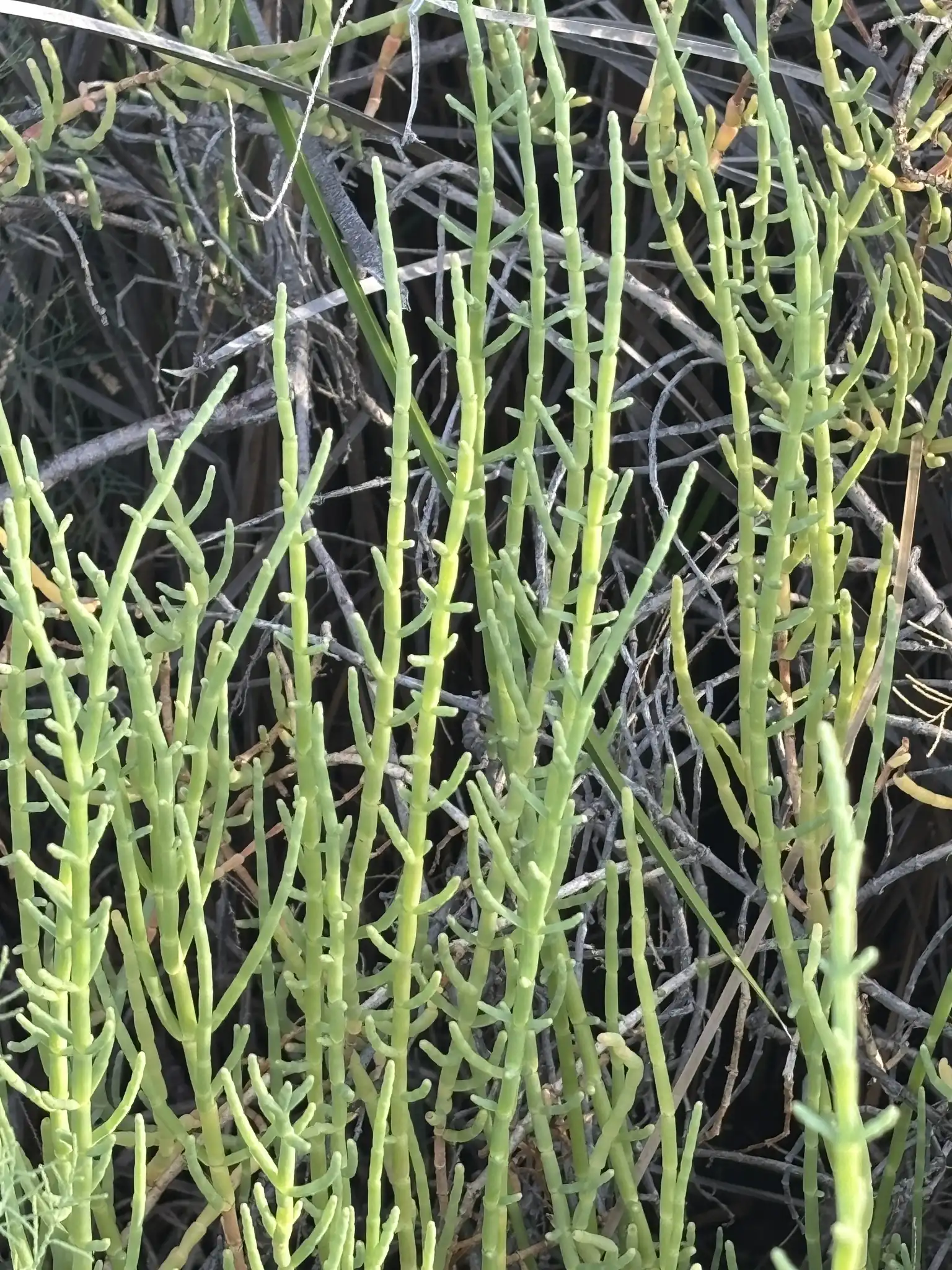
Salicornia pacifica is a low-growing, succulent perennial subshrub native to the saltwater marshes and alkaline flats of western North America. The plant is characterized by jointed, fleshy stems with leaves reduced to tiny scale-like structures, giving it a completely leafless appearance.
This halophyte possesses exceptional salt tolerance, sequestering excess sodium in its terminal segments which turn brilliant shades of red, orange, or purple before dropping off. In late summer, it produces tiny, wind-pollinated flowers grouped in inconspicuous terminal spikes.
Uses & Benefits:
Essentials
At a Glance
Plant Type
Perennial
Height
28"
Width
120"
Light
Full Sun
Zones
7, 8, 9, 10
Water
High
Humidity
High
Lifespan
Perennial
Native To
North America
Toxicity
Non-toxic
Bloom period
Summer – Fall
In flower about 6 months of the year
Planting
How to Grow
- Select a planting site in full sun with heavy clay, loam, or sandy soil that mimics a coastal or alkaline wetland.
- Ensure the planting area has adequate surface drainage or experiences cyclic wet-and-dry periods to prevent stagnant water pooling.
- Water with saline water periodically to maintain the plant's natural succulent habit and compact growth form.
- Avoid applying nitrogen-rich fertilizers, which disrupt the plant's salt-balancing mechanisms and weaken stem structure.
Pro Tip
Avoid irrigating with fresh water or applying standard fertilizers, which strip the stems of their salty flavor, cause weak, floppy growth, and prevent the development of the vivid red fall coloration.
Keep It Thriving
Care Guide
Do
- Grow in full sun to ensure optimal growth and vivid autumn coloration.
- Provide moist to wet soil conditions with adequate surface drainage.
- Allow the soil to dry slightly between watering cycles if not subjected to natural tides.
Don't
- Do not apply chemical fertilizers, as the plant relies on natural mineral ions.
- Do not allow the plant to sit in deep, stagnant, non-circulating water.
- Avoid heavy foot traffic, which easily crushes the succulent mats into bare mud.
Seasonal Care Calendar
| Task | Jan | Feb | Mar | Apr | May | Jun | Jul | Aug | Sep | Oct | Nov | Dec |
|---|---|---|---|---|---|---|---|---|---|---|---|---|
| Harvest | ||||||||||||
| Pest Check | ||||||||||||
| Plant | ||||||||||||
| Prune |
Watch Out For
Pests & Diseases
Common Pests
Common Diseases
In the Garden
Landscape Uses & Companions
Landscape Uses
Companion Plants
Multiply
Propagation Methods
Good to Know
Common Questions
Pickleweed questions
What zones can Pickleweed grow in?
Pickleweed is hardy in USDA Zones 7–10. Inside that range it survives winter in the ground; outside it, grow it as an annual or a container plant you protect.
Is Pickleweed deer resistant?
Not reliably. Deer may browse Pickleweed, especially tender spring growth — plan on repellents or fencing where pressure is high.
When does Pickleweed bloom?
Pickleweed typically blooms in summer through fall. Exact timing shifts a week or two with your zone — Sow's bloom calendar maps it to your garden.
Does Pickleweed need full sun?
Pickleweed does best in full sun (6+ hours).
Is Pickleweed drought tolerant?
Yes — once established (usually after the first full season), Pickleweed handles dry spells with minimal watering. Water deeply its first year to build the root system that makes that possible.
Keep exploring
Explore the genus
Hardy in your zone?
Grow Pickleweed with confidence
See it in a design of your actual yard, get zone-matched care reminders, and track it season by season in your garden journal.