The Story
Plant Bio
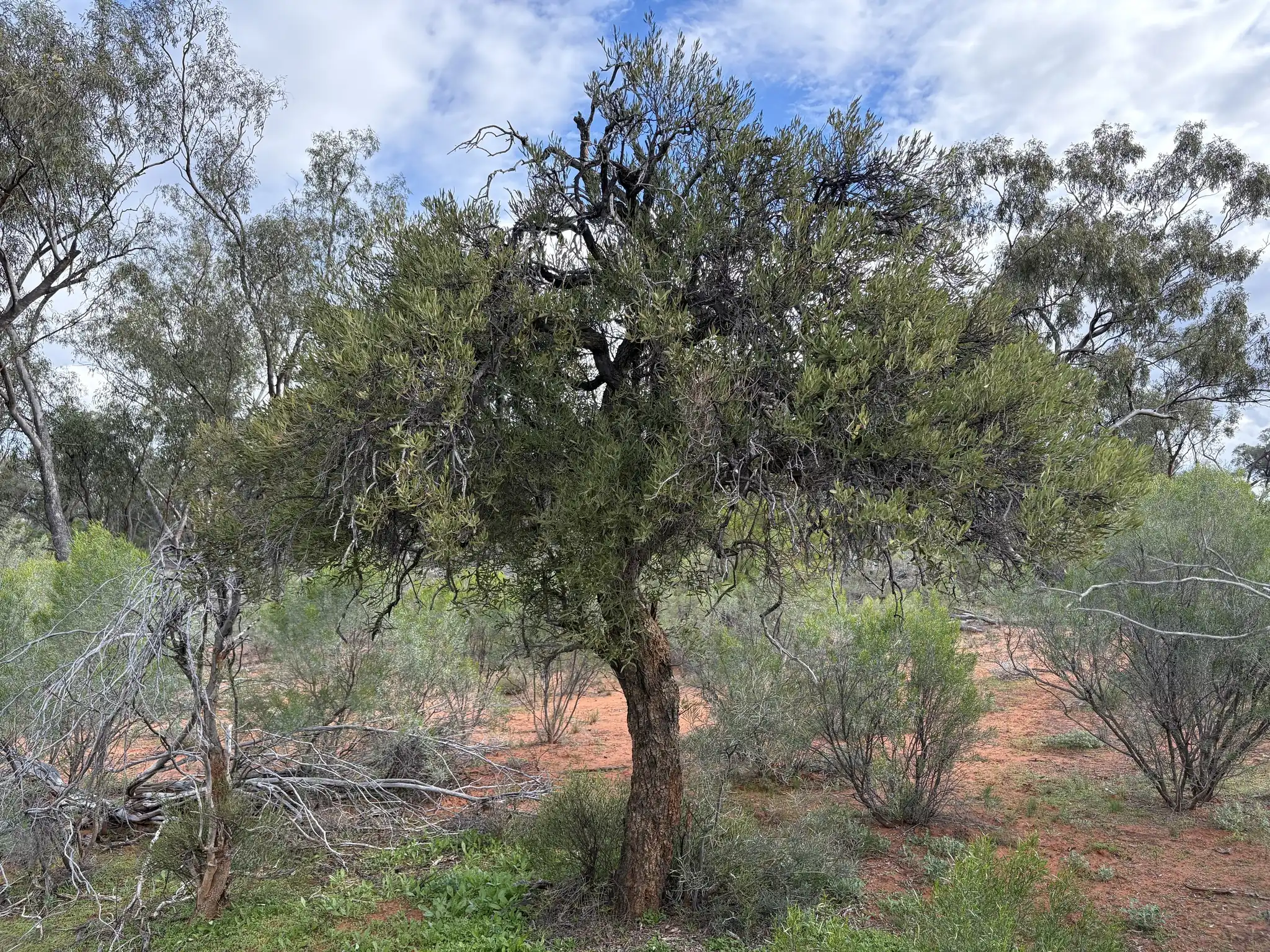
Capparis mitchellii, the wild orange, is a dense, rounded Australian tree or tall shrub reaching sixteen to twenty-six feet in height, with grayish-green leaves that start out densely yellowish-pubescent. The juvenile stage is heavily armed and scrambling, featuring sharp straight or recurved spines that partially persist into maturity.
The large, showy white to creamy-yellow flowers feature a prominent central gynophore and a dramatic cluster of long, spreading stamens. These blooms appear from spring through late summer, followed by large, edible green fruits with a sweet pulp.
Uses & Benefits:
Essentials
At a Glance
Plant Type
Shrub
Height
315"
Width
236"
Light
Full Sun
Zones
9, 10
Water
Low
Humidity
Low
Lifespan
Long-lived
Native To
Australia
Toxicity
Unripe fruit and seeds are harmful if ingested
Bloom period
Spring – Late summer
In flower about 6 months of the year
Planting
How to Grow
- Select a deep container with multiple drainage holes to accommodate the taproot.
- Fill the container with a highly permeable, sandy potting mix amended with coarse grit.
- Position the container in a location that receives at least six hours of direct sunlight daily.
- Water thoroughly when the potting medium dries out completely, avoiding any standing water.
Pro Tip
Prune lightly to shape the canopy but avoid cutting back radically into old, leafless wood, which fails to regenerate reliably.
Keep It Thriving
Care Guide
Do
- Provide maximum sunlight to encourage flowering.
- Use a highly free-draining potting mix to prevent root rot.
- Wear heavy leather gloves when handling the thorny juvenile branches.
Don't
- Do not allow the roots to sit in waterlogged soil.
- Do not prune heavily into old, bare wood.
- Do not consume unripe fruits or seeds.
Seasonal Care Calendar
| Task | Jan | Feb | Mar | Apr | May | Jun | Jul | Aug | Sep | Oct | Nov | Dec |
|---|---|---|---|---|---|---|---|---|---|---|---|---|
| Fertilize | ||||||||||||
| Pest Check | ||||||||||||
| Prune | ||||||||||||
| Winter Prep |
Watch Out For
Pests & Diseases
Common Pests
Common Diseases
In the Garden
Landscape Uses & Companions
Landscape Uses
Companion Plants
Multiply
Propagation Methods
Good to Know
Common Questions
Wild Orange questions
What zones can Wild Orange grow in?
Wild Orange is hardy in USDA Zones 9–10. Inside that range it survives winter in the ground; outside it, grow it as an annual or a container plant you protect.
When does Wild Orange bloom?
Wild Orange typically blooms in spring through late summer. Exact timing shifts a week or two with your zone — Sow's bloom calendar maps it to your garden.
Does Wild Orange need full sun?
Wild Orange does best in full sun (6+ hours).
Is Wild Orange drought tolerant?
Yes — once established (usually after the first full season), Wild Orange handles dry spells with minimal watering. Water deeply its first year to build the root system that makes that possible.
Keep exploring
Explore the genus
Hardy in your zone?
Grow Wild Orange with confidence
See it in a design of your actual yard, get zone-matched care reminders, and track it season by season in your garden journal.