The Story
Plant Bio
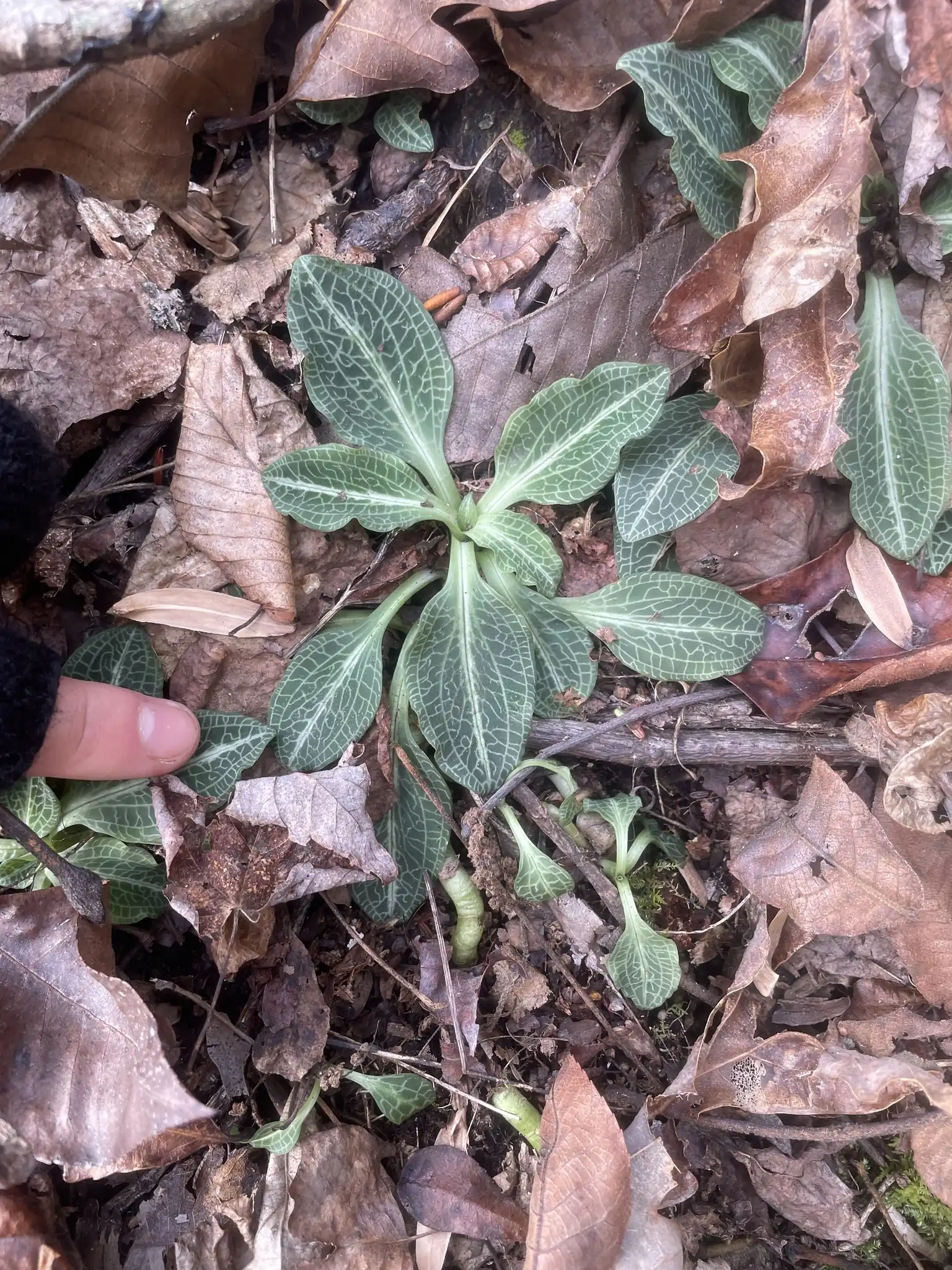
Goodyera pubescens, known as downy rattlesnake plantain, is an evergreen terrestrial orchid native to the dry-mesic forests of eastern North America. It forms low-growing basal rosettes of dark blue-green leaves that persist through the winter.
This species is distinguished by its striking leaf variegation, featuring an intricate network of silvery-white veins and a prominent central stripe. In midsummer, it sends up a heavily pubescent, leafless stalk bearing a dense, cylindrical spike of small, cup-shaped white flowers.
Uses & Benefits:
Essentials
At a Glance
Plant Type
Perennial
Height
20"
Width
12"
Light
Partial Sun, Shade
Zones
4, 5, 6, 7, 8, 9
Water
Medium
Humidity
Medium to High
Lifespan
Perennial
Native To
Eastern North America
Toxicity
Non-toxic
Bloom period
Summer
In flower about 3 months of the year
Planting
How to Grow
- Select a fully shaded site with loose, well-draining, acidic soil rich in organic matter or leaf mold.
- Plant the shallow rhizomes just below the soil surface, ensuring the basal rosette sits flush with the ground level.
- Apply a light mulch of pine needles or oak leaves to retain moisture without smothering the evergreen foliage.
- Water regularly to keep the soil consistently damp but never waterlogged, especially during the first growing season.
Pro Tip
Establish this orchid in highly acidic, gritty humus and leave the surrounding leaf litter intact to support the essential mycorrhizal fungi required for its survival.
Keep It Thriving
Care Guide
Do
- Maintain a light layer of natural leaf mold to foster symbiotic soil fungi.
- Provide sharp, excellent drainage to prevent crown and root rot.
- Protect the evergreen rosettes from heavy winter debris and smothering leaves.
Don't
- Never collect plants from the wild, as they rarely survive transplanting.
- Do not apply heavy chemical fertilizers, which disrupt the plant's mycorrhizal relationships.
- Do not prune or cut back the evergreen foliage.
Seasonal Care Calendar
| Task | Jan | Feb | Mar | Apr | May | Jun | Jul | Aug | Sep | Oct | Nov | Dec |
|---|---|---|---|---|---|---|---|---|---|---|---|---|
| Deadhead | ||||||||||||
| Mulch | ||||||||||||
| Pest Check | ||||||||||||
| Propagate |
Watch Out For
Pests & Diseases
Common Pests
Common Diseases
In the Garden
Landscape Uses & Companions
Landscape Uses
Companion Plants
Multiply
Propagation Methods
Good to Know
Common Questions
Downy rattlesnake plantain questions
What zones can Downy rattlesnake plantain grow in?
Downy rattlesnake plantain is hardy in USDA Zones 4–9. Inside that range it survives winter in the ground; outside it, grow it as an annual or a container plant you protect.
Is Downy rattlesnake plantain deer resistant?
Not reliably. Deer may browse Downy rattlesnake plantain, especially tender spring growth — plan on repellents or fencing where pressure is high.
When does Downy rattlesnake plantain bloom?
Downy rattlesnake plantain typically blooms in summer through summer. Exact timing shifts a week or two with your zone — Sow's bloom calendar maps it to your garden.
Does Downy rattlesnake plantain need full sun?
Downy rattlesnake plantain does best in part shade.
Keep exploring
Explore the genus
Grow Downy rattlesnake plantain with confidence
See it in a design of your actual yard, get zone-matched care reminders, and track it season by season in your garden journal.