The Story
Plant Bio
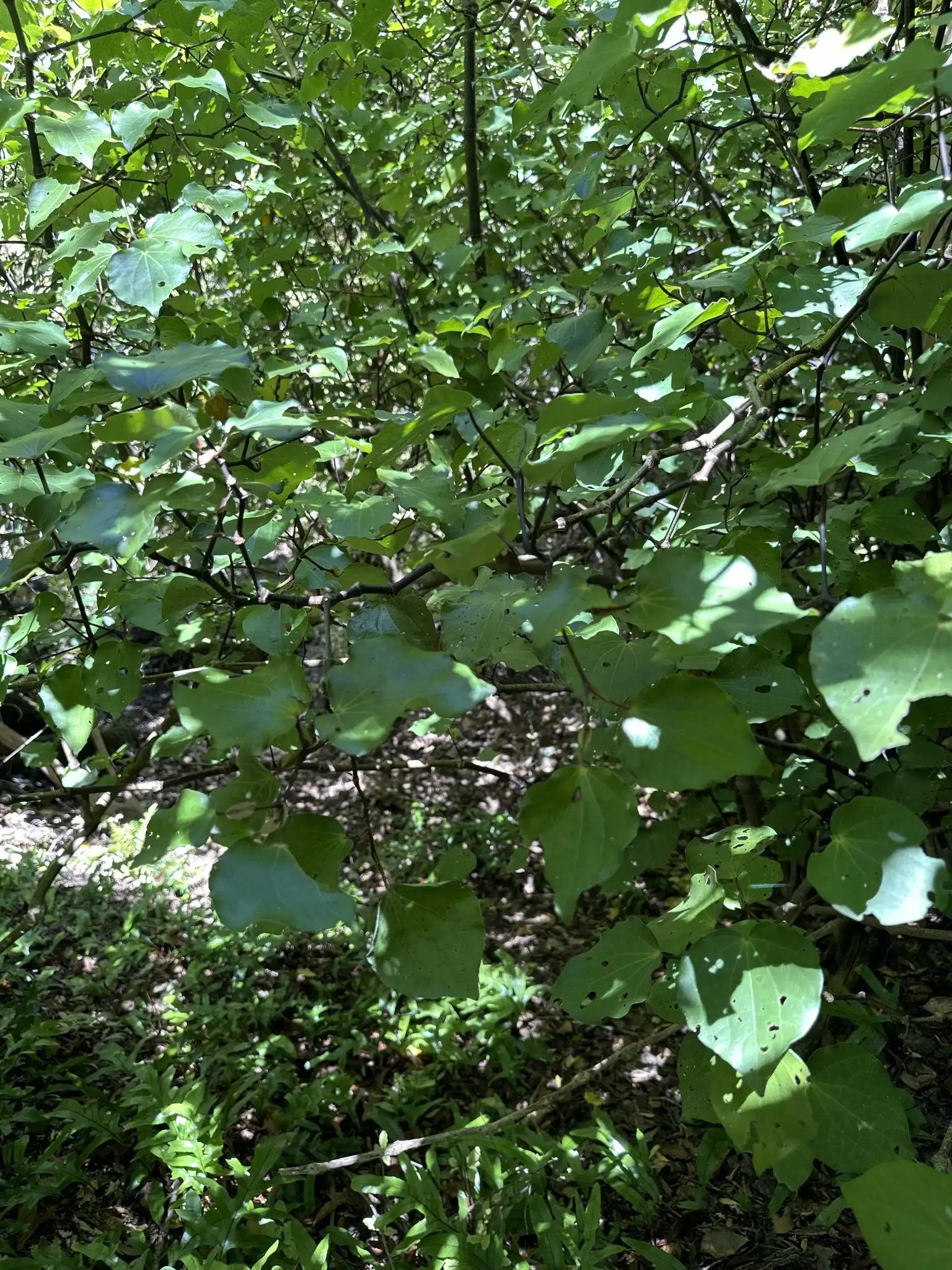
Piper excelsum, known as kawakawa, is an evergreen shrub native to the southwest Pacific, characterized by its distinctive swollen, knobbly stem joints and zigzag branching. The glossy, heart-shaped leaves feature prominent palmate venation and are often accentuated by deep wine-red to purple-black pigmentation on the stems and veins.
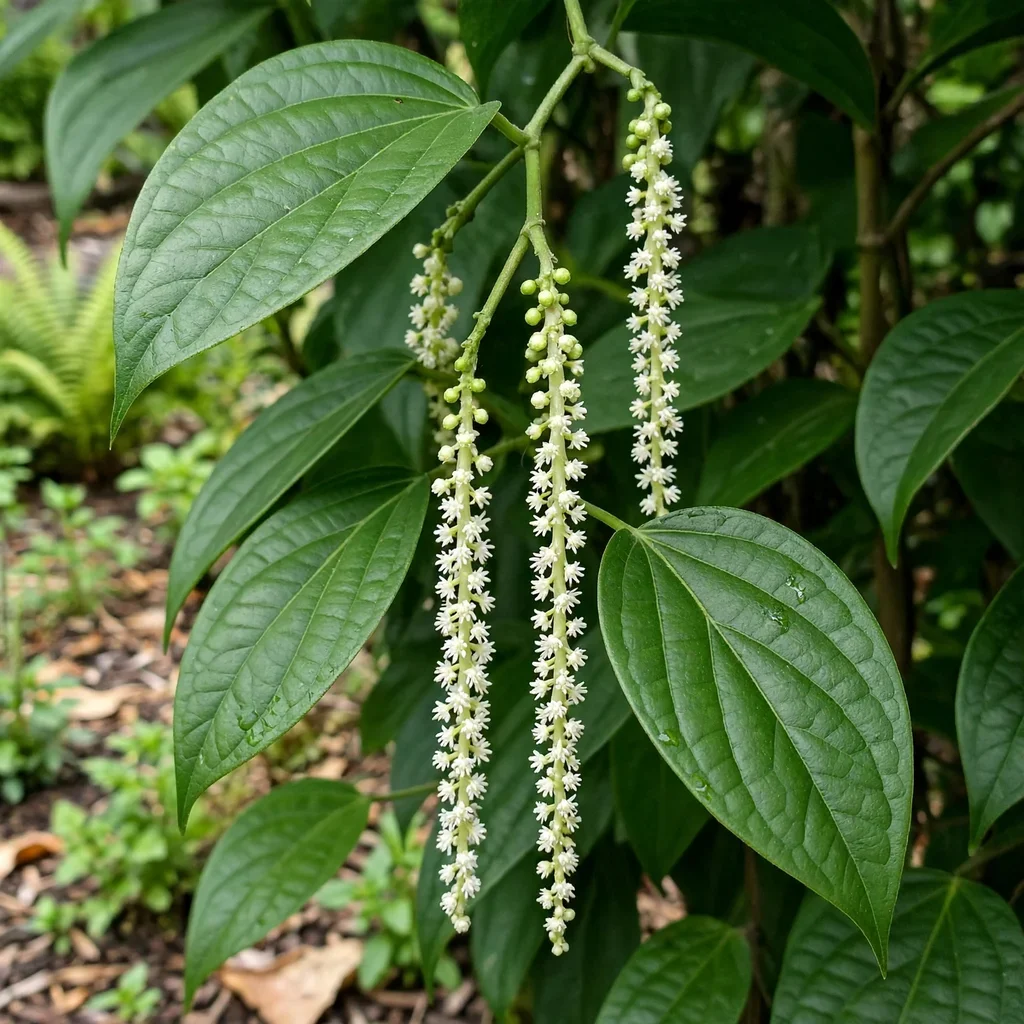
This dioecious species produces slender, upright, candle-like flower spikes that emerge from winter into spring, with female plants subsequently developing small, fleshy orange drupes. The dense, rounded habit and bold, aromatic foliage make it an exceptional architectural accent for shaded, frost-free gardens or conservatories.
Uses & Benefits:
Essentials
At a Glance
Plant Type
Shrub
Height
236"
Width
118"
Light
Partial Sun, Shade
Zones
9, 10
Water
Moderate
Humidity
Moderate to high
Lifespan
Long-lived
Native To
New Zealand, Chatham Islands, Kermadec Islands, Norfolk Island, Lord Howe Island
Toxicity
Non-toxic
Bloom period
Winter – Spring
In flower about 6 months of the year
Planting
How to Grow
- Select a planting site in partial to full shade with moist, humus-rich, and exceptionally well-draining soil.
- Dig a hole twice the width of the root ball and amend heavy soils with organic matter to improve drainage.
- Set the plant at the same depth as it was in the container, backfill, and water thoroughly to settle the soil.
- Apply a thick layer of organic mulch around the base to retain moisture and protect the shallow root system.
Pro Tip
Prune annually after fruiting to maintain a compact shape, taking care not to cut back into the smooth, leafless brown wood below the nodes where dormant buds will fail to break.
Keep It Thriving
Care Guide
Do
- Water regularly to maintain consistent soil moisture, especially during dry summer spells.
- Apply a light application of balanced organic fertilizer in early spring as new growth begins.
- Provide wind protection in coastal areas to prevent physical damage to the large, fleshy leaves.
Don't
- Do not allow the soil to become waterlogged, as wet, heavy soils rapidly induce root rot.
- Do not cut back into old, smooth, leafless wood when pruning, as it will not regenerate.
- Do not expose young plants to frost, which easily damages the tender new growth.
Seasonal Care Calendar
| Task | Jan | Feb | Mar | Apr | May | Jun | Jul | Aug | Sep | Oct | Nov | Dec |
|---|---|---|---|---|---|---|---|---|---|---|---|---|
| Fertilize | ||||||||||||
| Mulch | ||||||||||||
| Pest Check | ||||||||||||
| Prune | ||||||||||||
| Winter Prep |
Watch Out For
Pests & Diseases
Common Pests
Common Diseases
In the Garden
Landscape Uses & Companions
Landscape Uses
Companion Plants
Multiply
Propagation Methods
Good to Know
Common Questions
Kawakawa questions
What zones can Kawakawa grow in?
Kawakawa is hardy in USDA Zones 9–10. Inside that range it survives winter in the ground; outside it, grow it as an annual or a container plant you protect.
Is Kawakawa deer resistant?
Not reliably. Deer may browse Kawakawa, especially tender spring growth — plan on repellents or fencing where pressure is high.
When does Kawakawa bloom?
Kawakawa typically blooms in winter through spring. Exact timing shifts a week or two with your zone — Sow's bloom calendar maps it to your garden.
Does Kawakawa need full sun?
Kawakawa does best in part shade.
Is Kawakawa drought tolerant?
Yes — once established (usually after the first full season), Kawakawa handles dry spells with minimal watering. Water deeply its first year to build the root system that makes that possible.
More Piper to compare
Keep exploring
Explore the genus
Hardy in your zone?
Grow Kawakawa with confidence
See it in a design of your actual yard, get zone-matched care reminders, and track it season by season in your garden journal.