The Story
Plant Bio
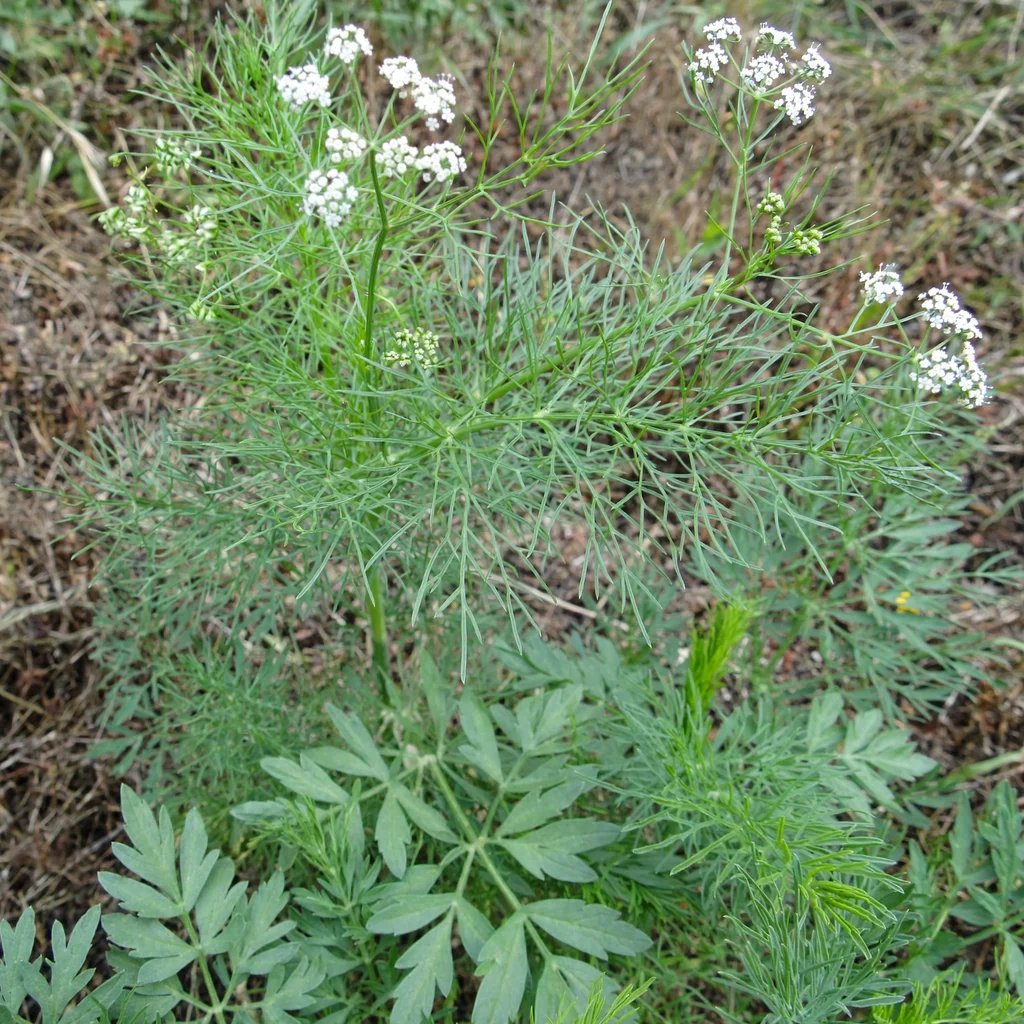
Pimpinella anisum, commonly known as anise, is a dainty, erect annual herb native to the Eastern Mediterranean and Southwest Asia. It features slender, branching stems clothed in light green foliage that transitions from rounded basal leaves to feathery, finely divided upper segments, culminating in flat-topped clusters of tiny white flowers.
This species is primarily cultivated for its aromatic seeds and foliage, which carry a distinct licorice-like flavor profile. The delicate, compound umbels attract a wide range of beneficial predatory wasps and native pollinators to the summer garden.
Uses & Benefits:
Essentials
At a Glance
Plant Type
Annual
Height
24"
Width
12"
Light
Full Sun
Zones
4, 5, 6, 7, 8, 9
Water
Moderate
Humidity
Moderate
Lifespan
Annual
Native To
Eastern Mediterranean, Southwest Asia
Toxicity
Skin Irritant
Bloom period
Summer
In flower about 3 months of the year
Planting
How to Grow
- Select a planting site in full sun with light, fertile, and exceptionally well-drained sandy or loamy soil.
- Sow seeds directly into the garden in spring after all danger of frost has passed, planting them one-quarter inch deep.
- Keep the soil consistently moist during the germination and early establishment phases.
- Thin seedlings to stand approximately eight to ten inches apart to allow adequate air circulation.
Pro Tip
Direct-sow seeds exactly where they are to grow; the delicate taproot does not tolerate transplanting and attempts to move seedlings will stunt or kill the plant.
Keep It Thriving
Care Guide
Do
- Water regularly during the initial establishment period to support steady growth.
- Ensure the planting site has high drainage to prevent seedling damping-off and root rot.
- Apply balanced fertilizers sparingly to maintain the concentration of aromatic essential oils.
Don't
- Do not attempt to transplant nursery-grown seedlings or propagate via root divisions.
- Avoid heavy nitrogen applications, which produce lush green foliage growth at the expense of essential oil accumulation.
- Do not overwater or plant in heavy, waterlogged soils where roots will quickly decay.
Seasonal Care Calendar
| Task | Jan | Feb | Mar | Apr | May | Jun | Jul | Aug | Sep | Oct | Nov | Dec |
|---|---|---|---|---|---|---|---|---|---|---|---|---|
| Fertilize | ||||||||||||
| Harvest | ||||||||||||
| Pest Check | ||||||||||||
| Plant |
Watch Out For
Pests & Diseases
Common Pests
Common Diseases
In the Garden
Landscape Uses & Companions
Landscape Uses
Companion Plants
Multiply
Propagation Methods
Good to Know
Common Questions
Anise questions
What zones can Anise grow in?
Anise is hardy in USDA Zones 4–9. Inside that range it survives winter in the ground; outside it, grow it as an annual or a container plant you protect.
Is Anise deer resistant?
Not reliably. Deer may browse Anise, especially tender spring growth — plan on repellents or fencing where pressure is high.
When does Anise bloom?
Anise typically blooms in summer through summer. Exact timing shifts a week or two with your zone — Sow's bloom calendar maps it to your garden.
Does Anise need full sun?
Anise does best in full sun (6+ hours).
Is Anise drought tolerant?
Yes — once established (usually after the first full season), Anise handles dry spells with minimal watering. Water deeply its first year to build the root system that makes that possible.
Keep exploring
Explore the genus
Grow Anise with confidence
See it in a design of your actual yard, get zone-matched care reminders, and track it season by season in your garden journal.