The Story
Plant Bio
Dillenia is a genus of warm-climate evergreen trees and shrubs known for their large, prominent foliage and showy, multi-stamened flowers. Dillenia alata, native to tropical coastal rainforests, forms a small to medium tree with a dense, rounded canopy and a characteristically crooked or fluted trunk.
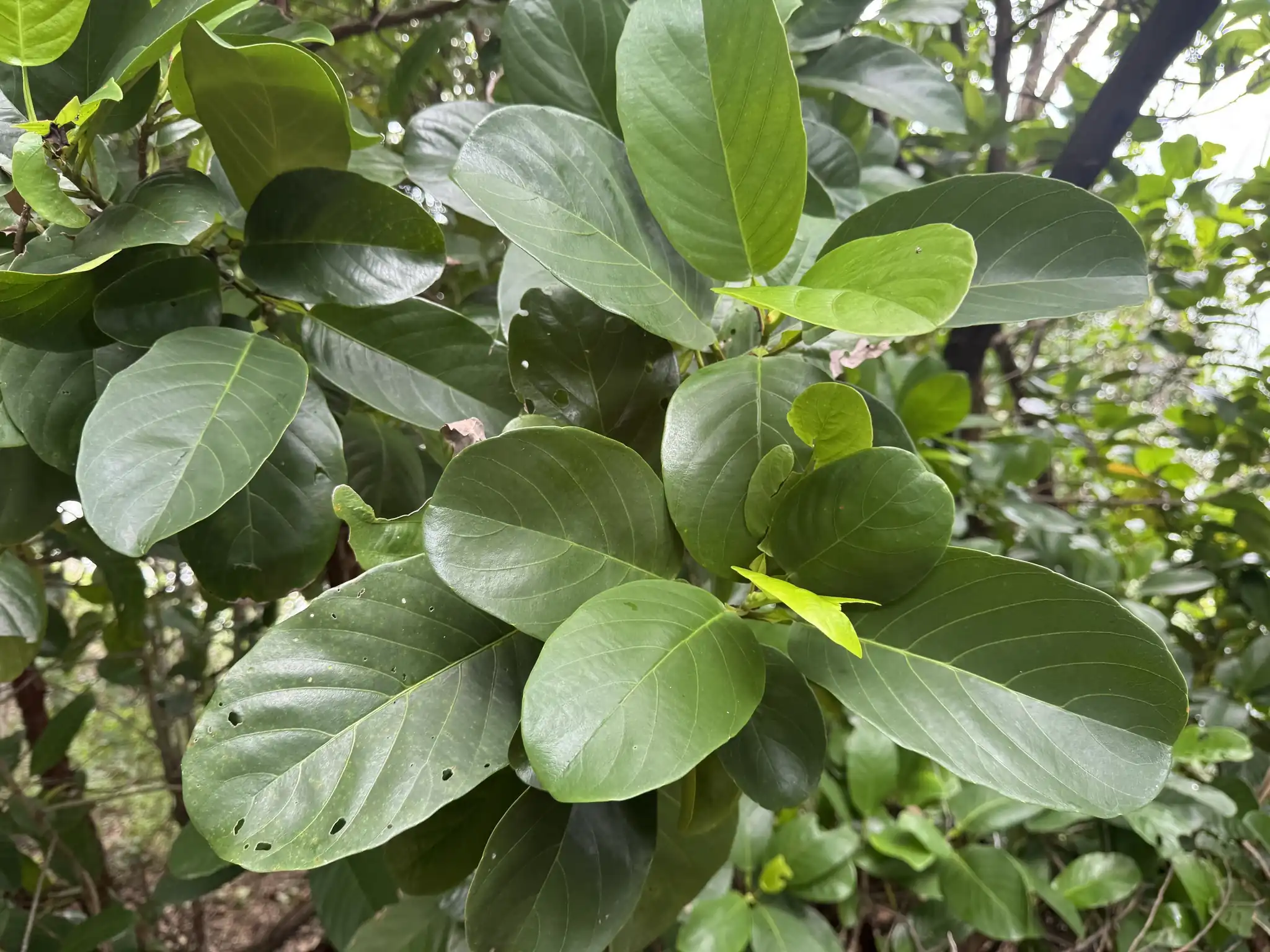
This species is distinguished by its papery, peeling coppery-red bark and glossy dark green leaves with winged petioles that sheath the stems. The bright yellow flowers open for just one day, contrasting sharply with their central cluster of pink to reddish-pink styles and stamens.
Uses & Benefits:
Essentials
At a Glance
Plant Type
Tree
Height
394"
Width
315"
Light
Full Sun, Partial Sun
Zones
10
Water
Consistent moisture
Humidity
High
Lifespan
Multi-decade
Native To
New Guinea, Indonesia, Malaysia, northern Australia
Toxicity
Non-toxic
Bloom period
Late spring – Summer
In flower about 4 months of the year
Planting
How to Grow
- Select a planting site in full sun to partial shade with humus-rich, sandy or loamy soil.
- Dig a hole twice the width of the root ball and set the plant at its original container depth.
- Water thoroughly upon planting and maintain consistent soil moisture, especially during dry spells.
- Apply a balanced, slow-release organic fertilizer sparingly in early spring to support new growth.
Pro Tip
Prune lightly only after the summer flowering cycle; cutting harshly into old, leafless wood results in sluggish and patchy epicormic regrowth.
Keep It Thriving
Care Guide
Do
- Keep the soil consistently moist, especially during the active summer growing season.
- Provide high atmospheric humidity and shelter from cold, drying winds.
- Prune lightly after flowering to maintain shape and clear lower branches if desired.
Don't
- Do not allow container specimens to sit in stagnant, heavy potting mixes that lack drainage.
- Never prune heavily into old, bare wood as epicormic budding is highly sluggish.
- Do not expose the plant to freezing temperatures or frost, which will cause severe damage.
Seasonal Care Calendar
| Task | Jan | Feb | Mar | Apr | May | Jun | Jul | Aug | Sep | Oct | Nov | Dec |
|---|---|---|---|---|---|---|---|---|---|---|---|---|
| Fertilize | ||||||||||||
| Pest Check | ||||||||||||
| Prune | ||||||||||||
| Winter Prep |
Watch Out For
Pests & Diseases
Common Pests
Common Diseases
In the Garden
Landscape Uses & Companions
Landscape Uses
Companion Plants
Multiply
Propagation Methods
Good to Know
Common Questions
Golden Guinea Tree questions
What zones can Golden Guinea Tree grow in?
Golden Guinea Tree is hardy in USDA Zone 10. Inside that range it survives winter in the ground; outside it, grow it as an annual or a container plant you protect.
When does Golden Guinea Tree bloom?
Golden Guinea Tree typically blooms in late spring through summer. Exact timing shifts a week or two with your zone — Sow's bloom calendar maps it to your garden.
Does Golden Guinea Tree need full sun?
Golden Guinea Tree does best in full sun to part shade. In hot climates, afternoon shade keeps blooms fresher longer.
Keep exploring
Explore the genus
Hardy in your zone?
Grow Golden Guinea Tree with confidence
See it in a design of your actual yard, get zone-matched care reminders, and track it season by season in your garden journal.