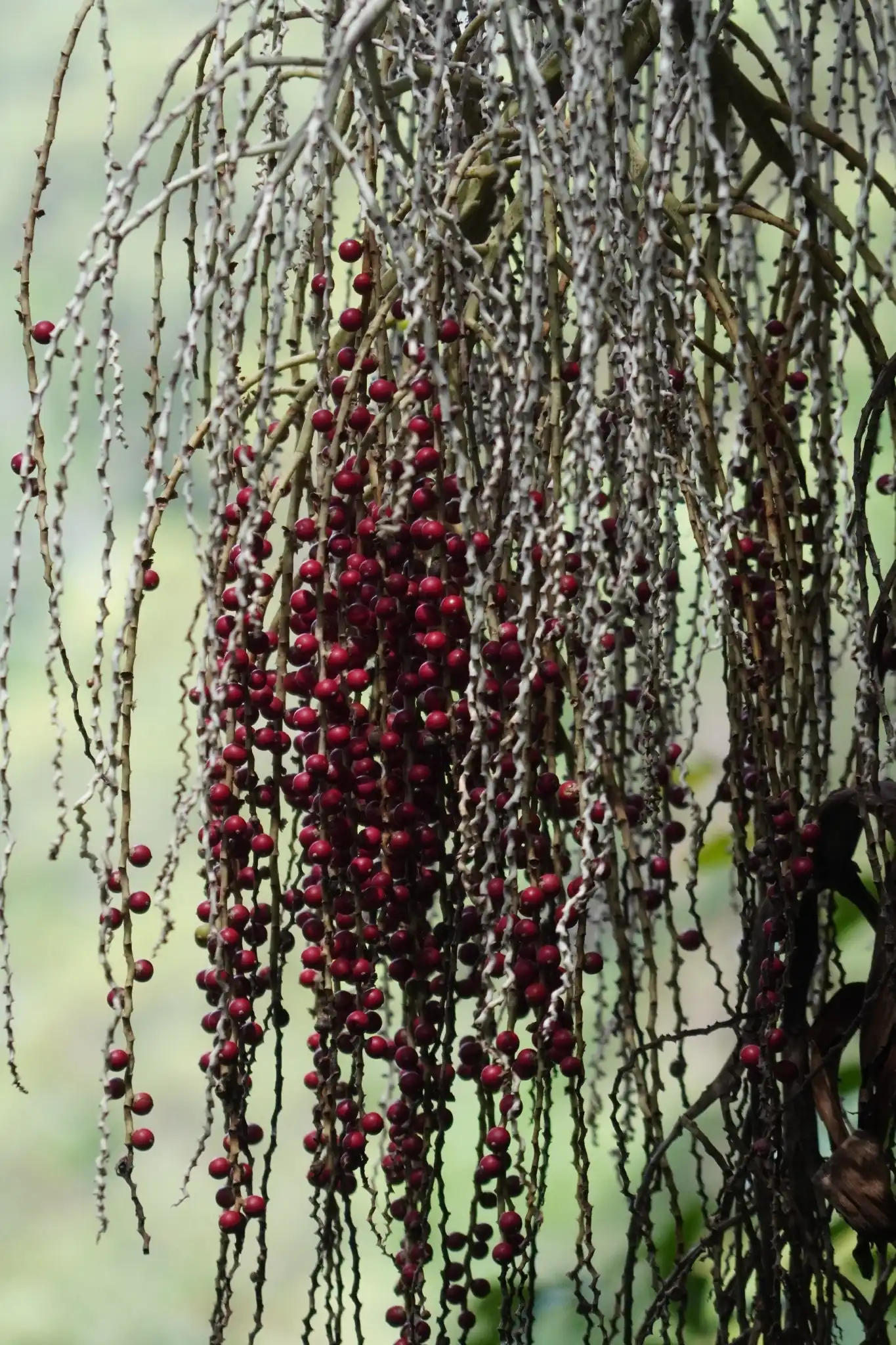
The Story
Plant Bio
Archontophoenix cunninghamiana is a single-stemmed, erect palm featuring a smooth, ringed gray trunk with a swollen base and a bright green crownshaft. The pinnately compound fronds reach up to thirteen feet in length, bearing arching leaflets that emerge bright green.
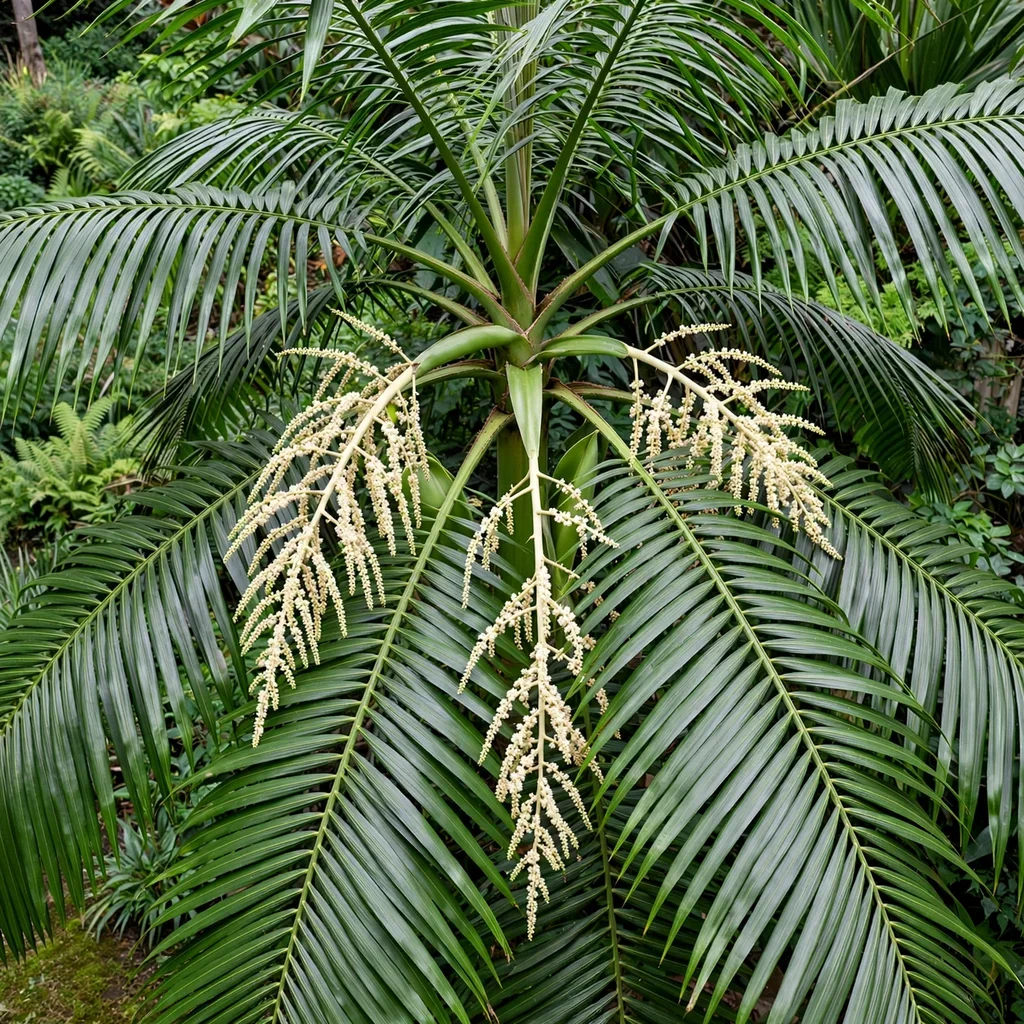
Large, branching inflorescences emerge from below the crownshaft, producing pendent spikes of purplish to pinkish flowers during spring and summer. The palm is highly dependent on consistent moisture and is susceptible to foliage burn or death from temperatures below 28 degrees Fahrenheit.
Uses & Benefits:
Essentials
At a Glance
Plant Type
Tropical
Height
866"
Width
177"
Light
Full Sun, Partial Sun, Shade
Zones
9, 10
Water
High
Humidity
High
Native To
Australia
Toxicity
Non-toxic
Bloom period
Spring – Summer
In flower about 6 months of the year
Marketplace
Where to Buy
Shipping costs Year-round shipping Free shipping
Planting
How to Grow
- Select a planting site with rich, organic, loamy soil that retains moisture but drains well.
- Provide partial shade for young specimens, gradually transitioning them to full sun only as they mature.
- Water regularly to ensure the soil never dries out, especially during warm summer months.
- Apply a balanced, slow-release palm fertilizer containing magnesium, manganese, and iron three times per year during spring and summer.
Pro Tip
Never perform a 'hurricane cut' by removing green fronds above the horizontal plane, as this starves the palm and exposes the green crownshaft to fatal fungal pathogens.
Keep It Thriving
Care Guide
Do
- Water consistently to maintain even soil moisture.
- Apply a slow-release palm fertilizer with micronutrients during the growing season.
- Allow dead fronds and spent inflorescences to drop naturally before removing them.
Don't
- Do not cut into green, living fronds or the crownshaft.
- Do not allow the soil to dry out completely.
- Do not prune the palm into a 'hurricane cut' shape.
Seasonal Care Calendar
| Task | Jan | Feb | Mar | Apr | May | Jun | Jul | Aug | Sep | Oct | Nov | Dec |
|---|---|---|---|---|---|---|---|---|---|---|---|---|
| Fertilize | ||||||||||||
| Pest Check | ||||||||||||
| Prune | ||||||||||||
| Winter Prep |
Watch Out For
Pests & Diseases
Common Pests
Common Diseases
In the Garden
Landscape Uses & Companions
Landscape Uses
Multiply
Propagation Methods
Good to Know
Common Questions
King Palm questions
What zones can King Palm grow in?
King Palm is hardy in USDA Zones 9–10. Inside that range it survives winter in the ground; outside it, grow it as an annual or a container plant you protect.
When does King Palm bloom?
King Palm typically blooms in spring through summer. Exact timing shifts a week or two with your zone — Sow's bloom calendar maps it to your garden.
Does King Palm need full sun?
King Palm does best in full sun to part shade. In hot climates, afternoon shade keeps blooms fresher longer.
More Archontophoenix to compare
Keep exploring
Explore the genus
Hardy in your zone?
Grow King Palm with confidence
See it in a design of your actual yard, get zone-matched care reminders, and track it season by season in your garden journal.