The Story
Plant Bio
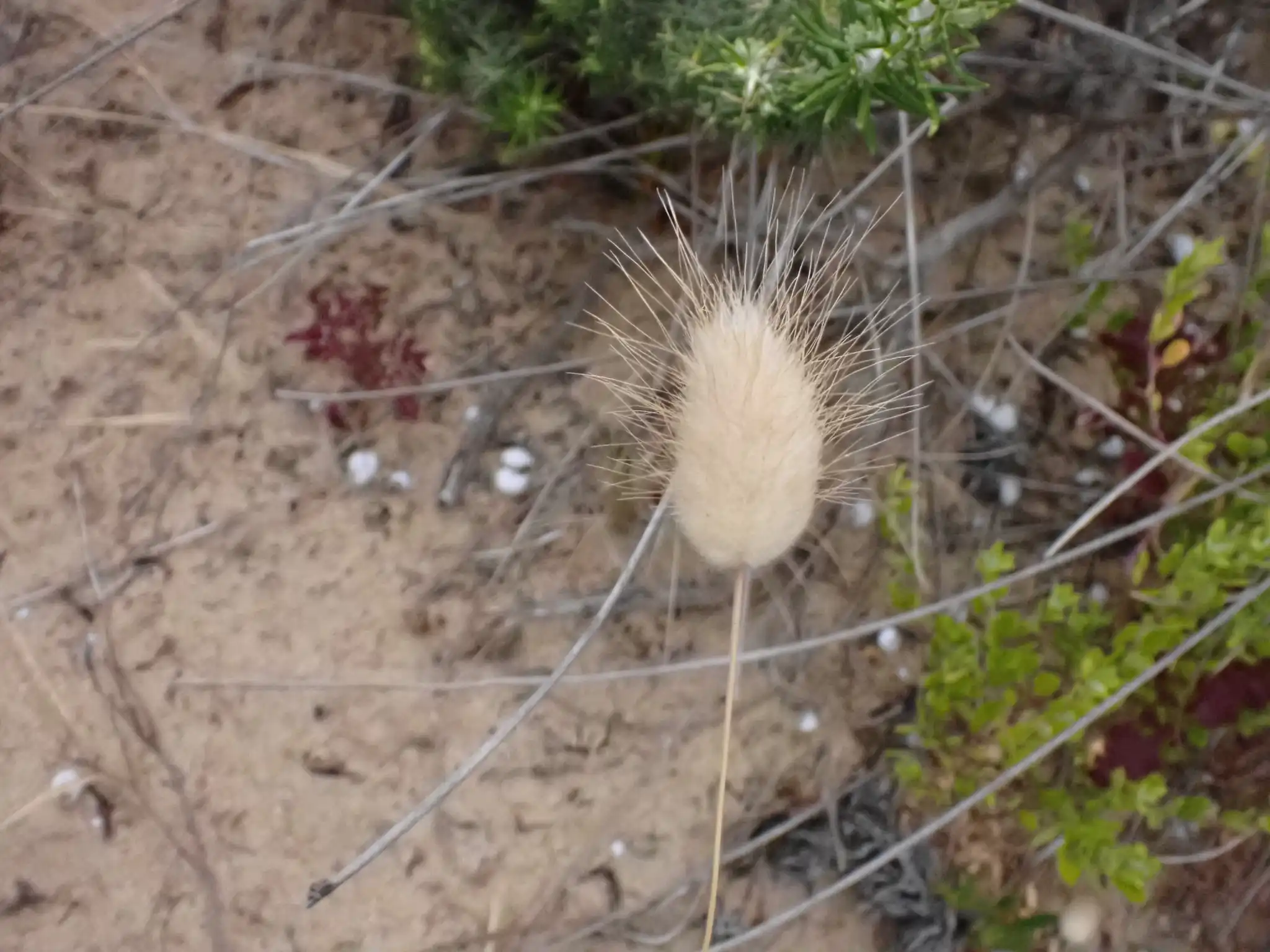
Lagurus ovatus, commonly known as hare's-tail grass, is a clump-forming annual grass distinguished by its pale green, softly pubescent linear foliage. The plant produces dense, oval, spike-like panicles that emerge pale green in summer before drying to a soft, creamy-buff color with long, silky awns.
This species is highly valued for its tactile, bunny-ear-like seed heads that persist on the stems well into fall. It thrives in poor, sandy soils where other ornamental grasses struggle, making it an excellent choice for coastal gardens and dried floral arrangements.
Uses & Benefits:
Essentials
At a Glance
Plant Type
Grass
Height
24"
Width
12"
Light
Full Sun
Zones
4, 5, 6, 7, 8, 9, 10
Water
Low
Humidity
Low
Lifespan
Annual
Native To
Mediterranean Basin
Toxicity
Non-toxic
Bloom period
Summer – Autumn
In flower about 6 months of the year
Planting
How to Grow
- Sow seeds directly into well-drained, sandy soil in early spring after the last frost.
- Press seeds lightly into the soil surface, as they require light to germinate.
- Water sparingly to keep the soil barely moist until seedlings emerge.
- Thin young plants to stand four to six inches apart to allow room for clumping.
Pro Tip
Grow this annual in lean, sandy soil and withhold supplemental fertilizer; high nutrient levels cause the stems to become weak and flop under the weight of the seed heads.
Keep It Thriving
Care Guide
Do
- Plant in full sun to ensure strong, upright stem development.
- Allow the soil to dry out completely between waterings once established.
- Harvest seed heads just as they turn cream-colored for use in dried arrangements.
Don't
- Do not apply nitrogen-rich fertilizers, which trigger weak, floppy growth.
- Do not overwater or plant in heavy clay soils prone to waterlogging.
- Do not attempt to prune or cut back the plant to stimulate new growth, as it is a strict annual.
Seasonal Care Calendar
| Task | Jan | Feb | Mar | Apr | May | Jun | Jul | Aug | Sep | Oct | Nov | Dec |
|---|---|---|---|---|---|---|---|---|---|---|---|---|
| Harvest | ||||||||||||
| Plant | ||||||||||||
| Propagate | ||||||||||||
| Spring Cleanup |
Watch Out For
Pests & Diseases
Common Pests
Common Diseases
In the Garden
Landscape Uses & Companions
Landscape Uses
Companion Plants
Multiply
Propagation Methods
Good to Know
Common Questions
Hare's-Tail Grass questions
What zones can Hare's-Tail Grass grow in?
Hare's-Tail Grass is hardy in USDA Zones 4–10. Inside that range it survives winter in the ground; outside it, grow it as an annual or a container plant you protect.
When does Hare's-Tail Grass bloom?
Hare's-Tail Grass typically blooms in summer through autumn. Exact timing shifts a week or two with your zone — Sow's bloom calendar maps it to your garden.
Does Hare's-Tail Grass need full sun?
Hare's-Tail Grass does best in full sun (6+ hours).
Is Hare's-Tail Grass drought tolerant?
Yes — once established (usually after the first full season), Hare's-Tail Grass handles dry spells with minimal watering. Water deeply its first year to build the root system that makes that possible.
Keep exploring
Explore the genus
Grow Hare's-Tail Grass with confidence
See it in a design of your actual yard, get zone-matched care reminders, and track it season by season in your garden journal.