The Story
Plant Bio
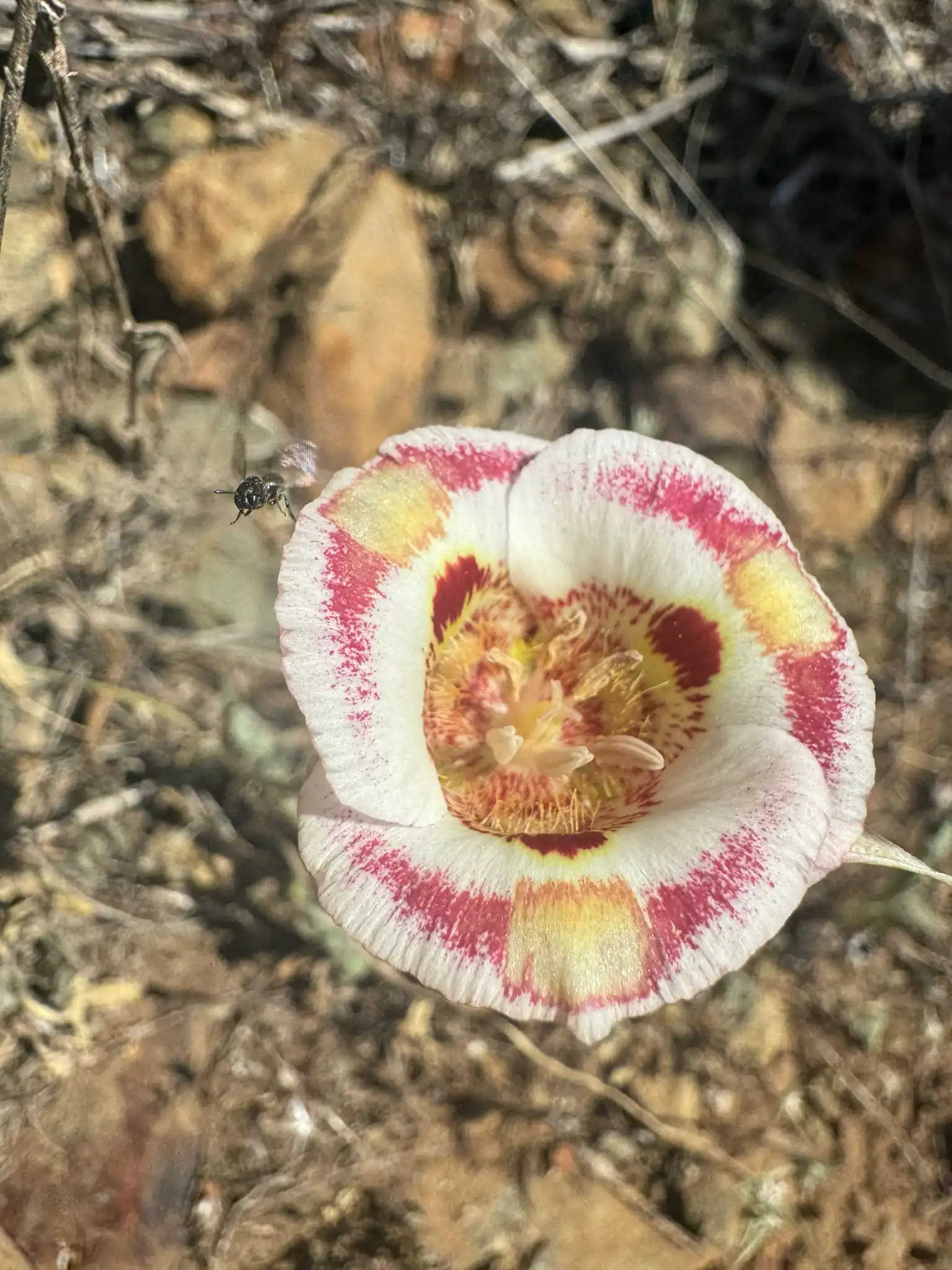
Calochortus venustus, the butterfly mariposa lily, is a bulbous perennial native to California's sandy mountain slopes and foothills. It produces erect, branching stems bearing cup-shaped flowers in shades of white, pink, yellow, or purple, each detailed with a dark red blotch at the petal base.
The single, grass-like basal leaf typically withers and dies back before the blossoms open in late spring. The highly variable floral markings make each wild or seed-grown specimen uniquely patterned.
Uses & Benefits:
Essentials
At a Glance
Plant Type
Bulb Corm Tuber
Height
24"
Width
6"
Light
Full Sun, Partial Sun
Zones
7, 8, 9
Water
Low
Humidity
Low
Lifespan
Perennial
Native To
California, USA
Toxicity
Non-toxic
Bloom period
Late spring – Early summer
In flower about 2 months of the year
Planting
How to Grow
- Select a planting site with sandy, exceptionally well-drained soil that receives full sun.
- Plant corms in fall at a depth of five inches, spacing them three to four inches apart.
- Water moderately during the active growth period in winter and spring to mimic natural rainfall.
- Withhold all water completely once the foliage begins to wither and die back in early summer.
Pro Tip
Withhold all water during the summer dormancy period; summer moisture triggers fungal pathogens that rapidly rot the underground corm.
Keep It Thriving
Care Guide
Do
- Ensure the soil drains rapidly to prevent moisture accumulation around the corm.
- Allow the basal leaf to wither naturally to return energy to the bulb.
- Keep the planting area completely dry throughout the summer dormancy period.
Don't
- Do not irrigate the plants during summer, as warm, wet soil causes fatal root rot.
- Do not plant in heavy clay or rich, moisture-retentive garden loam.
- Do not prune or cut back green foliage before it has completely dried out.
Seasonal Care Calendar
| Task | Jan | Feb | Mar | Apr | May | Jun | Jul | Aug | Sep | Oct | Nov | Dec |
|---|---|---|---|---|---|---|---|---|---|---|---|---|
| Pest Check | ||||||||||||
| Plant | ||||||||||||
| Propagate | ||||||||||||
| Spring Cleanup |
Watch Out For
Pests & Diseases
Common Pests
Common Diseases
In the Garden
Landscape Uses & Companions
Landscape Uses
Multiply
Propagation Methods
Good to Know
Common Questions
Butterfly Mariposa Lily questions
What zones can Butterfly Mariposa Lily grow in?
Butterfly Mariposa Lily is hardy in USDA Zones 7–9. Inside that range it survives winter in the ground; outside it, grow it as an annual or a container plant you protect.
Is Butterfly Mariposa Lily deer resistant?
Not reliably. Deer may browse Butterfly Mariposa Lily, especially tender spring growth — plan on repellents or fencing where pressure is high.
When does Butterfly Mariposa Lily bloom?
Butterfly Mariposa Lily typically blooms in late spring through early summer. Exact timing shifts a week or two with your zone — Sow's bloom calendar maps it to your garden.
Does Butterfly Mariposa Lily need full sun?
Butterfly Mariposa Lily does best in full sun to part shade. In hot climates, afternoon shade keeps blooms fresher longer.
Is Butterfly Mariposa Lily drought tolerant?
Yes — once established (usually after the first full season), Butterfly Mariposa Lily handles dry spells with minimal watering. Water deeply its first year to build the root system that makes that possible.
Keep exploring
Explore the genus
Hardy in your zone?
Grow Butterfly Mariposa Lily with confidence
See it in a design of your actual yard, get zone-matched care reminders, and track it season by season in your garden journal.