The Story
Plant Bio
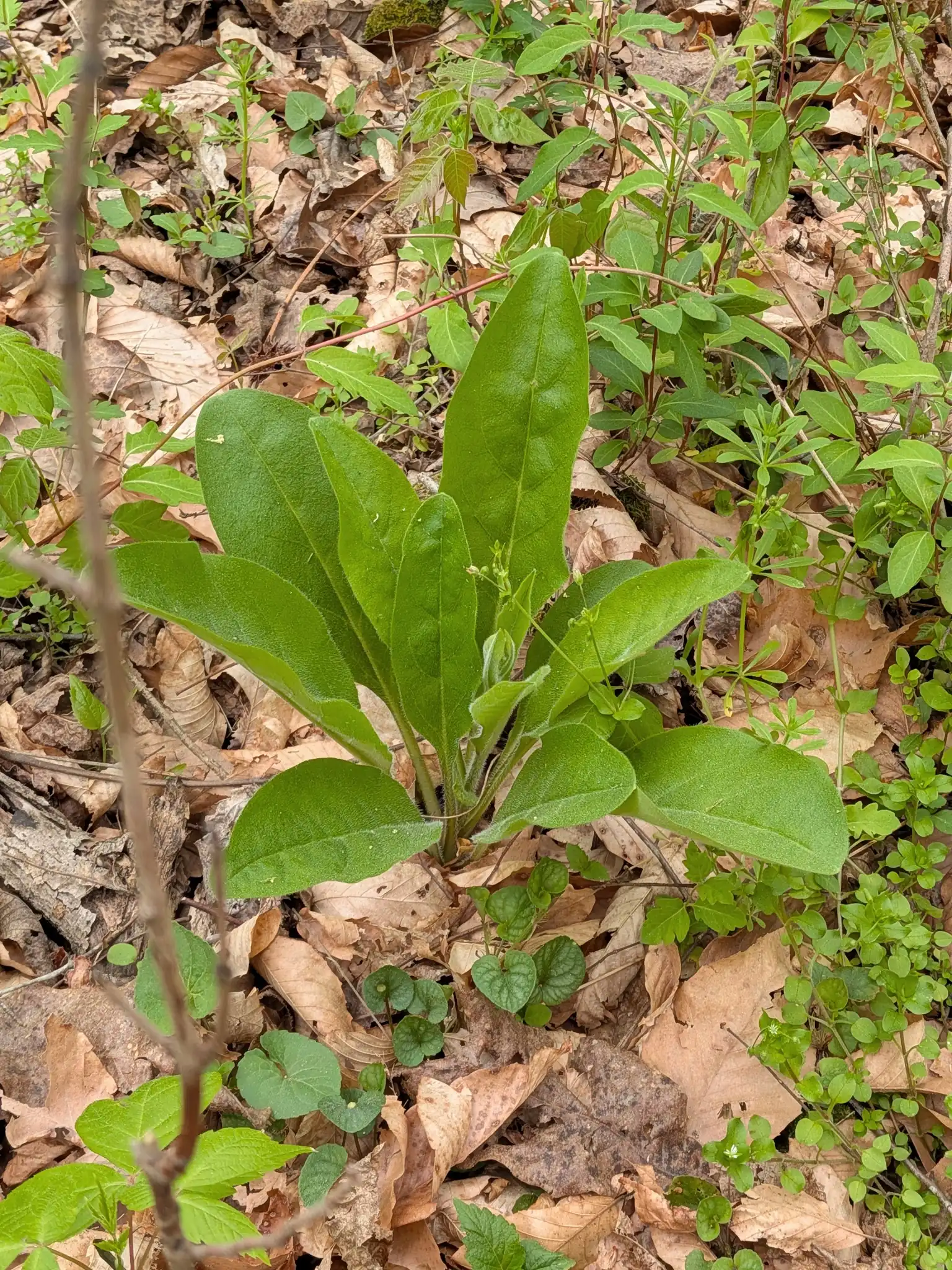
Andersonglossum virginianum is a deciduous herbaceous perennial native to eastern North American woodlands, forming a basal rosette of large, rough-haired leaves. In spring, unbranched flowering stems rise above the foliage to bear terminal clusters of pale sky-blue to purplish flowers that age to a greenish-white.
This species is distinguished by its densely hairy, elliptic leaves and its distinctive spiny, barbed nutlets that cling to passing animals for seed dispersal. The small, flat-faced flowers are specifically structured to accommodate small native bees and flies rather than long-tongued pollinators.
Uses & Benefits:
Essentials
At a Glance
Plant Type
Perennial
Height
36"
Width
12"
Light
Partial Sun, Shade
Zones
5, 6, 7, 8, 9
Water
Medium to medium-dry
Humidity
High
Lifespan
Perennial
Native To
North America
Toxicity
Toxic if ingested; skin irritant
Bloom period
Mid spring – Early summer
In flower about 3 months of the year
Planting
How to Grow
- Select a planting site in partial to full shade, mimicking a natural forest canopy.
- Incorporate organic leaf mold or compost into the soil to improve moisture retention and structure.
- Position the crown level with the soil surface to prevent rot.
- Water thoroughly after planting and maintain consistent moisture until the root system is established.
Pro Tip
Plant in dappled shade with leaf-litter-rich soil, ensuring absolute winter drainage; waterlogged soils during dormancy rot the crown.
Keep It Thriving
Care Guide
Do
- Clear away dead foliage in late winter before new basal growth begins.
- Apply a light top-dressing of leaf mold or compost around the base in fall.
- Ensure the soil drains rapidly to protect the dormant crown from winter wet.
Don't
- Do not plant in hot, dry, full-sun borders where the foliage will scorch and decline.
- Do not over-maintain or frequently transplant established crowns.
- Do not apply heavy synthetic fertilizers, as the plant thrives in natural woodland nutrient levels.
Seasonal Care Calendar
| Task | Jan | Feb | Mar | Apr | May | Jun | Jul | Aug | Sep | Oct | Nov | Dec |
|---|---|---|---|---|---|---|---|---|---|---|---|---|
| Divide | ||||||||||||
| Mulch | ||||||||||||
| Pest Check | ||||||||||||
| Spring Cleanup |
Watch Out For
Pests & Diseases
Common Pests
Common Diseases
In the Garden
Landscape Uses & Companions
Landscape Uses
Multiply
Propagation Methods
Good to Know
Common Questions
Wild Comfrey questions
What zones can Wild Comfrey grow in?
Wild Comfrey is hardy in USDA Zones 5–9. Inside that range it survives winter in the ground; outside it, grow it as an annual or a container plant you protect.
Is Wild Comfrey deer resistant?
Not reliably. Deer may browse Wild Comfrey, especially tender spring growth — plan on repellents or fencing where pressure is high.
When does Wild Comfrey bloom?
Wild Comfrey typically blooms in mid spring through early summer. Exact timing shifts a week or two with your zone — Sow's bloom calendar maps it to your garden.
Does Wild Comfrey need full sun?
Wild Comfrey does best in part shade.
Keep exploring
Explore the genus
Hardy in your zone?
Grow Wild Comfrey with confidence
See it in a design of your actual yard, get zone-matched care reminders, and track it season by season in your garden journal.