The Story
Plant Bio
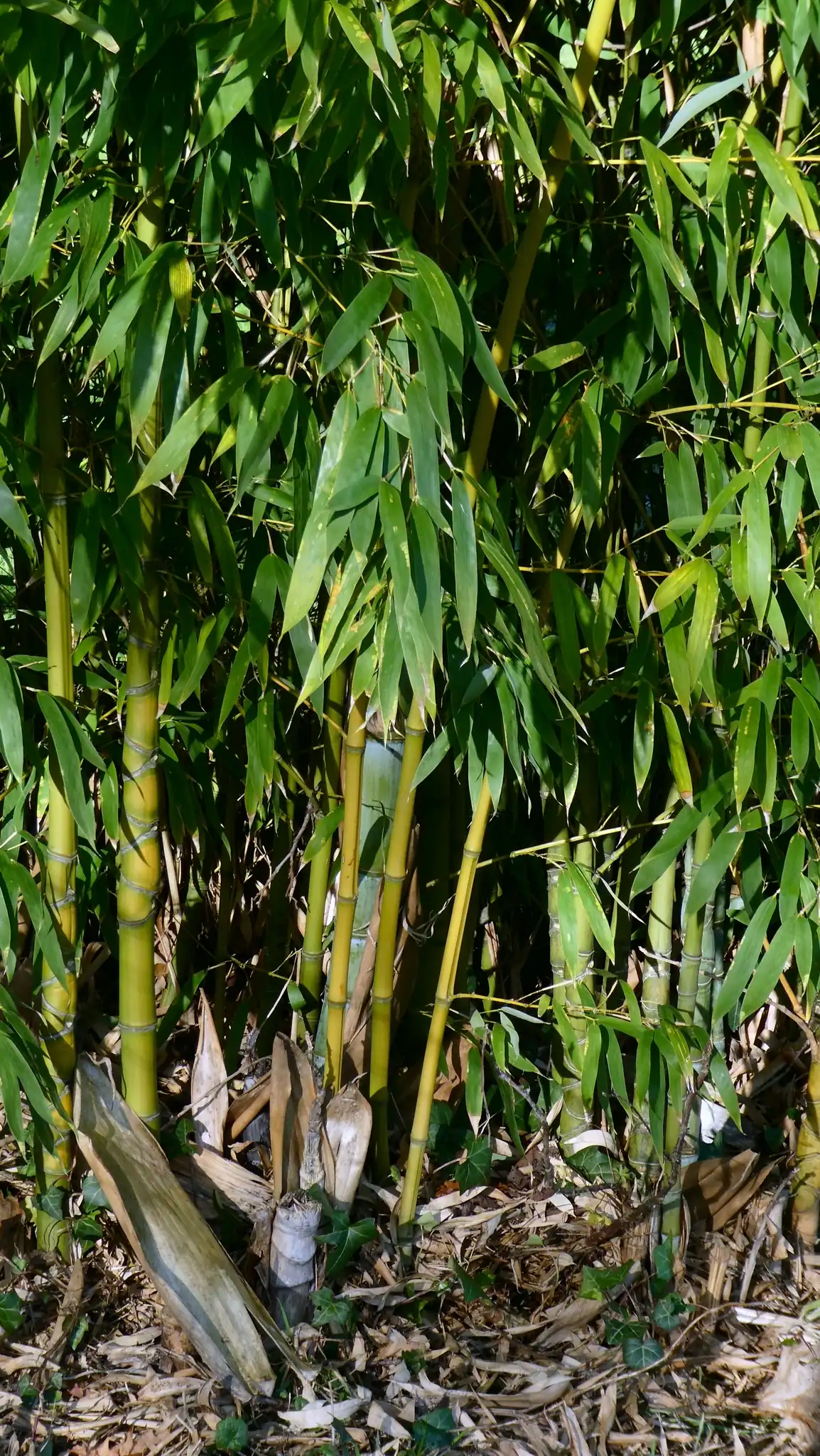
Phyllostachys aurea is an evergreen running bamboo that forms dense stands of woody, hollow-stemmed culms reaching ten to thirty feet in height. The upright culms emerge green and mature to a golden-yellow color when exposed to direct sunlight, bearing lance-shaped, olive-green leaves up to six inches long.
This species is distinguished by compressed or shortened internodes at the base of its culms, creating a stacked appearance. It spreads aggressively via underground rhizomes, making it highly effective for quick privacy screens but requiring strict containment to prevent invasive spread.
Uses & Benefits:
Essentials
At a Glance
Plant Type
Grass
Height
360"
Width
240"
Light
Full Sun, Partial Sun
Zones
7, 8, 9, 10
Water
Moderate
Humidity
High
Lifespan
Perennial
Native To
China
Toxicity
Non-toxic
Bloom period
Spring – Summer
In flower about 6 months of the year
Marketplace
Where to Buy
Shipping costs Year-round shipping Free shipping
Planting
How to Grow
- Select a planting site in full sun to partial shade with well-drained loam, clay, or sandy soil.
- Dig a trench to install a physical rhizome barrier at least twenty-four inches deep, angling the top of the barrier outward.
- Plant the root ball or division at the same depth it was growing in the container, backfill, and water thoroughly.
- Maintain consistent soil moisture during the first growing season to help the root system establish.
Pro Tip
Install a heavy-duty, high-density polyethylene root barrier at least twenty-four inches deep and angled slightly outward to contain the aggressive running rhizomes.
Keep It Thriving
Care Guide
Do
- Prune out dead, damaged, or weak culms at ground level in late winter or early spring.
- Apply a balanced, slow-release nitrogen-rich fertilizer once a year in early spring.
- Perform annual root pruning or check physical barriers to control the running rhizomes.
- Provide protection from direct, heavy salt-laden winds in coastal locations.
Don't
- Do not prune green culms back halfway, as topping ruins the appearance and causes weak, unsightly branching.
- Do not plant in poorly drained soils where water logs the roots.
- Do not leave the running rhizomes uncontained near garden borders or neighboring properties.
Seasonal Care Calendar
| Task | Jan | Feb | Mar | Apr | May | Jun | Jul | Aug | Sep | Oct | Nov | Dec |
|---|---|---|---|---|---|---|---|---|---|---|---|---|
| Divide | ||||||||||||
| Fertilize | ||||||||||||
| Pest Check | ||||||||||||
| Prune |
Watch Out For
Pests & Diseases
Common Pests
Common Diseases
In the Garden
Landscape Uses & Companions
Landscape Uses
Multiply
Propagation Methods
Good to Know
Common Questions
Golden bamboo questions
What zones can Golden bamboo grow in?
Golden bamboo is hardy in USDA Zones 7–10. Inside that range it survives winter in the ground; outside it, grow it as an annual or a container plant you protect.
Is Golden bamboo deer resistant?
Not reliably. Deer may browse Golden bamboo, especially tender spring growth — plan on repellents or fencing where pressure is high.
When does Golden bamboo bloom?
Golden bamboo typically blooms in spring through summer. Exact timing shifts a week or two with your zone — Sow's bloom calendar maps it to your garden.
Does Golden bamboo need full sun?
Golden bamboo does best in full sun to part shade. In hot climates, afternoon shade keeps blooms fresher longer.
Is Golden bamboo drought tolerant?
Yes — once established (usually after the first full season), Golden bamboo handles dry spells with minimal watering. Water deeply its first year to build the root system that makes that possible.
Keep exploring
Explore the genus
Hardy in your zone?
Grow Golden bamboo with confidence
See it in a design of your actual yard, get zone-matched care reminders, and track it season by season in your garden journal.