The Story
Plant Bio
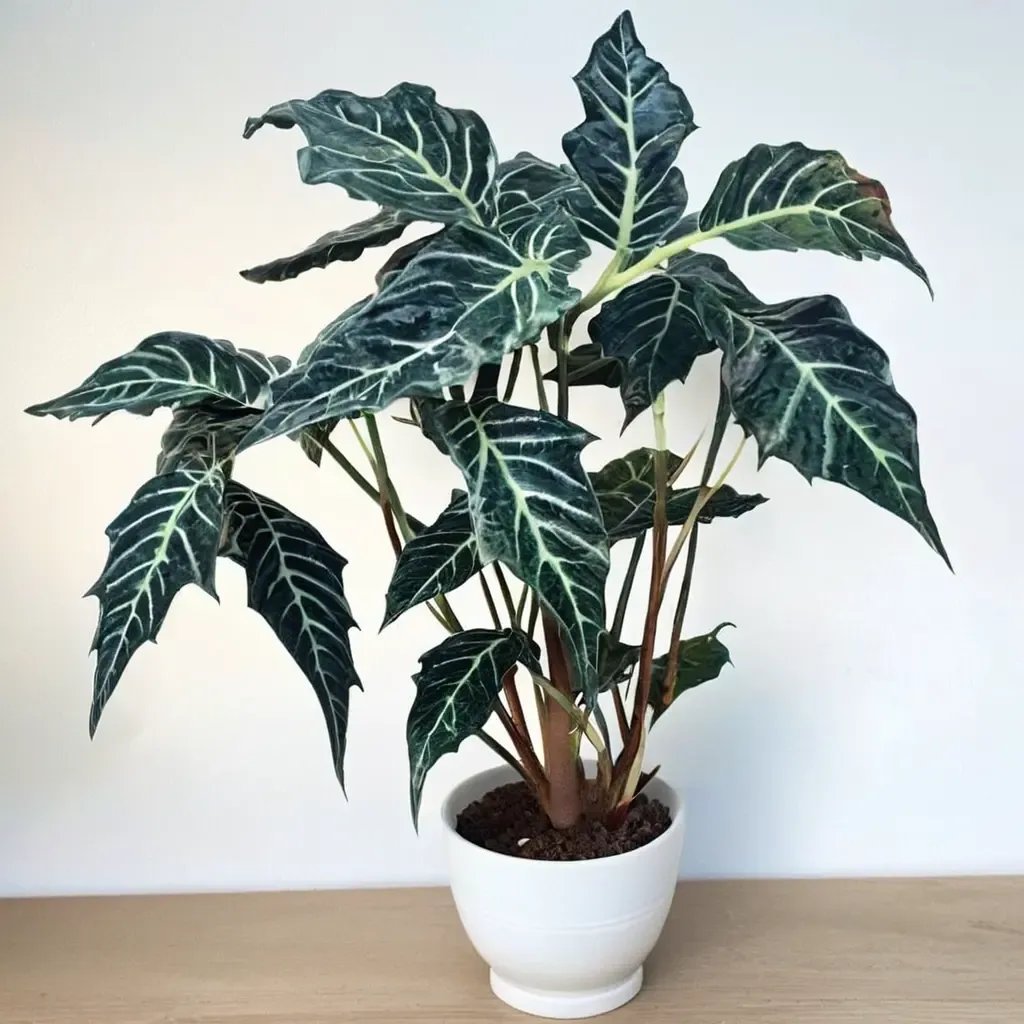
A striking tropical hybrid known for its dramatic foliage. It features large, arrow-shaped, deep green to almost black leaves with prominent, contrasting silvery-white to light green primary veins.
This is a hybrid of Alocasia longiloba and Alocasia sanderiana, not a naturally occurring species. Its key feature is the highly ornamental, glossy, wavy-edged leaves. It is a tender perennial, typically grown as a houseplant in temperate climates, and requires high humidity and consistently moist, well-drained soil.
Uses & Benefits:
Essentials
At a Glance
Plant Type
Bulb Corm Tuber
Height
24"
Width
20"
Light
Partial Sun, Shade
Zones
10
Water
Consistent moisture
Humidity
High
Lifespan
Perennial
Native To
Horticultural hybrid
Toxicity
Toxic
Bloom period
Late summer – Early fall
In flower about 2 months of the year
Planting
How to Grow
- Tuck bulbs into well-draining soil in a shaded location.
- Mist cuttings regularly to maintain humidity.
- Water consistently to keep soil moist but not waterlogged.
- Fertilize monthly during the growing season with a balanced fertilizer.
- Divide rhizomes every 2-3 years to manage size and promote growth.
- Mulch around the base to retain moisture and regulate soil temperature.
Pro Tip
Use a rich, organic soil mix and maintain high humidity for optimal growth.
Keep It Thriving
Care Guide
Do
- Water regularly to keep soil moist 🌱
- Provide bright, indirect light
- Apply balanced fertilizer monthly during summer
- Mulch to conserve moisture
- Divide rhizomes in early spring
Don't
- Avoid overwatering to prevent root rot ❌
- Don’t expose to direct, harsh sunlight
- Skip fertilizing in winter
- Don’t forget to lift bulbs before frost
Seasonal Care Calendar
| Task | Jan | Feb | Mar | Apr | May | Jun | Jul | Aug | Sep | Oct | Nov | Dec |
|---|---|---|---|---|---|---|---|---|---|---|---|---|
| Fertilize | ||||||||||||
| Lift Store | ||||||||||||
| Pest Check | ||||||||||||
| Plant | ||||||||||||
| Winter Prep |
Watch Out For
Pests & Diseases
Common Pests
Common Diseases
In the Garden
Landscape Uses & Companions
Landscape Uses
Companion Plants
Multiply
Propagation Methods
Good to Know