Also known as Flamingo Flower · 5 saves
Anthurium
Anthurium, the genus most gardeners know as flamingo flower. We track 3 varieties; the ones most used by real gardeners.
The 3 most-saved Anthurium varieties
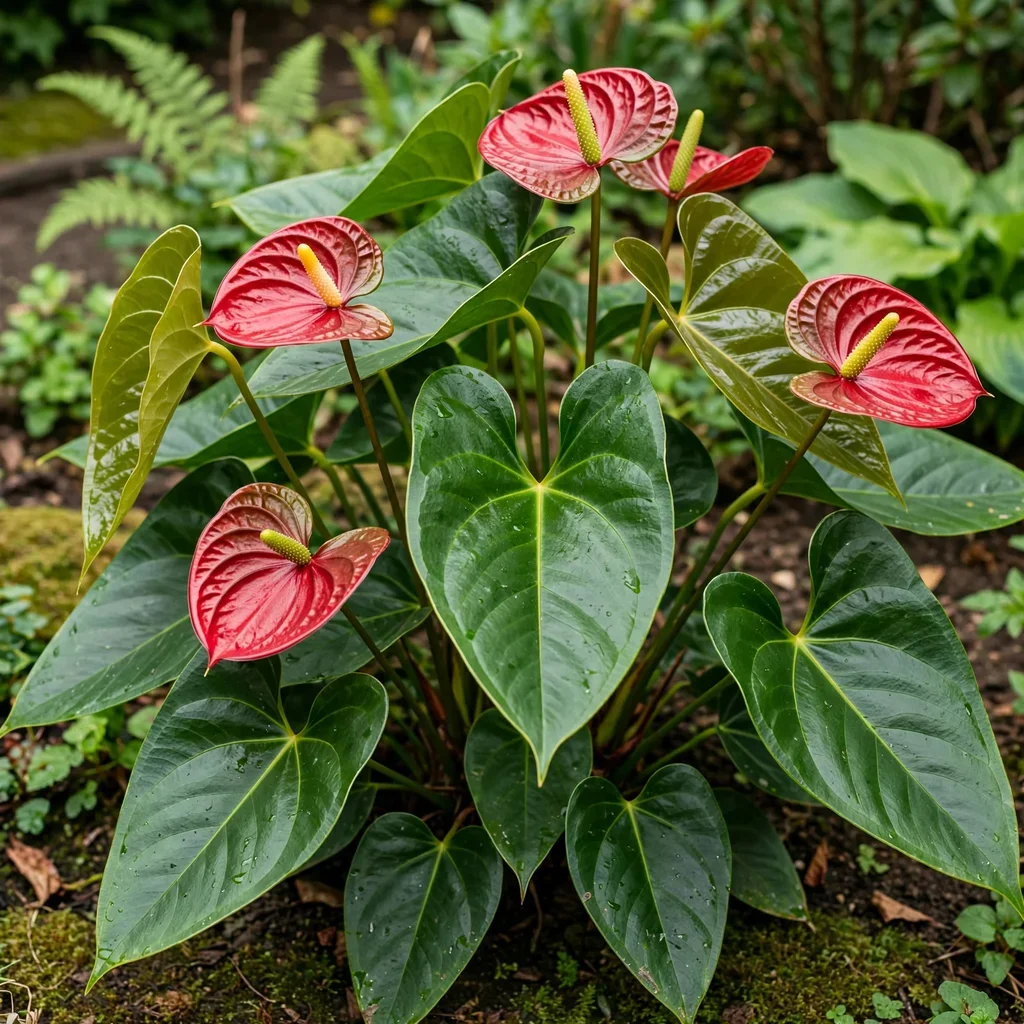
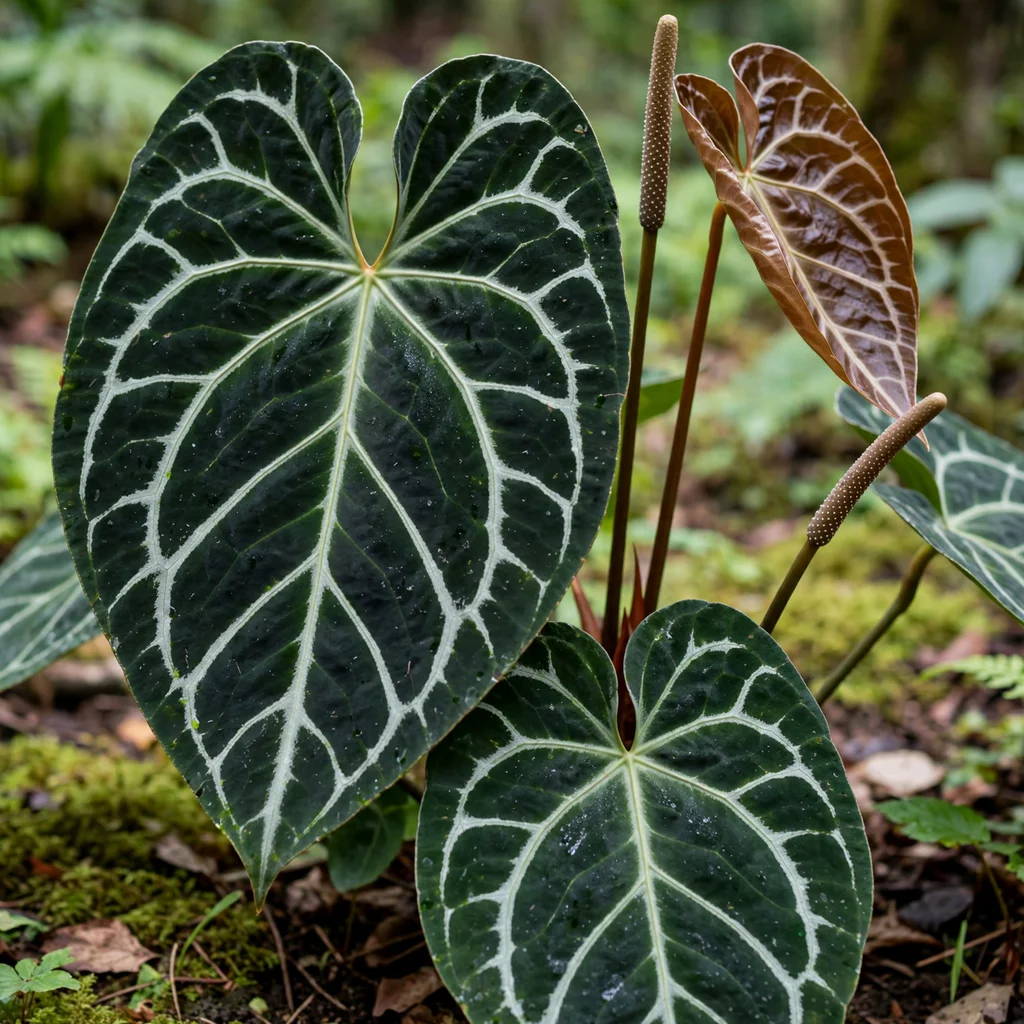
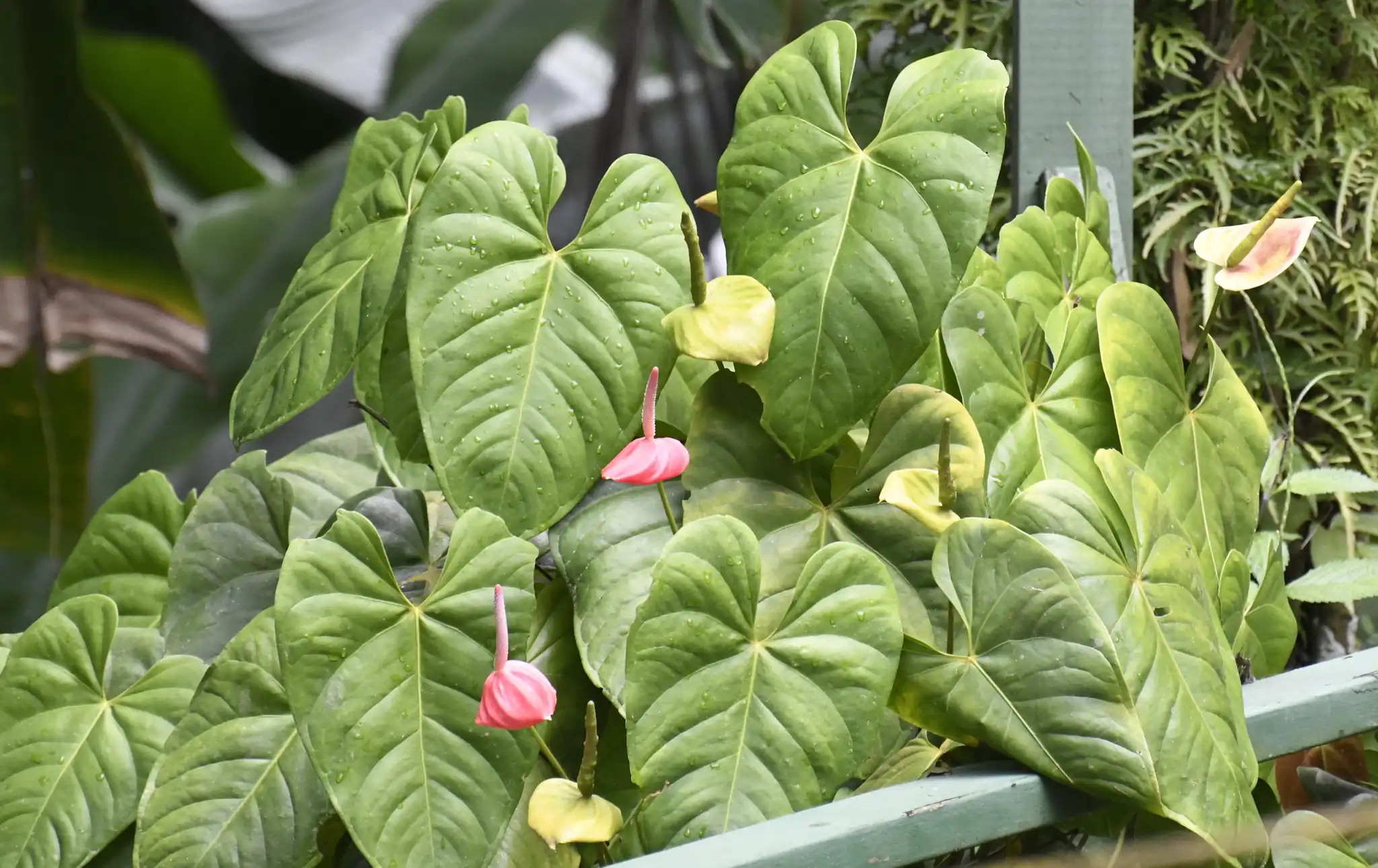
2 species of Anthurium
Each one is a parent of the varieties above.
Track your Anthurium in Sow
Save the Anthurium you grow and get care reminders timed to your zone.
How to grow Anthurium
Whats common across all Anthurium varieties in our catalog — drawn from the care records of the 3 most-grown of them.
The Anthurium year
- PruneMarch and April67% of varieties
Remove completely yellowed or dead leaves at the base using sterile shears.
- FertilizeApril–September67% of varieties
Apply a balanced, water-soluble liquid fertilizer diluted to half-strength every 4 to 6 weeks.
- Check for PestsJanuary–December67% of varieties
Inspect the velvety leaf surfaces and crevices regularly for spider mites, thrips, and mealybugs.


Do
- Wipe the velvety leaves gently with a dry or slightly damp microfiber cloth to remove dust.
- Use a balanced, water-soluble liquid fertilizer diluted to half-strength during the active spring and summer growth periods.
- Ensure the container has excellent drainage holes to allow excess water to escape immediately.
- Pot it in coarse bark mix 🌳
- Give it bright indirect light 🪟
Avoid
- Do not use dense, standard potting soil, which compacts and suffocates the root system.
- Do not allow the plant to sit in standing water or waterlogged saucers.
- Do not cut into old, leafless woody stems when removing dead foliage.
- Pot it in ordinary compost ❌
What goes wrong with Anthurium
| Problem | What you'll see | What to do |
|---|---|---|
| Mealybugs | White, cottony masses in leaf axils and on the undersides of the foliage. | Dab pests with an alcohol-soaked cotton swab or spray with horticultural oil. |
| Spider mites | Fine webbing on leaf undersides and yellow speckling on the velvety foliage. | Wipe leaves regularly and treat with insecticidal soaps, horticultural oils, or systemic miticides. |
| Thrips | Silvery patches, distorted new growth, and tiny black waste spots on the leaves. | Isolate the plant and apply systemic insecticides or insecticidal soaps. |
| Scale insects | Brown waxy bumps along the leaf stalks and undersides, with sticky residue | Wipe off by hand; test any oil treatment on one leaf first, as the glossy foliage can mark |
| Bacterial leaf spot | Water-soaked lesions with yellow halos on the foliage, caused by Xanthomonas. | Improve air circulation, remove affected leaves, and apply copper-based bactericides. |
| Root and stem rot | Wilting, yellowing leaves and mushy, black roots caused by Pythium or Rhizoctonia. | Repot immediately into fresh, chunky media, prune away rotted roots, and reduce watering frequency. |
| Root rot | Leaves yellow and the plant wilts despite wet compost, with blackened mushy roots | Repot into coarse bark, cut away dead roots and water less; dense compost is nearly always the cause |
Making more Anthurium
Division
- Knock the plant out and separate a rooted offset.
- Pot into coarse bark mix.
- Keep warm and humid until it settles.
Stem cuttings
- Locate a healthy stem section containing at least one node and a visible growth eye.
- Sever the section cleanly using a sterile knife or shears.
- Place the cutting in moist sphagnum moss or a chunky propagation mix.
- Maintain high humidity and warm temperatures until new roots and leaves establish.
Anthurium questions
How many types of Anthurium are there?
The Sow catalog tracks 3 distinct Anthurium varieties. The most popular — ranked by 5 real gardeners — are shown first above.
What zones does Anthurium grow in?
Across its varieties, Anthurium covers USDA Zones 7–9. Individual varieties differ — each plant page lists its exact range, and Sow filters the catalog to your zone automatically.
When does Anthurium bloom?
Most Anthurium varieties bloom in year-round, spring, year-round indoors. Staggering early, mid, and late varieties extends the genus's season in one bed.
Which Anthurium should I choose?
Start from the most-saved varieties above — popularity across thousands of gardens is a strong signal of reliability — then filter by your zone and sun. In the Sow app you can preview any of them in a photo of your actual yard before you buy.