The Story
Plant Bio
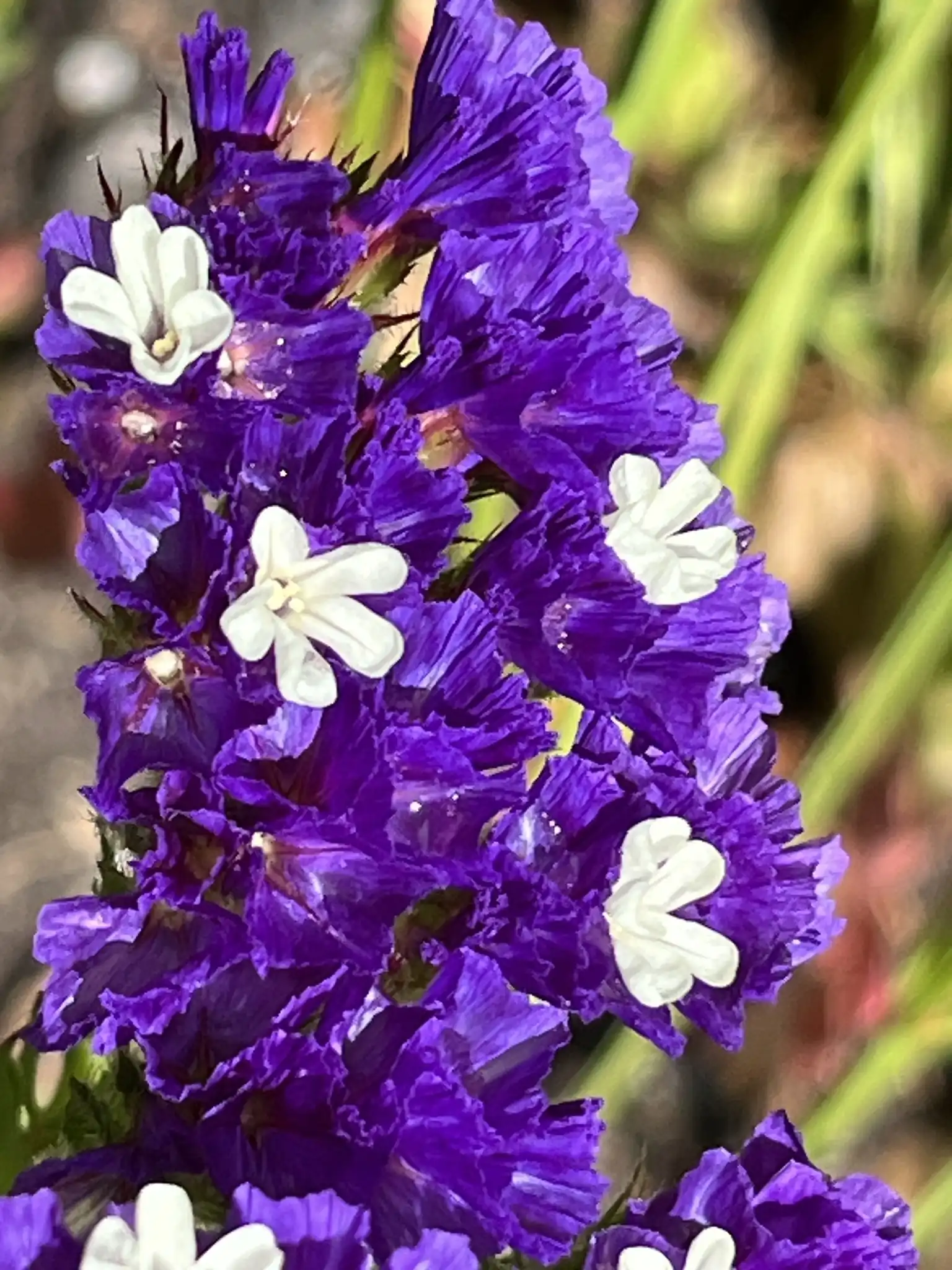
Limonium sinuatum, commonly known as statice, is a clump-forming tender perennial or biennial rising from a flat basal rosette of wavy-margined leaves. The stiff, winged flowering stems bear branched panicles of tiny white flowers enveloped in papery, long-lasting colored calyces.
This species is highly valued for its papery calyces that retain their intense purple, pink, yellow, or blue coloration long after drying. The winged stems are nearly leafless, directing all energy into the dense, flat-topped flower clusters.
Uses & Benefits:
Essentials
At a Glance
Plant Type
Perennial
Height
18"
Width
12"
Light
Full Sun
Zones
8, 9, 10
Water
Low
Humidity
Low
Lifespan
Tender Perennial
Native To
Mediterranean region
Toxicity
Non-toxic
Bloom period
Summer – Fall
In flower about 6 months of the year
Planting
How to Grow
- Select a site with sandy loam or well-drained soil that receives at least six hours of direct daily sunlight.
- Sow seeds indoors six to eight weeks before the last expected frost, covering them lightly with soil.
- Transplant hardened-off seedlings outdoors after all danger of frost has passed, spacing them eight to twelve inches apart.
- Water sparingly once established, allowing the top few inches of soil to dry out completely between waterings.
Pro Tip
Plant in lean, sandy soil and keep the crown slightly elevated above the soil line to prevent fatal crown rot. Avoid organic mulches that retain moisture around the base of the rosette.
Keep It Thriving
Care Guide
Do
- Grow in poor or average soil to maintain strong, upright stems.
- Ensure excellent drainage to prevent root rot.
- Cut entire flower stalks at the base for fresh or dried arrangements.
Don't
- Do not over-fertilize, as excess nutrients cause weak, floppy stems.
- Do not plant in heavy clay or waterlogged soils.
- Do not overwater or use overhead irrigation that keeps the foliage wet.
Seasonal Care Calendar
| Task | Jan | Feb | Mar | Apr | May | Jun | Jul | Aug | Sep | Oct | Nov | Dec |
|---|---|---|---|---|---|---|---|---|---|---|---|---|
| Harvest | ||||||||||||
| Pest Check | ||||||||||||
| Plant | ||||||||||||
| Propagate | ||||||||||||
| Winter Prep |
Watch Out For
Pests & Diseases
Common Pests
Common Diseases
In the Garden
Landscape Uses & Companions
Landscape Uses
Companion Plants
Multiply
Propagation Methods
Good to Know
Common Questions
Statice questions
What zones can Statice grow in?
Statice is hardy in USDA Zones 8–10. Inside that range it survives winter in the ground; outside it, grow it as an annual or a container plant you protect.
When does Statice bloom?
Statice typically blooms in summer through fall. Exact timing shifts a week or two with your zone — Sow's bloom calendar maps it to your garden.
Does Statice need full sun?
Statice does best in full sun (6+ hours).
Is Statice drought tolerant?
Yes — once established (usually after the first full season), Statice handles dry spells with minimal watering. Water deeply its first year to build the root system that makes that possible.
More Limonium to compare
Keep exploring
Explore the genus
Hardy in your zone?
Grow Statice with confidence
See it in a design of your actual yard, get zone-matched care reminders, and track it season by season in your garden journal.