The Story
Plant Bio
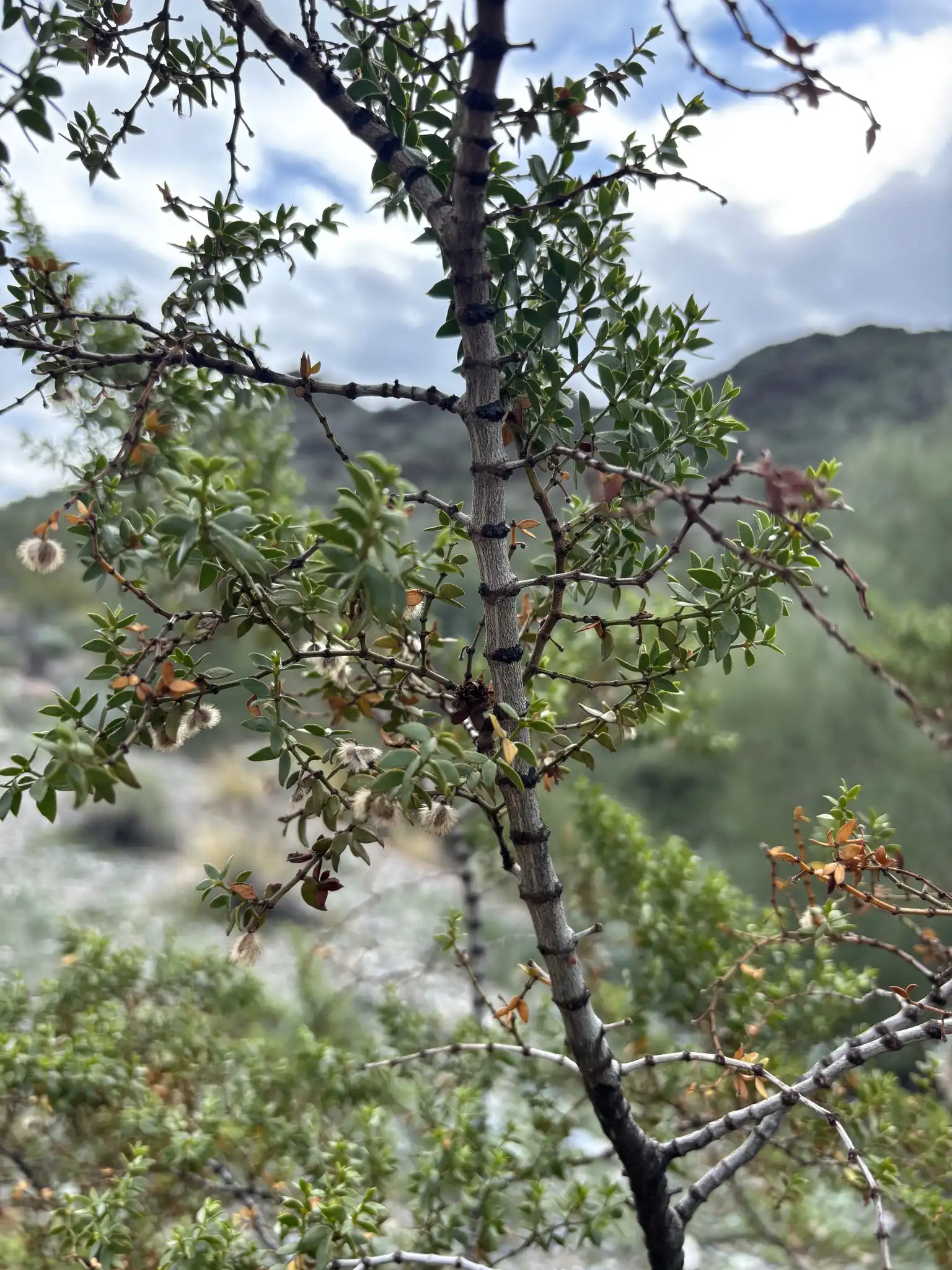
Larrea tridentata, the creosote bush, is an upright, multi-stemmed evergreen shrub native to the arid deserts of North America, reaching up to ten feet in height. Its small, dark green, two-lobed leaflets are coated in a sticky, glossy resin that emits a strong, characteristic scent when wet.
The bright yellow flowers appear primarily in spring, followed by fuzzy, white seed globes that persist on the branches. The heavy resin coating on the foliage acts as a natural deterrent against herbivores and helps the plant conserve moisture in extreme drought.
Uses & Benefits:
Essentials
At a Glance
Plant Type
Shrub
Height
118"
Width
118"
Light
Full Sun
Zones
7, 8, 9, 10
Water
Low
Humidity
Low
Lifespan
Long-lived
Native To
North America
Toxicity
Skin Irritant
Bloom period
Spring
In flower about 3 months of the year
Planting
How to Grow
- Select a planting site in full sun with exceptionally sharp-draining sandy, gravelly, or rocky soil.
- Dig a hole twice as wide as the root ball but no deeper, ensuring the crown sits slightly above the surrounding soil level.
- Backfill with the native mineral soil without adding compost, fertilizer, or organic amendments.
- Water deeply immediately after planting to settle the soil, then withhold water entirely unless simulating desert rain cycles.
Pro Tip
Avoid planting in irrigated garden zones or rich, organic soils; this desert shrub requires complete neglect, lean mineral soil, and infrequent deep watering to prevent fatal root rot.
Keep It Thriving
Care Guide
Do
- Plant in full sun and lean, unamended mineral soil.
- Allow the soil to dry out completely between infrequent, deep waterings.
- Prune only to remove dead or broken branches.
Don't
- Do not apply organic mulch or compost around the base of the stem.
- Do not prune hard into old, bare wood, as it lacks dormant buds to regenerate.
- Do not plant in standard lawn irrigation zones or heavy clay soils.
Seasonal Care Calendar
| Task | Jan | Feb | Mar | Apr | May | Jun | Jul | Aug | Sep | Oct | Nov | Dec |
|---|---|---|---|---|---|---|---|---|---|---|---|---|
| Pest Check | ||||||||||||
| Plant | ||||||||||||
| Propagate | ||||||||||||
| Prune |
Watch Out For
Pests & Diseases
Common Pests
Common Diseases
In the Garden
Landscape Uses & Companions
Landscape Uses
Companion Plants
Multiply
Propagation Methods
Good to Know
Common Questions
Creosote Bush questions
What zones can Creosote Bush grow in?
Creosote Bush is hardy in USDA Zones 7–10. Inside that range it survives winter in the ground; outside it, grow it as an annual or a container plant you protect.
Is Creosote Bush deer resistant?
Yes — Creosote Bush is rated deer-resistant. Deer typically pass it over, though extreme hunger can override any plant's defenses.
When does Creosote Bush bloom?
Creosote Bush typically blooms in spring through spring. Exact timing shifts a week or two with your zone — Sow's bloom calendar maps it to your garden.
Does Creosote Bush need full sun?
Creosote Bush does best in full sun (6+ hours).
Is Creosote Bush drought tolerant?
Yes — once established (usually after the first full season), Creosote Bush handles dry spells with minimal watering. Water deeply its first year to build the root system that makes that possible.
Keep exploring
Explore the genus
Hardy in your zone?
Grow Creosote Bush with confidence
See it in a design of your actual yard, get zone-matched care reminders, and track it season by season in your garden journal.