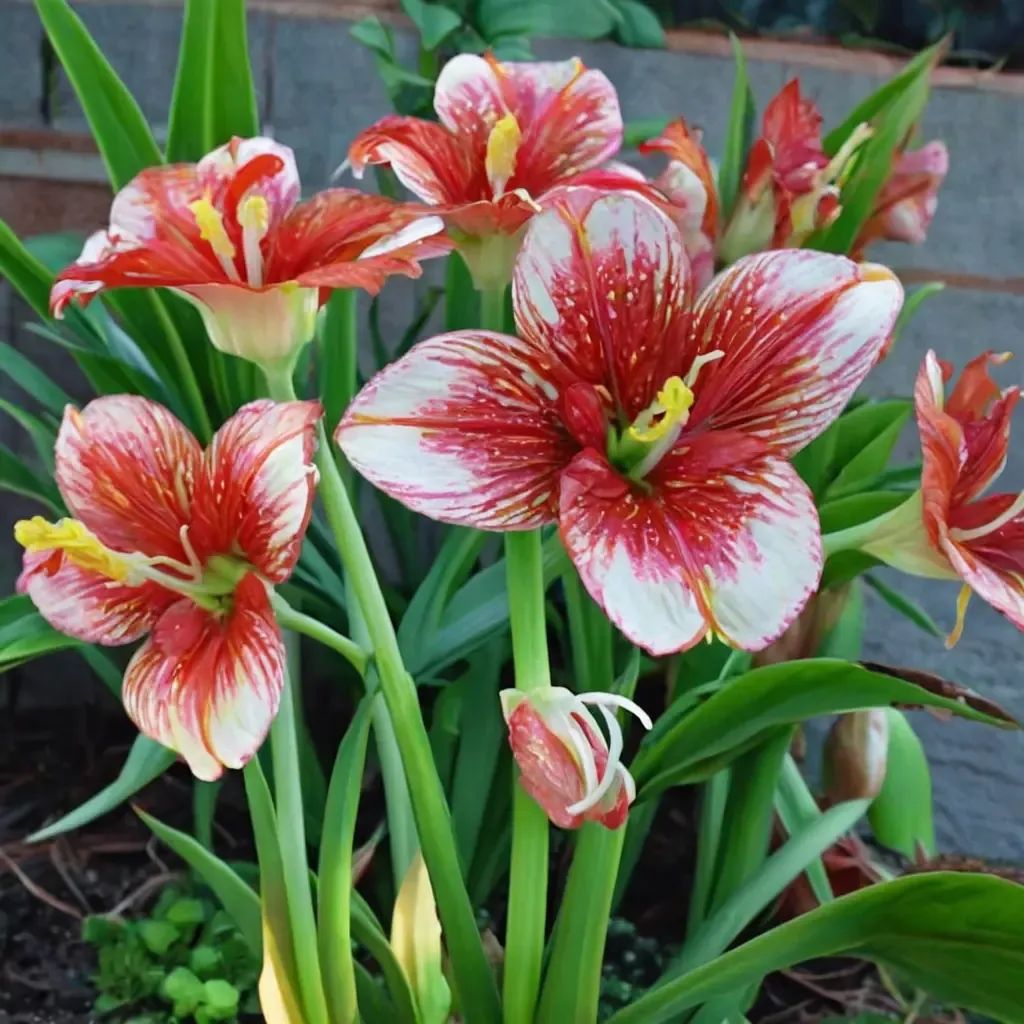
Amaryllis
Hippeastrum x hybrida
Not currently listed at our partner nurseries.
Essentials
At a Glance
Plant Type
Bulb Corm Tuber
Height
24 inches
Width
10 inches
Light
Full Sun, Partial Sun
Zones
8, 9
Water
Moderate during active growth
Humidity
Average household humidity
Lifespan
Perennial (with proper care)
Native To
South America
Toxicity
Toxic to pets if ingested
The Story
Plant Bio
Hippeastrum hybrids are known for their large, showy flowers and can produce multiple blooms per stalk. This hybrid combines various species to enhance flower size and color variations.
Uses & Benefits:
Marketplace
Where to Buy
We couldn't find this plant listed online right now.
Shipping costs Year-round shipping Free shipping
Planting
How to Grow
- Tuck bulbs 2-3 inches deep into well-draining soil in late summer.
- Mist soil lightly until sprouts appear, about 2-3 weeks after planting.
- Transplant into a brighter location once leaves develop, after 6 weeks.
- Fertilize monthly with balanced fertilizer during active growth.
- Allow foliage to yellow naturally before removing in late fall.
- Store bulbs in a cool, dry place during dormancy for replanting.
Pro Tip
Plant in a pot with good drainage and ensure bright indirect sunlight for best blooms.
Keep It Thriving
Care Guide
Do
- Water moderately, keeping soil moist but not soggy 🌱
- Provide bright, indirect light for healthy growth
- Apply balanced fertilizer monthly during active season
- Remove dead leaves to prevent disease
- Repot when bulbs outgrow current containers
Don't
- Avoid overwatering to prevent bulb rot ❌
- Don’t expose to direct, harsh sunlight during peak hours
- Never leave bulbs in standing water
- Avoid fertilizing during dormancy
- Don’t forget to allow foliage to die back naturally
Seasonal Care Calendar
| Task | Jan | Feb | Mar | Apr | May | Jun | Jul | Aug | Sep | Oct | Nov | Dec |
|---|---|---|---|---|---|---|---|---|---|---|---|---|
| Deadhead | ||||||||||||
| Fertilize | ||||||||||||
| Lift Store | ||||||||||||
| Plant | ||||||||||||
| Winter Prep |
Watch Out For
Pests & Diseases
Common Pests
Common Diseases
In the Garden
Landscape Uses & Companions
Landscape Uses
Companion Plants
Multiply
Propagation Methods
Good to Know