The Story
Plant Bio
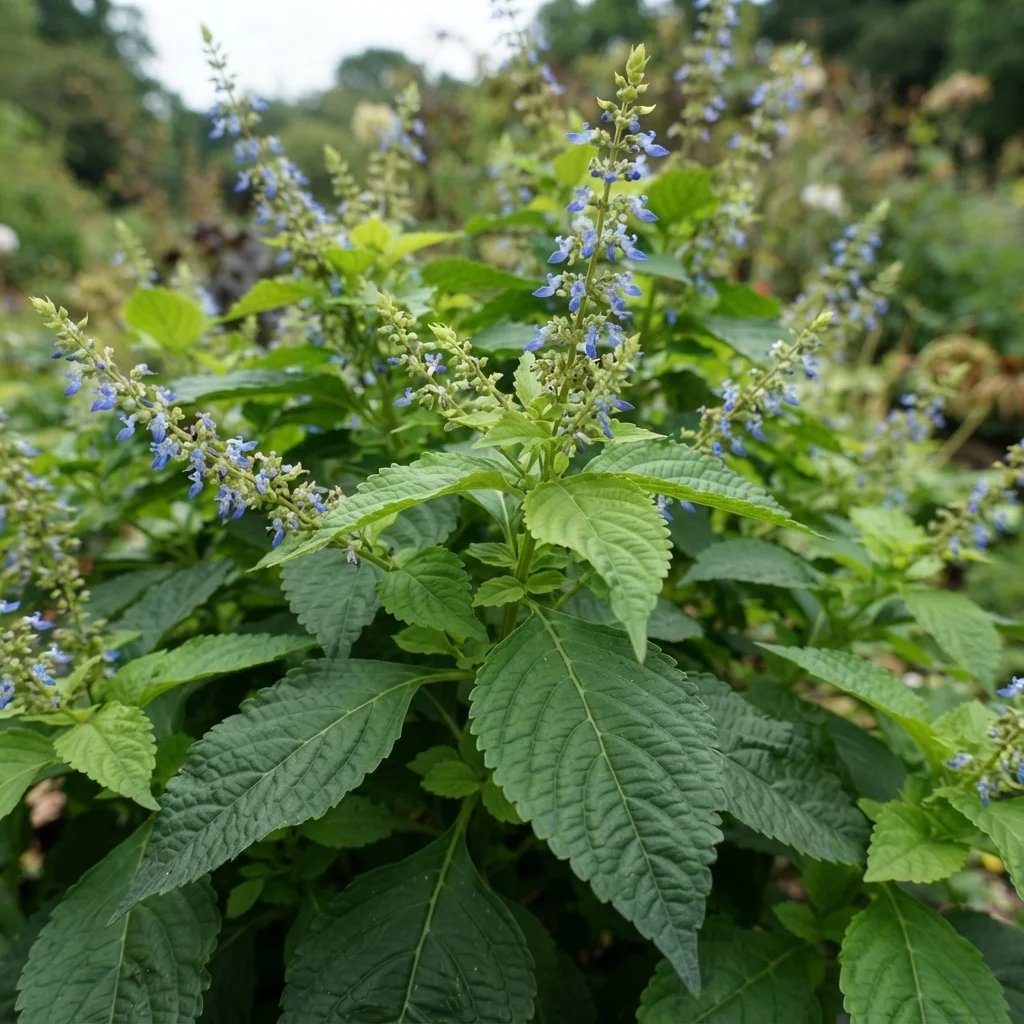
Coleus decurrens is an upright, branching herbaceous perennial or small subshrub native to tropical Africa, characterized by square stems and opposite, ovate leaves with scalloped margins. The plant produces terminal spikes of small, tubular pale blue, white, or purplish flowers primarily during summer and fall.
The species is distinguished by its decurrens-type leaf attachment and new growth that emerges in bright green or tinted tones depending on light exposure. It serves as a tender foliage plant in temperate regions, where it is grown as a container specimen or annual bedding.
Uses & Benefits:
Essentials
At a Glance
Plant Type
Perennial
Height
35"
Width
24"
Light
Partial Sun, Shade
Zones
10
Water
Regular
Humidity
Moderate to high
Lifespan
Perennial (grown as annual)
Native To
Tropical Africa
Toxicity
Non-toxic to humans
Bloom period
Summer – Fall
In flower about 6 months of the year
Planting
How to Grow
- Plant in humus-rich, loamy soil with excellent drainage and a slightly acidic to neutral pH.
- Position in partial shade or bright indirect light, avoiding harsh afternoon sun which scorches the leaves.
- Keep the soil consistently moist but never waterlogged to prevent root rot.
- Pinch the growing tips every two to three weeks during the active season to encourage branching.
Pro Tip
Never cut back into old, leafless woody stems, as they rarely sprout new growth; instead, pinch active green tips regularly to maintain a dense, bushy form.
Keep It Thriving
Care Guide
Do
- Pinch off flower spikes as they appear to preserve foliage vigor and color.
- Water regularly to prevent rapid wilting under dry conditions.
- Apply a balanced, water-soluble fertilizer diluted to half strength every two to four weeks in spring and summer.
Don't
- Do not allow the soil to dry out completely, as the plant has low drought tolerance.
- Do not fertilize during winter dormancy or periods of slow growth.
- Do not expose the plant to freezing temperatures, which immediately kill top growth.
Seasonal Care Calendar
| Task | Jan | Feb | Mar | Apr | May | Jun | Jul | Aug | Sep | Oct | Nov | Dec |
|---|---|---|---|---|---|---|---|---|---|---|---|---|
| Fertilize | ||||||||||||
| Pest Check | ||||||||||||
| Pinch | ||||||||||||
| Propagate | ||||||||||||
| Winter Prep |
Watch Out For
Pests & Diseases
Common Pests
Common Diseases
In the Garden
Landscape Uses & Companions
Landscape Uses
Multiply
Propagation Methods
Good to Know
Common Questions
Golden Hullwort questions
What zones can Golden Hullwort grow in?
Golden Hullwort is hardy in USDA Zone 10. Inside that range it survives winter in the ground; outside it, grow it as an annual or a container plant you protect.
Is Golden Hullwort deer resistant?
Not reliably. Deer may browse Golden Hullwort, especially tender spring growth — plan on repellents or fencing where pressure is high.
When does Golden Hullwort bloom?
Golden Hullwort typically blooms in summer through fall. Exact timing shifts a week or two with your zone — Sow's bloom calendar maps it to your garden.
Does Golden Hullwort need full sun?
Golden Hullwort does best in part shade.
Keep exploring
Explore the genus
Hardy in your zone?
Grow Golden Hullwort with confidence
See it in a design of your actual yard, get zone-matched care reminders, and track it season by season in your garden journal.