The Story
Plant Bio
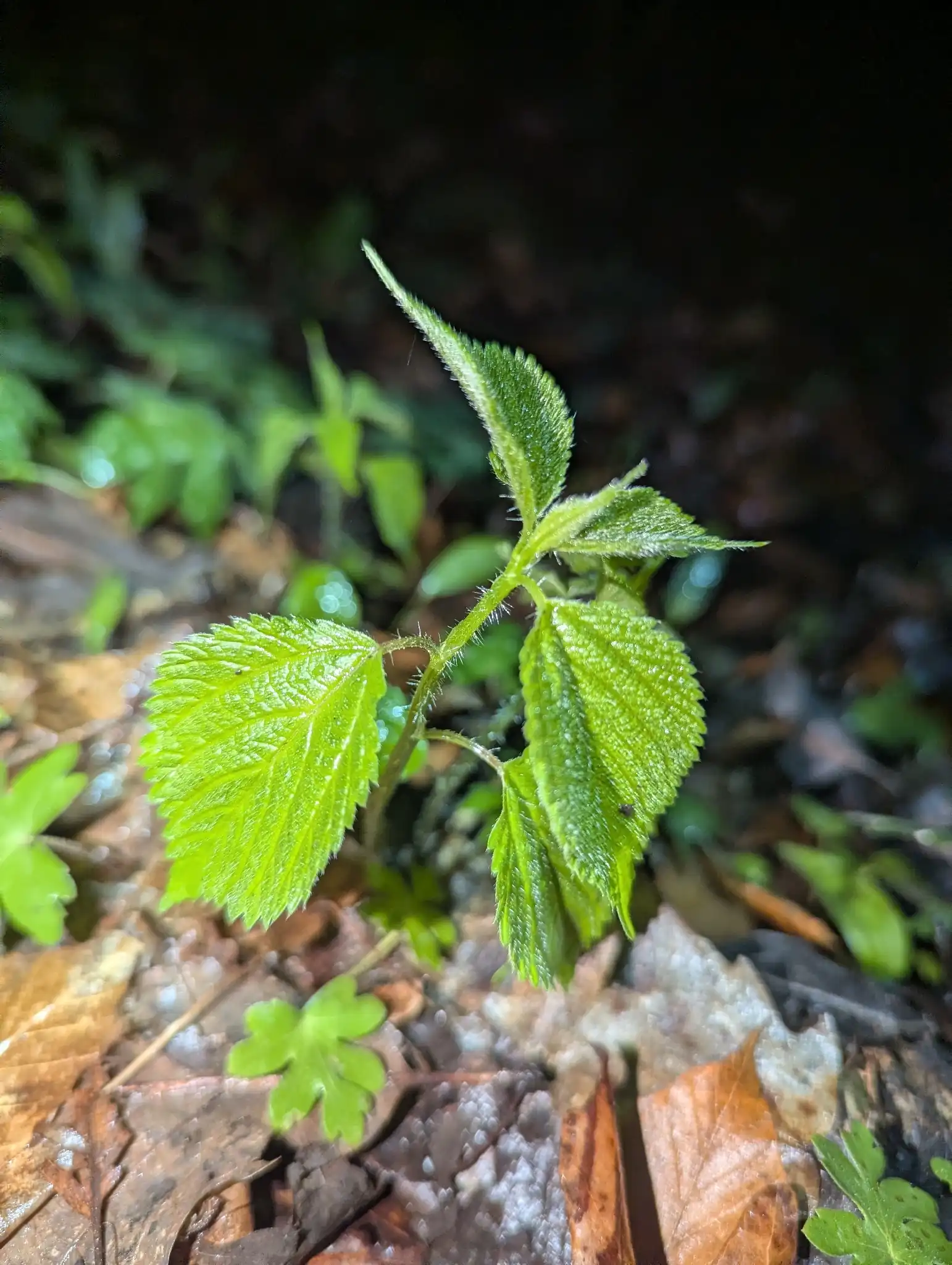
Laportea canadensis is an erect, herbaceous perennial native to North American woodlands, growing from a system of spreading rhizomes and tuberous roots. The alternate, coarsely toothed leaves and unbranched stems are heavily armed with stinging hairs that cause immediate skin irritation upon contact.
The species is distinguished by its leaves being crowded high on a sometimes zigzag stem, unlike the opposite leaves of common stinging nettle. Small, whitish-green flowers are produced in summer, with male clusters lower on the stem and female clusters held above.
Uses & Benefits:
Essentials
At a Glance
Plant Type
Perennial
Height
60"
Width
36"
Light
Partial Sun, Shade
Zones
4, 5, 6, 7, 8
Water
High
Humidity
High
Lifespan
Perennial
Native To
North America
Toxicity
Skin irritant
Bloom period
Summer – Early fall
In flower about 4 months of the year
Planting
How to Grow
- Select a site in partial to full shade with rich, moist, organic-rich soil such as a woodland garden or low-lying riparian area.
- Plant container-grown specimens or dormant rhizomes in spring, spacing them to allow for natural rhizomatous spread.
- Maintain consistent soil moisture, as the plant lacks drought tolerance and will wilt or suffer leaf scorch if allowed to dry out.
- Install root barriers or plant in contained areas if you need to limit its aggressive underground spread through rhizomes.
Pro Tip
Wear thick gloves and long sleeves when handling this plant to avoid the stinging trichomes, and plant it only where foot traffic is non-existent.
Keep It Thriving
Care Guide
Do
- Wear protective gloves and clothing whenever working near or maintaining the plant.
- Keep the soil consistently moist to wet, mimicking its natural floodplain and wet forest habitats.
- Allow the plant to die back naturally in winter to protect the root zone.
Don't
- Do not plant near pathways, play areas, or garden borders where people or pets might brush against the stinging foliage.
- Do not let the soil dry out completely, as this species is highly susceptible to drought stress.
- Do not apply supplemental fertilizer if the plant is grown in rich, organic woodland soils.
Seasonal Care Calendar
| Task | Jan | Feb | Mar | Apr | May | Jun | Jul | Aug | Sep | Oct | Nov | Dec |
|---|---|---|---|---|---|---|---|---|---|---|---|---|
| Mulch | ||||||||||||
| Pest Check | ||||||||||||
| Propagate | ||||||||||||
| Spring Cleanup |
Watch Out For
Pests & Diseases
Common Pests
Common Diseases
In the Garden
Landscape Uses & Companions
Landscape Uses
Companion Plants
Multiply
Propagation Methods
Good to Know
Common Questions
Wood Nettle questions
What zones can Wood Nettle grow in?
Wood Nettle is hardy in USDA Zones 4–8. Inside that range it survives winter in the ground; outside it, grow it as an annual or a container plant you protect.
Is Wood Nettle deer resistant?
Not reliably. Deer may browse Wood Nettle, especially tender spring growth — plan on repellents or fencing where pressure is high.
When does Wood Nettle bloom?
Wood Nettle typically blooms in summer through early fall. Exact timing shifts a week or two with your zone — Sow's bloom calendar maps it to your garden.
Does Wood Nettle need full sun?
Wood Nettle does best in part shade.
Keep exploring
Explore the genus
Hardy in your zone?
Grow Wood Nettle with confidence
See it in a design of your actual yard, get zone-matched care reminders, and track it season by season in your garden journal.