The Story
Plant Bio
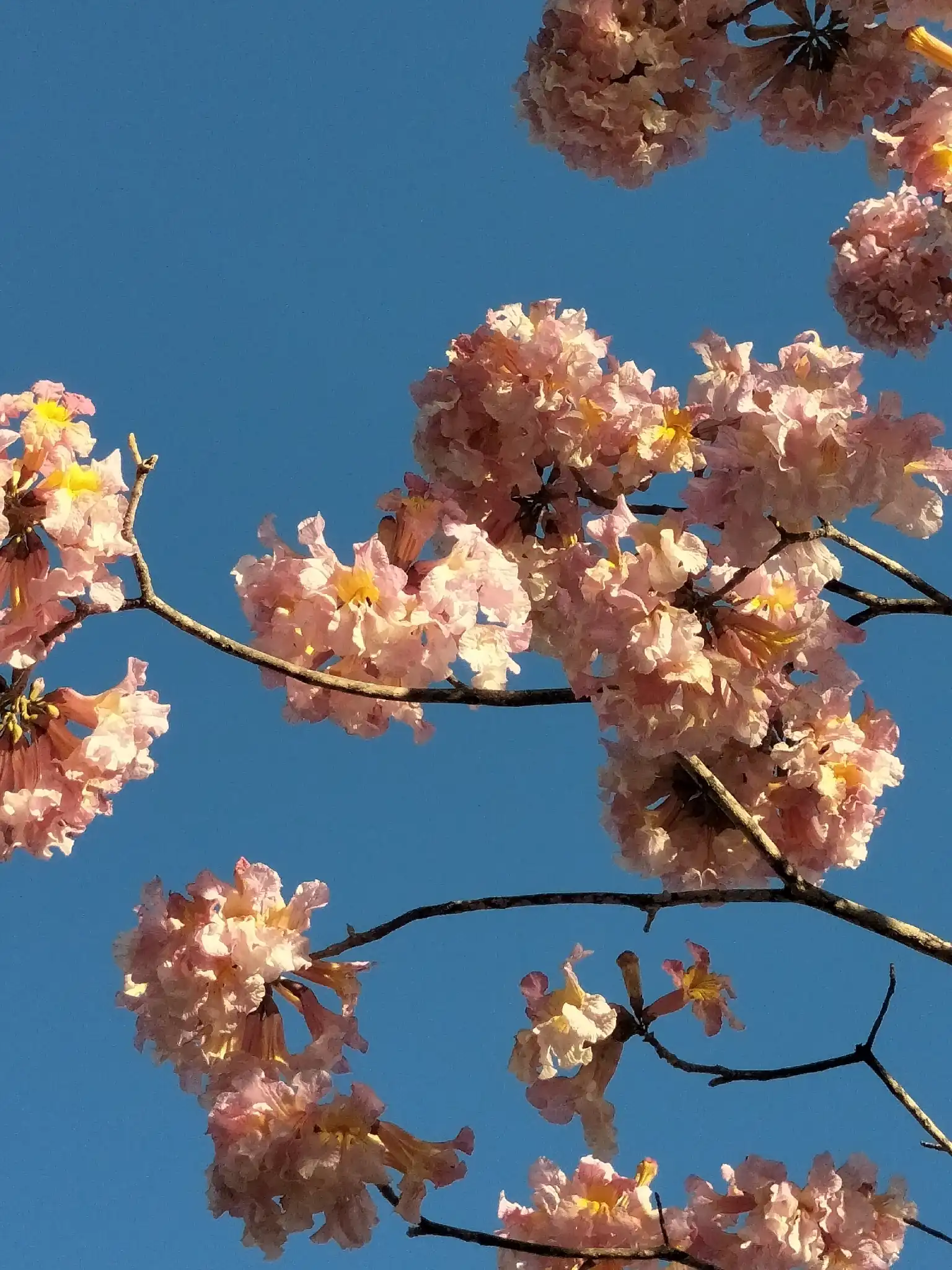
Handroanthus impetiginosus is a deciduous tree native to the Neotropics, developing an upright, spreading canopy and a gray, deeply fissured trunk. Before the foliage emerges in spring, the canopy is completely covered in dense, showy clusters of tubular pink to magenta flowers with yellow-striped throats.
The palmately compound leaves feature five to seven leaflets with finely serrated margins, emerging with a bronze tint before maturing to light green. Once established, this species exhibits high drought tolerance and adapts well to both humid and dry summer climates.
Uses & Benefits:
Essentials
At a Glance
Plant Type
Tree
Height
472"
Width
393"
Light
Full Sun
Zones
9, 10
Water
Low
Humidity
High to Low
Lifespan
Long-lived
Native To
Central and South America
Toxicity
Non-toxic
Bloom period
Spring
In flower about 3 months of the year
Planting
How to Grow
- Select a planting site in full sun with excellent drainage, as the root system is highly sensitive to waterlogging.
- Dig a hole twice as wide as the root ball but no deeper, ensuring the trunk flare sits level with or slightly above the surrounding soil.
- Water deeply at planting and maintain consistent moisture during the first growing season to establish the root system.
- Apply a balanced, slow-release fertilizer sparingly in early spring only if growth appears sluggish, avoiding excess nitrogen.
Pro Tip
Prune strictly after flowering finishes and avoid cutting back into old, leafless wood, as latent buds in mature wood fail to sprout.
Keep It Thriving
Care Guide
Do
- Plant in a location that receives full sun to maximize spring flowering.
- Ensure the soil drains rapidly, amending heavy soils with organic matter or sand if necessary.
- Protect young trees from winter frosts below 25 degrees Fahrenheit using burlap or frost cloth.
Don't
- Do not allow the soil to remain waterlogged, which quickly triggers root rot.
- Do not prune heavily into old, bare wood where new growth cannot regenerate.
- Do not over-fertilize with nitrogen, which stimulates excessive foliage at the expense of blossoms.
Seasonal Care Calendar
| Task | Jan | Feb | Mar | Apr | May | Jun | Jul | Aug | Sep | Oct | Nov | Dec |
|---|---|---|---|---|---|---|---|---|---|---|---|---|
| Fertilize | ||||||||||||
| Mulch | ||||||||||||
| Pest Check | ||||||||||||
| Prune |
Watch Out For
Pests & Diseases
Common Pests
Common Diseases
In the Garden
Landscape Uses & Companions
Landscape Uses
Companion Plants
Multiply
Propagation Methods
Good to Know
Common Questions
Pink Trumpet Tree questions
What zones can Pink Trumpet Tree grow in?
Pink Trumpet Tree is hardy in USDA Zones 9–10. Inside that range it survives winter in the ground; outside it, grow it as an annual or a container plant you protect.
Is Pink Trumpet Tree deer resistant?
Not reliably. Deer may browse Pink Trumpet Tree, especially tender spring growth — plan on repellents or fencing where pressure is high.
When does Pink Trumpet Tree bloom?
Pink Trumpet Tree typically blooms in spring through spring. Exact timing shifts a week or two with your zone — Sow's bloom calendar maps it to your garden.
Does Pink Trumpet Tree need full sun?
Pink Trumpet Tree does best in full sun (6+ hours).
Is Pink Trumpet Tree drought tolerant?
Yes — once established (usually after the first full season), Pink Trumpet Tree handles dry spells with minimal watering. Water deeply its first year to build the root system that makes that possible.
Keep exploring
Explore the genus
Hardy in your zone?
Grow Pink Trumpet Tree with confidence
See it in a design of your actual yard, get zone-matched care reminders, and track it season by season in your garden journal.