The Story
Plant Bio
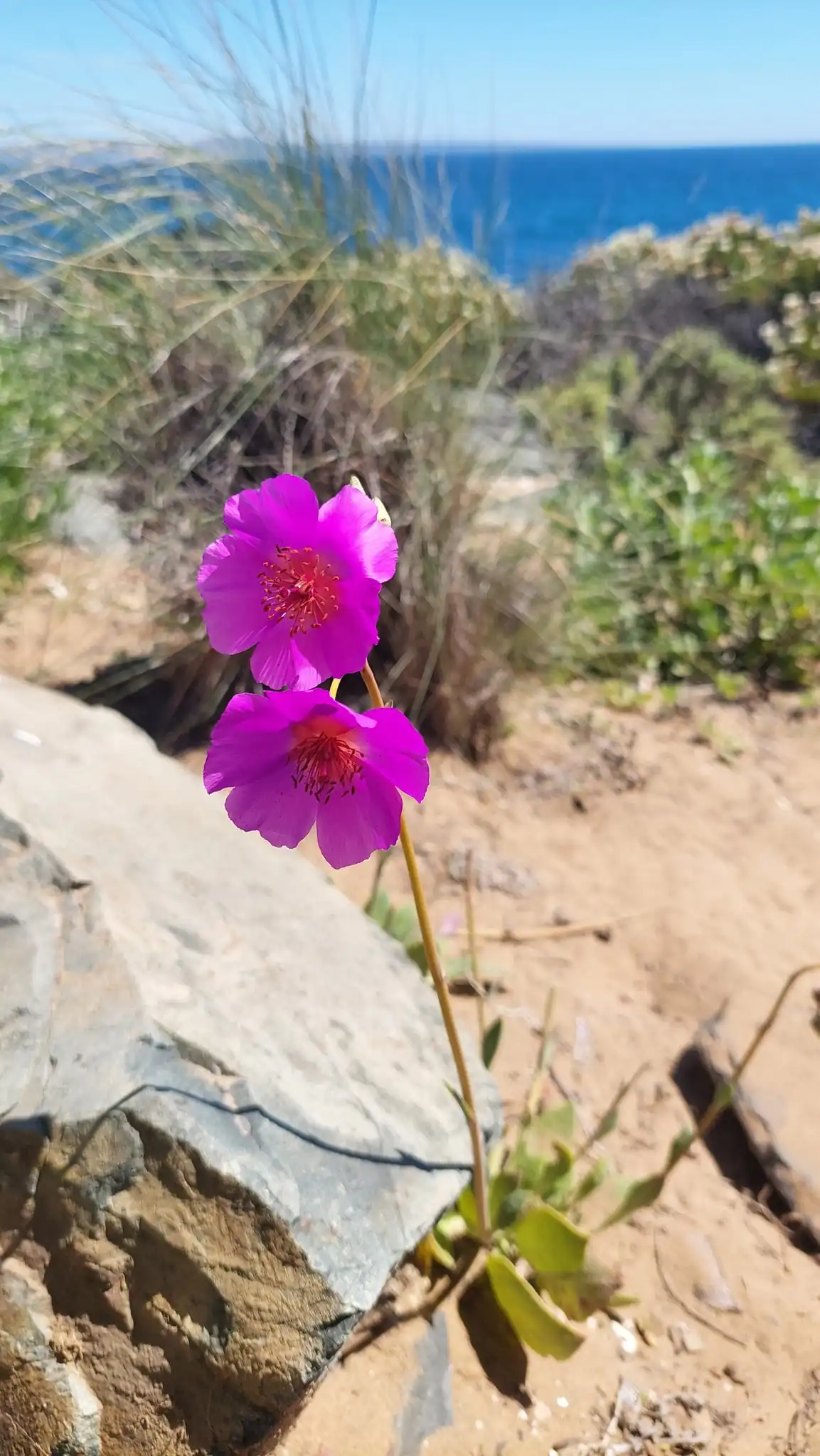
Cistanthe grandiflora is an evergreen, mounding succulent perennial native to Chile that forms a low, spreading clump of fleshy, blue-green foliage. Throughout the warmer months, it produces tall, slender stems bearing loose clusters of vibrant, poppy-like magenta flowers that open in direct sunlight and close at night.
The thick, spathulate leaves grow up to eight inches long in a tight basal rosette, providing a striking architectural texture even when the plant is not in bloom. Individual flowers feature a bright yellow center that contrasts sharply against the intense fuchsia-pink petals.
Uses & Benefits:
Essentials
At a Glance
Plant Type
Perennial
Height
24"
Width
40"
Light
Full Sun
Zones
9, 10
Water
Low
Humidity
Low to Moderate
Lifespan
Perennial
Native To
Chile
Toxicity
Non-toxic
Bloom period
Spring – Fall
In flower about 9 months of the year
Planting
How to Grow
- Select a planting site that receives full, unobstructed sun for at least six hours daily.
- Amend the planting area with coarse sand, fine gravel, or pumice to guarantee rapid drainage.
- Position the plant so the crown sits slightly above the surrounding soil level to prevent water pooling.
- Water sparingly until established, then restrict irrigation to periods of prolonged dry weather.
Pro Tip
Plant in purely mineral, gritty soil and avoid organic mulches; excess moisture around the crown or root zone triggers rapid fungal rot.
Keep It Thriving
Care Guide
Do
- Grow in poor, sandy, or rocky soils to maintain a compact, tidy growth habit.
- Provide excellent air circulation to minimize the risk of fungal issues in humid climates.
Don't
- Do not plant in heavy clay or highly organic soils that retain moisture.
- Never prune hard into old, leafless woody stems, as the plant will fail to regenerate.
Seasonal Care Calendar
| Task | Jan | Feb | Mar | Apr | May | Jun | Jul | Aug | Sep | Oct | Nov | Dec |
|---|---|---|---|---|---|---|---|---|---|---|---|---|
| Deadhead | ||||||||||||
| Pest Check | ||||||||||||
| Propagate | ||||||||||||
| Spring Cleanup | ||||||||||||
| Winter Prep |
Watch Out For
Pests & Diseases
Common Pests
Common Diseases
In the Garden
Landscape Uses & Companions
Landscape Uses
Companion Plants
Multiply
Propagation Methods
Good to Know
Common Questions
Rock Purslane questions
What zones can Rock Purslane grow in?
Rock Purslane is hardy in USDA Zones 9–10. Inside that range it survives winter in the ground; outside it, grow it as an annual or a container plant you protect.
Is Rock Purslane deer resistant?
Not reliably. Deer may browse Rock Purslane, especially tender spring growth — plan on repellents or fencing where pressure is high.
When does Rock Purslane bloom?
Rock Purslane typically blooms in spring through fall. Exact timing shifts a week or two with your zone — Sow's bloom calendar maps it to your garden.
Does Rock Purslane need full sun?
Rock Purslane does best in full sun (6+ hours).
Is Rock Purslane drought tolerant?
Yes — once established (usually after the first full season), Rock Purslane handles dry spells with minimal watering. Water deeply its first year to build the root system that makes that possible.
Keep exploring
Explore the genus
Hardy in your zone?
Grow Rock Purslane with confidence
See it in a design of your actual yard, get zone-matched care reminders, and track it season by season in your garden journal.