The Story
Plant Bio
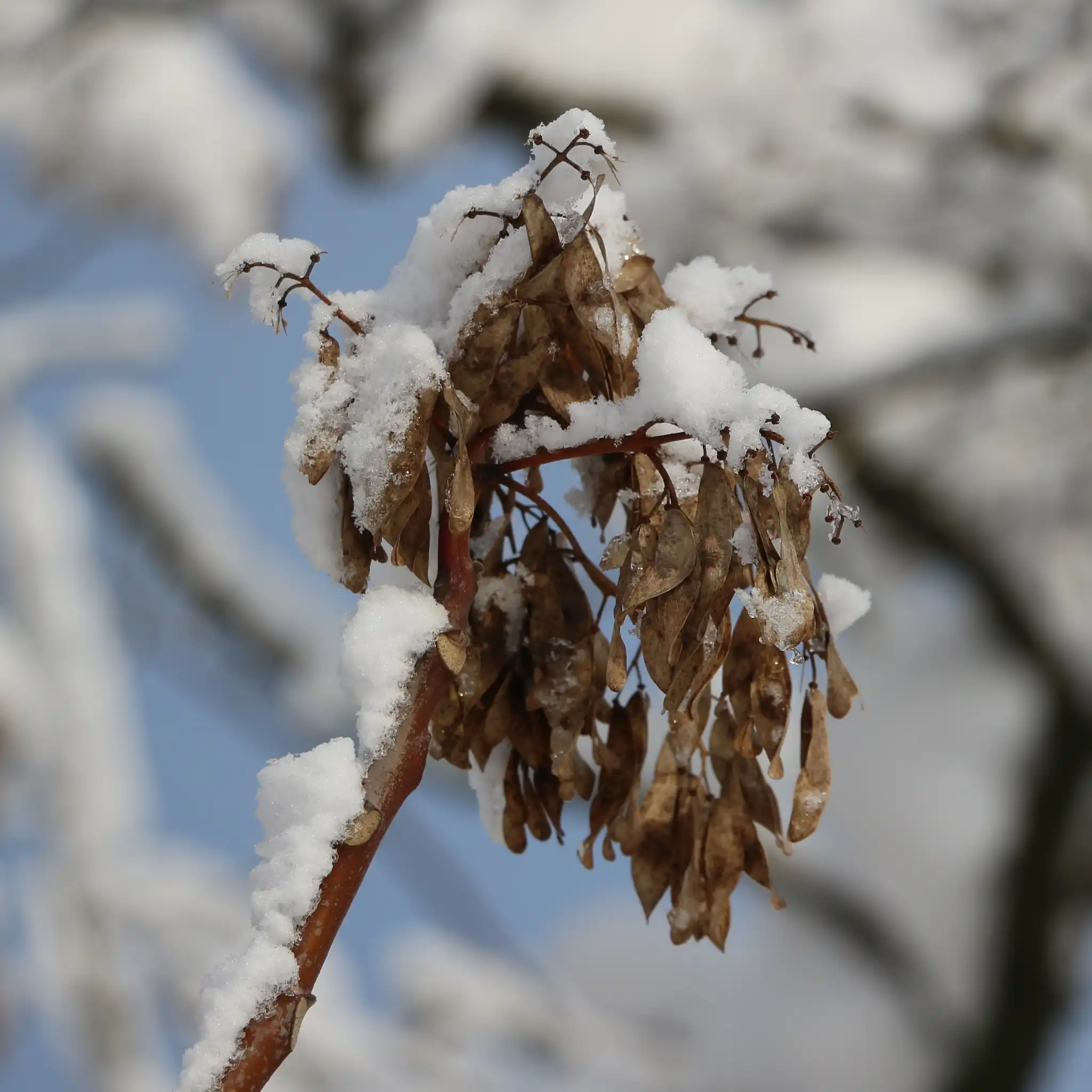
Ailanthus altissima, the tree-of-heaven, is a fast-growing deciduous tree native to China and Taiwan that reaches heights of up to one hundred feet. It develops an upright, spreading, coarse-textured canopy and spreads aggressively via wind-dispersed samaras and extensive underground root suckers.
The large, pinnately compound leaves emit a strong, unpleasant odor resembling rotting cashews when crushed and feature distinctive glandular teeth near the leaflet bases. In summer, the tree produces large terminal panicles of small, greenish-yellow flowers followed by abundant papery winged seeds.
Uses & Benefits:
Essentials
At a Glance
Plant Type
Tree
Height
1181"
Width
708"
Light
Full Sun, Partial Sun
Zones
4, 5, 6, 7, 8
Water
Low
Humidity
High
Lifespan
Medium
Native To
China and Taiwan
Toxicity
Mildly toxic if ingested; sap is a skin and eye irritant
Bloom period
Late spring – Summer
In flower about 4 months of the year
Planting
How to Grow
- Do not plant this species, as it is a highly invasive and regulated noxious weed.
- Identify wild populations by their large compound leaves and distinctive glandular teeth at the leaflet bases.
- Control established specimens using targeted systemic herbicide applications to prevent aggressive root suckering.
- Monitor the site continuously for several years to eradicate emerging seedlings and stump sprouts.
Pro Tip
Avoid routine mechanical cutting or pruning, as physical damage to the trunk or stems triggers rapid, vigorous root suckering and stump sprouting from the extensive root system.
Keep It Thriving
Care Guide
Do
- Wear gloves and protective eyewear when handling to avoid skin irritation from the sap.
- Apply systemic herbicides immediately to cut stumps to kill the root system.
- Monitor treated areas for multiple years to control persistent root suckers.
Don't
- Do not plant or propagate this species in any garden or landscape setting.
- Do not rely on mechanical cutting alone, as this stimulates rapid, dense root suckering.
- Do not compost any parts of the tree, especially seeds or root fragments.
Seasonal Care Calendar
| Task | Jan | Feb | Mar | Apr | May | Jun | Jul | Aug | Sep | Oct | Nov | Dec |
|---|---|---|---|---|---|---|---|---|---|---|---|---|
| Pest Check | ||||||||||||
| Prune | ||||||||||||
| Spray | ||||||||||||
| Spring Cleanup |
Watch Out For
Pests & Diseases
Common Pests
Common Diseases
In the Garden
Landscape Uses & Companions
Landscape Uses
Multiply
Propagation Methods
Good to Know
Common Questions
Tree-of-Heaven questions
What zones can Tree-of-Heaven grow in?
Tree-of-Heaven is hardy in USDA Zones 4–8. Inside that range it survives winter in the ground; outside it, grow it as an annual or a container plant you protect.
When does Tree-of-Heaven bloom?
Tree-of-Heaven typically blooms in late spring through summer. Exact timing shifts a week or two with your zone — Sow's bloom calendar maps it to your garden.
Does Tree-of-Heaven need full sun?
Tree-of-Heaven does best in full sun to part shade. In hot climates, afternoon shade keeps blooms fresher longer.
Is Tree-of-Heaven drought tolerant?
Yes — once established (usually after the first full season), Tree-of-Heaven handles dry spells with minimal watering. Water deeply its first year to build the root system that makes that possible.
Keep exploring
Explore the genus
Hardy in your zone?
Grow Tree-of-Heaven with confidence
See it in a design of your actual yard, get zone-matched care reminders, and track it season by season in your garden journal.