The Story
Plant Bio
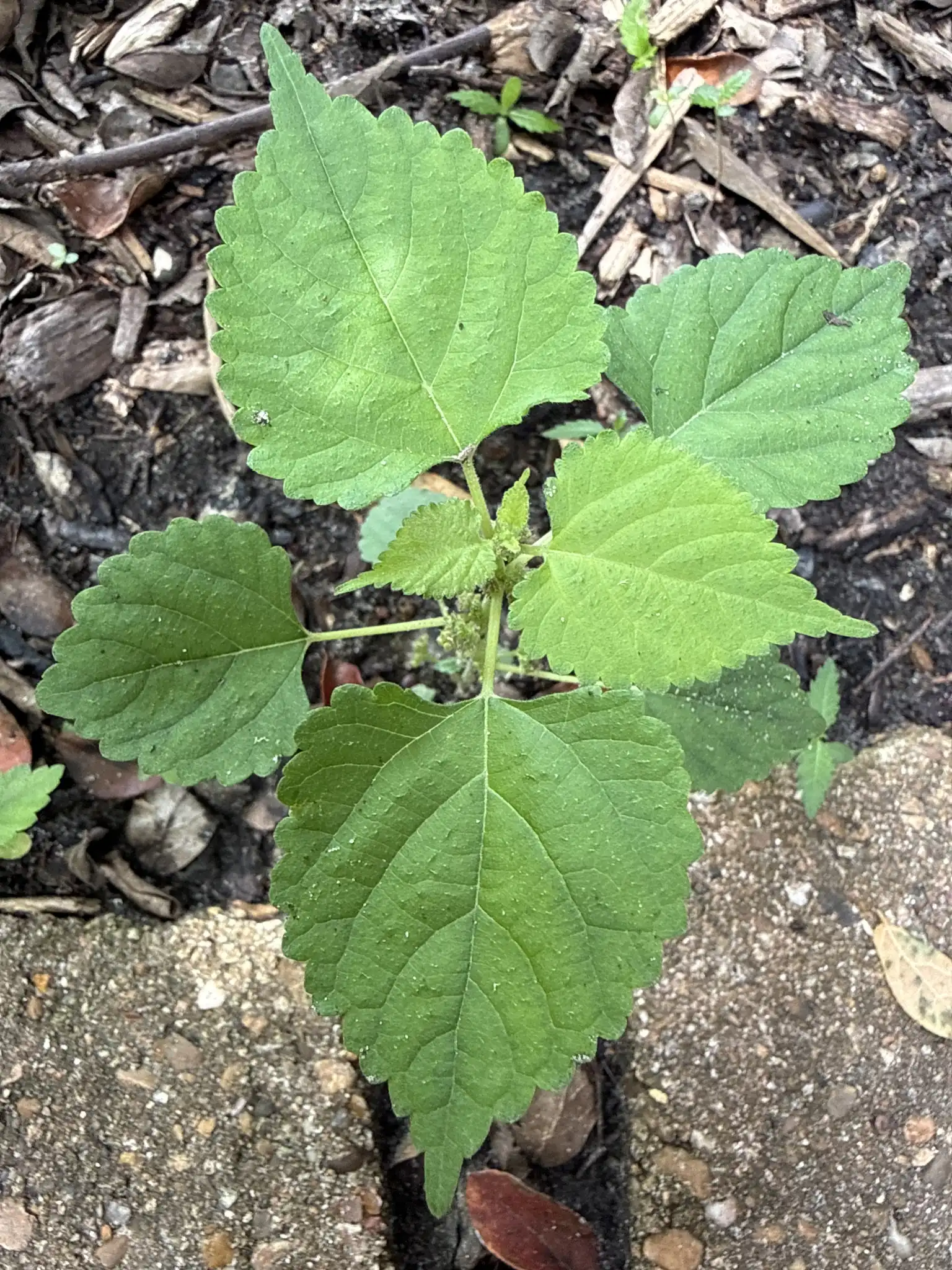
Fatoua villosa, commonly known as mulberryweed, is an erect, branching annual in the mulberry family that rapidly colonizes disturbed soils, greenhouse containers, and garden beds. The plant features alternate, papery, ovate leaves with prominent palmate veins and crenate-dentate margins, closely resembling young mulberry seedlings.
Stems are densely covered with sticky glandular and recurved hairs, while the tiny, petal-less green flowers are clustered in tight axillary cymes. This species is highly invasive in North America, spreading aggressively via explosive seed pods that project seeds several feet from the parent plant.
Uses & Benefits:
Essentials
At a Glance
Plant Type
Annual
Height
31"
Width
20"
Light
Full Sun, Partial Sun, Shade
Zones
6, 7, 8, 9, 10
Water
Medium
Humidity
High
Lifespan
Annual
Native To
Eastern Asia
Toxicity
Non-toxic (can cause mild skin irritation)
Bloom period
Summer – Fall
In flower about 6 months of the year
Planting
How to Grow
- Identify young seedlings early by their light green, mulberry-like leaves and hairy stems.
- Grip the plant firmly at the soil line to extract the entire taproot before flowering begins.
- Bag and discard all pulled plants in the trash rather than placing them in compost bins.
- Apply a thick layer of organic mulch over cleared areas to suppress any remaining seed banks.
Pro Tip
Hand-pull plants before the axillary flower clusters mature; composting pulled specimens is not recommended as the drying seed pods will still dehisce and spread viable seeds throughout the compost pile.
Keep It Thriving
Care Guide
Do
- Pull plants immediately upon identification to prevent seed production.
- Wear gloves when handling large quantities to avoid skin irritation from glandular hairs.
- Clean gardening tools and boots after working in infested areas to prevent spreading seeds.
Don't
- Do not compost mature plants with visible flower clusters.
- Do not allow the plant to go to seed in greenhouse or nursery environments.
- Do not transport soil or container plants from infested areas without inspection.
Seasonal Care Calendar
| Task | Jan | Feb | Mar | Apr | May | Jun | Jul | Aug | Sep | Oct | Nov | Dec |
|---|---|---|---|---|---|---|---|---|---|---|---|---|
| Pest Check | ||||||||||||
| Prune | ||||||||||||
| Spring Cleanup | ||||||||||||
| Winter Prep |
Watch Out For
Pests & Diseases
Common Pests
Common Diseases
In the Garden
Landscape Uses & Companions
Landscape Uses
Multiply
Propagation Methods
Good to Know
Common Questions
Mulberryweed questions
What zones can Mulberryweed grow in?
Mulberryweed is hardy in USDA Zones 6–10. Inside that range it survives winter in the ground; outside it, grow it as an annual or a container plant you protect.
Is Mulberryweed deer resistant?
Yes — Mulberryweed is rated deer-resistant. Deer typically pass it over, though extreme hunger can override any plant's defenses.
When does Mulberryweed bloom?
Mulberryweed typically blooms in summer through fall. Exact timing shifts a week or two with your zone — Sow's bloom calendar maps it to your garden.
Does Mulberryweed need full sun?
Mulberryweed does best in full sun to part shade. In hot climates, afternoon shade keeps blooms fresher longer.
Keep exploring
Explore the genus
Hardy in your zone?
Grow Mulberryweed with confidence
See it in a design of your actual yard, get zone-matched care reminders, and track it season by season in your garden journal.