The Story
Plant Bio
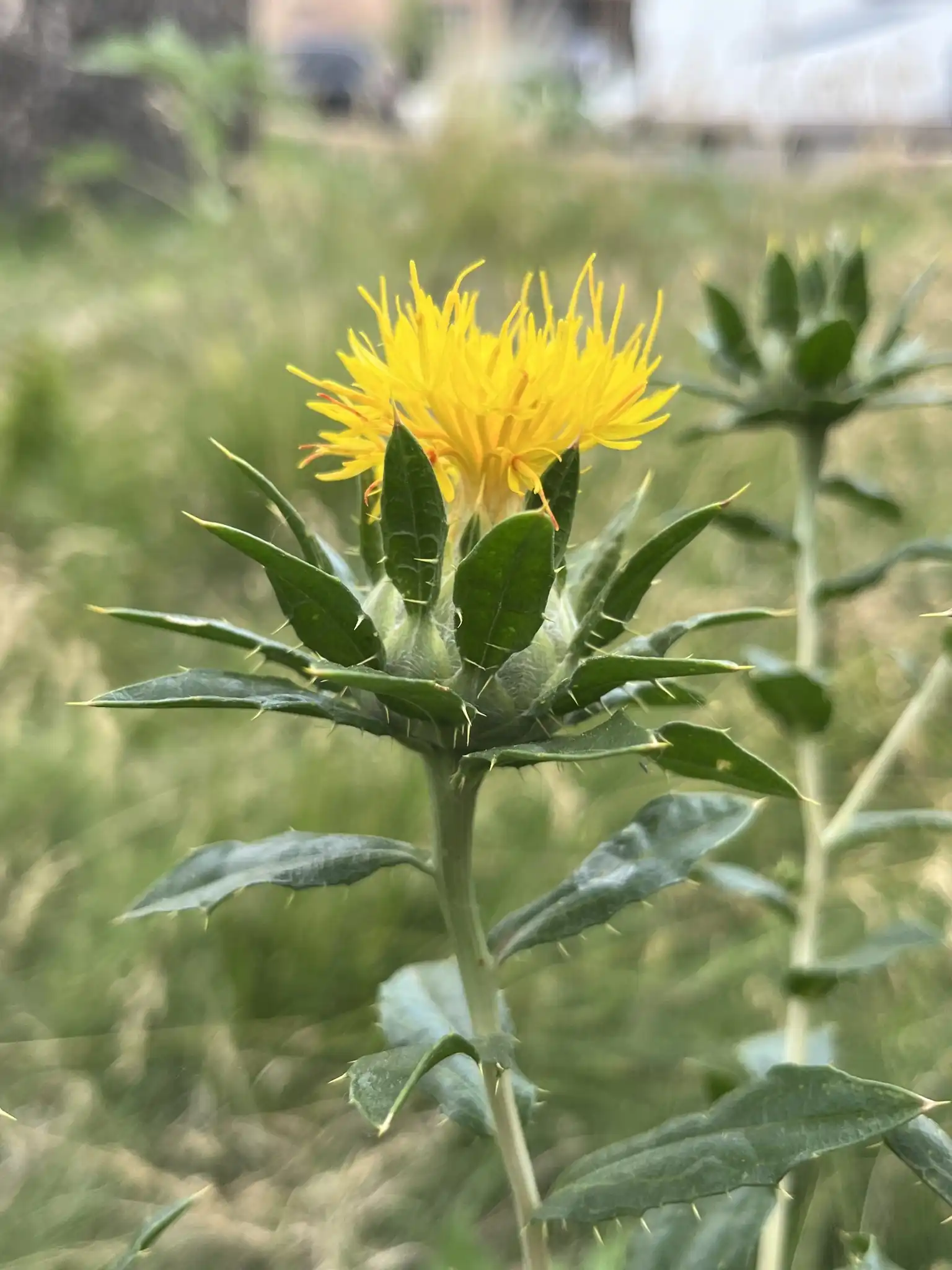
Carthamus tinctorius, commonly known as safflower, is an erect, branching annual herb native to Eurasia and the Mediterranean basin. It develops a deep taproot and produces bright green, lanceolate leaves that develop sharp, spiny margins as the plant matures.
The terminal, thistle-like flower heads open in shades of yellow, orange, or red, turning a deep red-orange as they age. These colorful inflorescences are surrounded by stiff, spiny bracts and are highly valued for both dye production and dried floral arrangements.
Uses & Benefits:
Essentials
At a Glance
Plant Type
Annual
Height
48"
Width
24"
Light
Full Sun
Zones
4, 5, 6, 7, 8, 9, 10
Water
Low
Humidity
Low
Lifespan
Annual
Native To
Eurasia
Toxicity
Non-toxic
Bloom period
Summer – Fall
In flower about 6 months of the year
Planting
How to Grow
- Select a planting site in full sun with deep, well-drained mineral soil of neutral to slightly alkaline pH.
- Sow seeds directly into the garden in spring, burying them one-half inch deep once the soil has warmed.
- Water sparingly after germination, allowing the soil to dry out completely between waterings to prevent damping-off.
- Thin seedlings to stand six to twelve inches apart to ensure adequate air circulation and prevent fungal blights.
Pro Tip
Plant safflower in exceptionally well-drained, lean soil; excessive moisture or heavy clay triggers fatal Phytophthora root rot, while high nitrogen levels cause the tall stems to lodge.
Keep It Thriving
Care Guide
Do
- Wear heavy-duty leather gloves when harvesting or handling mature plants to protect against the sharp spines.
- Grow in a site with excellent air circulation to minimize the risk of foliar fungal diseases.
- Allow the flower heads to dry completely on the stem if harvesting seeds for birds or oil.
Don't
- Do not overwater or plant in low-lying areas where water pools, as wet soil rapidly causes root decay.
- Avoid applying high-nitrogen fertilizers, which stimulate weak, floppy vegetative growth at the expense of flowers.
- Do not transplant established seedlings, as the deep taproot does not recover well from root disturbance.
Seasonal Care Calendar
| Task | Jan | Feb | Mar | Apr | May | Jun | Jul | Aug | Sep | Oct | Nov | Dec |
|---|---|---|---|---|---|---|---|---|---|---|---|---|
| Harvest | ||||||||||||
| Pest Check | ||||||||||||
| Plant | ||||||||||||
| Spring Cleanup |
Watch Out For
Pests & Diseases
Common Pests
Common Diseases
In the Garden
Landscape Uses & Companions
Landscape Uses
Companion Plants
Multiply
Propagation Methods
Good to Know
Common Questions
Safflower questions
What zones can Safflower grow in?
Safflower is hardy in USDA Zones 4–10. Inside that range it survives winter in the ground; outside it, grow it as an annual or a container plant you protect.
When does Safflower bloom?
Safflower typically blooms in summer through fall. Exact timing shifts a week or two with your zone — Sow's bloom calendar maps it to your garden.
Does Safflower need full sun?
Safflower does best in full sun (6+ hours).
Is Safflower drought tolerant?
Yes — once established (usually after the first full season), Safflower handles dry spells with minimal watering. Water deeply its first year to build the root system that makes that possible.
Keep exploring
Explore the genus
Grow Safflower with confidence
See it in a design of your actual yard, get zone-matched care reminders, and track it season by season in your garden journal.