The Story
Plant Bio
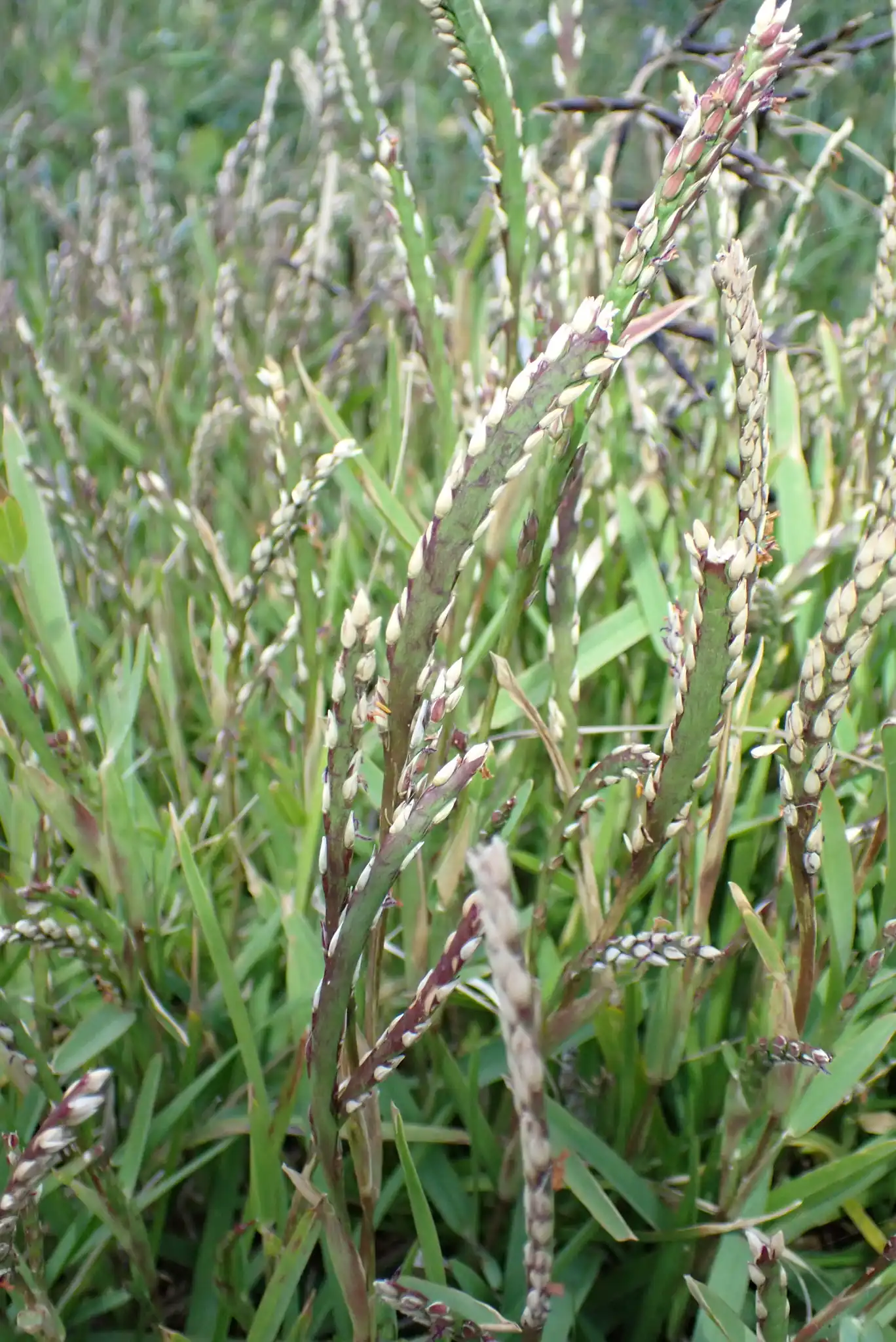
Stenotaphrum secundatum is a robust, low-growing, stoloniferous perennial grass that spreads aggressively via branching flat stolons to form a dense turf mat. The foliage consists of broad, flat, or folded linear blades with blunt, rounded tips that emerge bright green and mature to a dark blue-green.
The inconspicuous flowers are borne on a flattened, fleshy, spike-like central axis with short spikelets sunken into alternating hollows along one side. This species is highly valued as one of the most shade-tolerant warm-season turfgrasses, thriving in coastal environments with high salt spray.
Uses & Benefits:
Essentials
At a Glance
Plant Type
Grass
Height
16"
Width
120"
Light
Full Sun, Partial Sun
Zones
7, 8, 9, 10
Water
Moderate
Humidity
High
Lifespan
Perennial
Native To
Americas and Africa
Toxicity
Non-toxic
Bloom period
Summer – Autumn
In flower about 6 months of the year
Planting
How to Grow
- Prepare a well-drained planting site with a soil pH between 5.5 and 7.5, clearing all existing weeds.
- Lay rolled sod slabs tightly together or space turf plugs at regular intervals across the area.
- Water daily to keep the soil consistently moist until the root system establishes and stolons begin to spread.
- Mow the new turf once it reaches 3 to 4 inches in height, setting the blade to leave at least 2.5 inches of growth.
Pro Tip
Mow at a height of at least 2.5 inches; cutting this grass too short depletes carbohydrate reserves, weakens root depth, and invites chinch bug attacks and weed invasion.
Keep It Thriving
Care Guide
Do
- Mow every 7 to 14 days during the active summer growing season using a sharp rotary mower.
- Apply a balanced turf fertilizer to supply 2 to 4 pounds of nitrogen per 1,000 square feet annually.
- Irrigate during prolonged dry spells to prevent wilting and maintain color.
- Dethatch the lawn periodically if high nitrogen applications lead to heavy thatch build-up.
Don't
- Do not scalp the grass by mowing below 2.5 inches, which weakens the root system.
- Do not allow the soil to become waterlogged, as this grass cannot tolerate anaerobic conditions.
- Do not over-fertilize with nitrogen, which accelerates thatch accumulation and fungal diseases.
- Do not plant this grass in regions colder than USDA Zone 8 without winter protection.
Seasonal Care Calendar
| Task | Jan | Feb | Mar | Apr | May | Jun | Jul | Aug | Sep | Oct | Nov | Dec |
|---|---|---|---|---|---|---|---|---|---|---|---|---|
| Fertilize | ||||||||||||
| Pest Check | ||||||||||||
| Prune | ||||||||||||
| Winter Prep |
Watch Out For
Pests & Diseases
Common Pests
Common Diseases
In the Garden
Landscape Uses & Companions
Landscape Uses
Multiply
Propagation Methods
Good to Know
Common Questions
St. Augustine Grass questions
What zones can St. Augustine Grass grow in?
St. Augustine Grass is hardy in USDA Zones 7–10. Inside that range it survives winter in the ground; outside it, grow it as an annual or a container plant you protect.
When does St. Augustine Grass bloom?
St. Augustine Grass typically blooms in summer through autumn. Exact timing shifts a week or two with your zone — Sow's bloom calendar maps it to your garden.
Does St. Augustine Grass need full sun?
St. Augustine Grass does best in full sun to part shade. In hot climates, afternoon shade keeps blooms fresher longer.
Is St. Augustine Grass drought tolerant?
Yes — once established (usually after the first full season), St. Augustine Grass handles dry spells with minimal watering. Water deeply its first year to build the root system that makes that possible.
Keep exploring
Explore the genus
Hardy in your zone?
Grow St. Augustine Grass with confidence
See it in a design of your actual yard, get zone-matched care reminders, and track it season by season in your garden journal.