The Story
Plant Bio
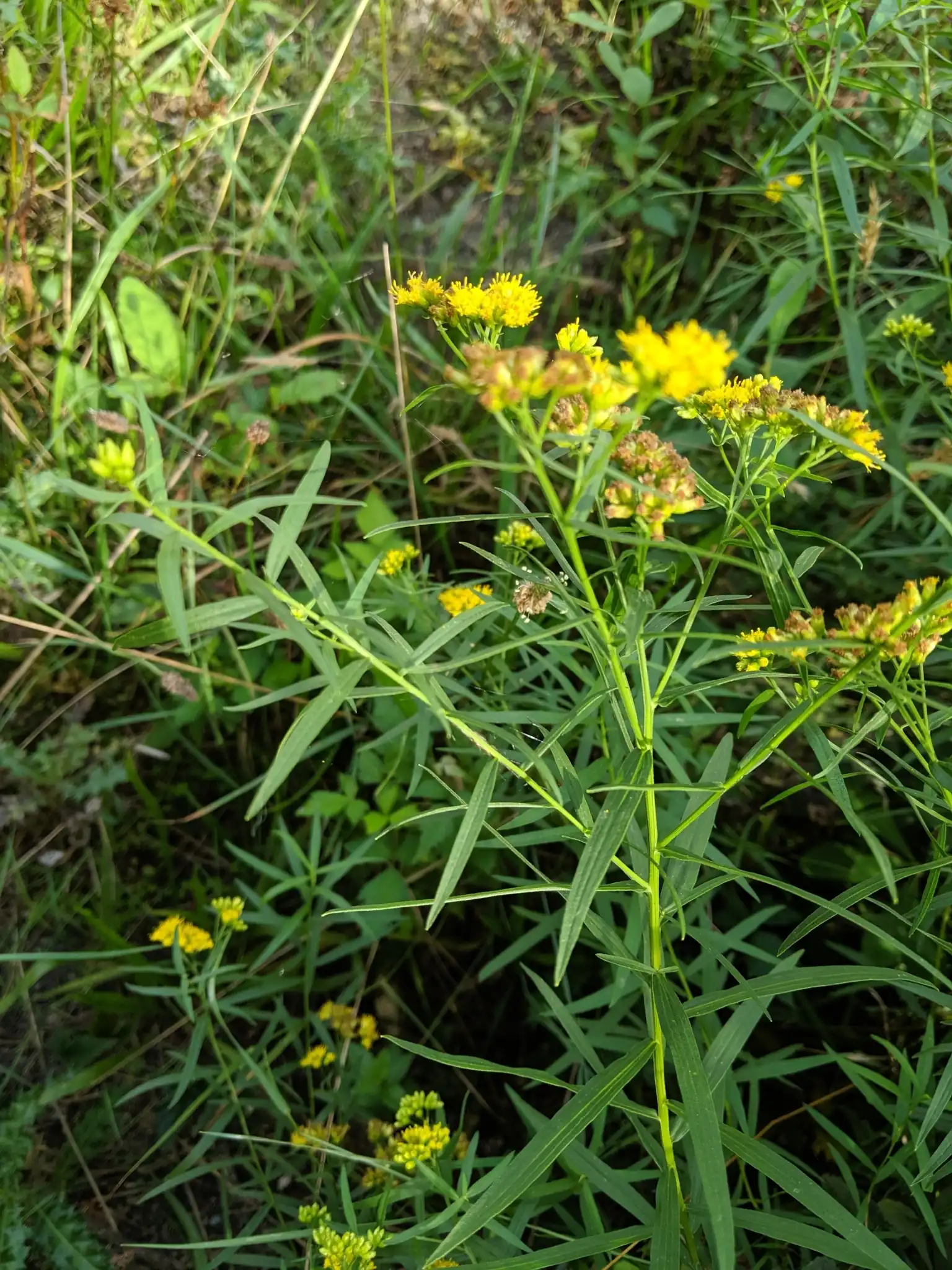
Euthamia graminifolia is a native perennial found across North America, typically in moist fields, meadows, and roadsides. Unlike the plume-like flowers of most Solidago (goldenrod) species, it has flat-topped clusters of tiny, bright yellow flowers.
Its fine-textured, grass-like leaves give it a unique appearance throughout the season, distinguishing it from its broader-leaved relatives. It is a powerhouse pollinator plant, attracting a huge diversity of bees, wasps, and butterflies.
Uses & Benefits:
Essentials
At a Glance
Plant Type
Perennial
Height
36"
Width
30"
Light
Full Sun, Partial Sun
Zones
4, 5, 6, 7, 8
Water
Moderate to high
Humidity
Adaptable
Lifespan
Long-lived perennial
Native To
North America
Toxicity
Non-toxic
Bloom period
Late summer – Mid-fall
In flower about 3 months of the year
Planting
How to Grow
- Select a site in full sun with average to moist soil.
- It is highly adaptable and tolerates a range of conditions.
- Dig a hole and plant at the same depth as its container.
- Water well after planting.
- It spreads by rhizomes to form colonies.
- No fertilizer or supplemental care is typically needed.
Pro Tip
Plant this in a wilder part of the garden or a meadow setting, as its rhizomatous spread can be too aggressive for a formal perennial border.
Keep It Thriving
Care Guide
Do
- Provide full sun for the sturdiest growth.
- Allow it to spread to form a naturalistic patch.
- Appreciate its incredible value to late-season pollinators.
Don't
- Don't plant it in a small, tidy border where it will outcompete neighbors.
- Don't mistake it for the cause of hay fever (ragweed is the culprit).
- Don't over-fertilize.
Seasonal Care Calendar
| Task | Jan | Feb | Mar | Apr | May | Jun | Jul | Aug | Sep | Oct | Nov | Dec |
|---|---|---|---|---|---|---|---|---|---|---|---|---|
| Divide | ||||||||||||
| Plant |
Watch Out For
Pests & Diseases
Common Pests
Common Diseases
In the Garden
Landscape Uses & Companions
Landscape Uses
Multiply
Propagation Methods
Good to Know
Common Questions
Grass-leaved Goldenrod questions
What zones can Grass-leaved Goldenrod grow in?
Grass-leaved Goldenrod is hardy in USDA Zones 4–8. Inside that range it survives winter in the ground; outside it, grow it as an annual or a container plant you protect.
Is Grass-leaved Goldenrod deer resistant?
Yes — Grass-leaved Goldenrod is rated deer-resistant. Deer typically pass it over, though extreme hunger can override any plant's defenses.
When does Grass-leaved Goldenrod bloom?
Grass-leaved Goldenrod typically blooms in late summer through mid-fall. Exact timing shifts a week or two with your zone — Sow's bloom calendar maps it to your garden.
Does Grass-leaved Goldenrod need full sun?
Grass-leaved Goldenrod does best in full sun to part shade. In hot climates, afternoon shade keeps blooms fresher longer.
More Euthamia to compare
Keep exploring
Explore the genus
Hardy in your zone?
Grow Grass-leaved Goldenrod with confidence
See it in a design of your actual yard, get zone-matched care reminders, and track it season by season in your garden journal.