The Story
Plant Bio
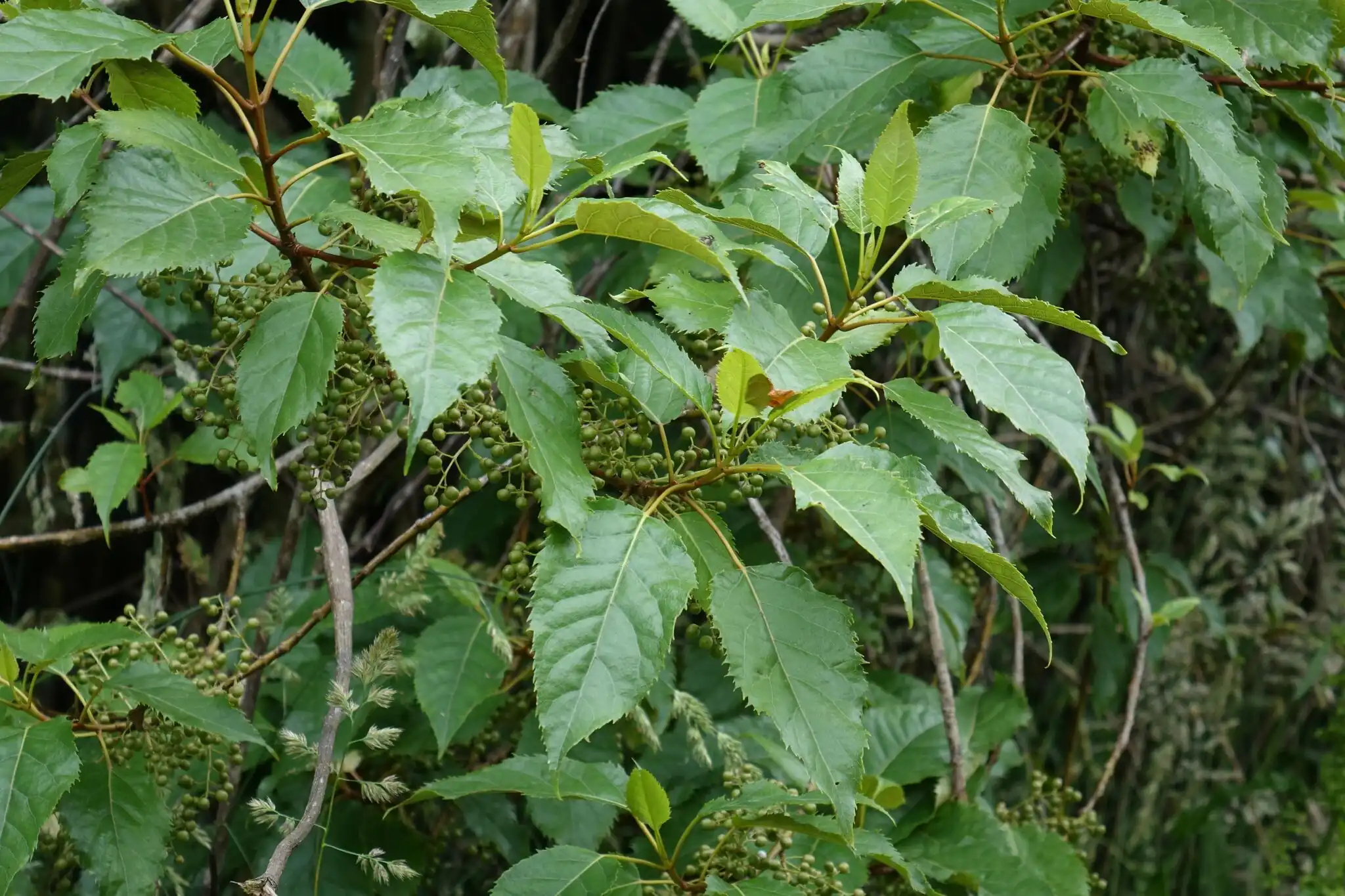
Aristotelia serrata, commonly known as New Zealand wineberry, is a fast-growing, semi-deciduous small tree characterized by its smooth gray trunk and reddish, finely pubescent young branchlets. The broad, membranous leaves feature deeply and doubly serrate margins, with light green upper surfaces and pale undersides that are frequently flushed with purple or pink.
In spring, the tree produces axillary panicles of small flowers that transition from white and light pink to deep red as they age. Because the species is strictly dioecious, both male and female specimens must be planted in close proximity to produce the small, dark berries favored by frugivorous birds.
Uses & Benefits:
Essentials
At a Glance
Plant Type
Tree
Height
393"
Width
157"
Light
Full Sun, Partial Sun
Zones
8, 9, 10
Water
High
Humidity
Moderate to high
Lifespan
Moderate
Native To
New Zealand
Toxicity
Non-toxic
Bloom period
Spring – Early summer
In flower about 4 months of the year
Planting
How to Grow
- Select a planting site with moist, well-draining soil in full sun to partial shade, ideally sheltered from strong, drying winds.
- Dig a hole twice the width of the root ball and backfill with native soil, ensuring the crown sits level with the surrounding ground.
- Apply a thick layer of organic mulch over the root zone to conserve soil moisture, keeping the mulch clear of the trunk.
- Water deeply and regularly during the first few growing seasons to prevent the soil from drying out completely.
Pro Tip
Keep the root zone consistently moist, as this forest-margin species drops its foliage rapidly and declines under any prolonged drought stress.
Keep It Thriving
Care Guide
Do
- Plant both male and female specimens nearby if fruit production is desired.
- Maintain consistent soil moisture, especially during dry summer spells.
- Apply a balanced, slow-release organic fertilizer in early spring.
Don't
- Do not prune heavily into old, bare wood, as it will fail to regenerate.
- Do not allow the soil to dry out completely, which triggers leaf drop.
- Do not plant in poorly drained or waterlogged sites prone to root rot.
Seasonal Care Calendar
| Task | Jan | Feb | Mar | Apr | May | Jun | Jul | Aug | Sep | Oct | Nov | Dec |
|---|---|---|---|---|---|---|---|---|---|---|---|---|
| Fertilize | ||||||||||||
| Mulch | ||||||||||||
| Pest Check | ||||||||||||
| Prune |
Watch Out For
Pests & Diseases
Common Pests
Common Diseases
In the Garden
Landscape Uses & Companions
Landscape Uses
Companion Plants
Multiply
Propagation Methods
Good to Know
Common Questions
New Zealand Wineberry questions
What zones can New Zealand Wineberry grow in?
New Zealand Wineberry is hardy in USDA Zones 8–10. Inside that range it survives winter in the ground; outside it, grow it as an annual or a container plant you protect.
Is New Zealand Wineberry deer resistant?
Not reliably. Deer may browse New Zealand Wineberry, especially tender spring growth — plan on repellents or fencing where pressure is high.
When does New Zealand Wineberry bloom?
New Zealand Wineberry typically blooms in spring through early summer. Exact timing shifts a week or two with your zone — Sow's bloom calendar maps it to your garden.
Does New Zealand Wineberry need full sun?
New Zealand Wineberry does best in full sun to part shade. In hot climates, afternoon shade keeps blooms fresher longer.
Keep exploring
Explore the genus
Hardy in your zone?
Grow New Zealand Wineberry with confidence
See it in a design of your actual yard, get zone-matched care reminders, and track it season by season in your garden journal.