The Story
Plant Bio
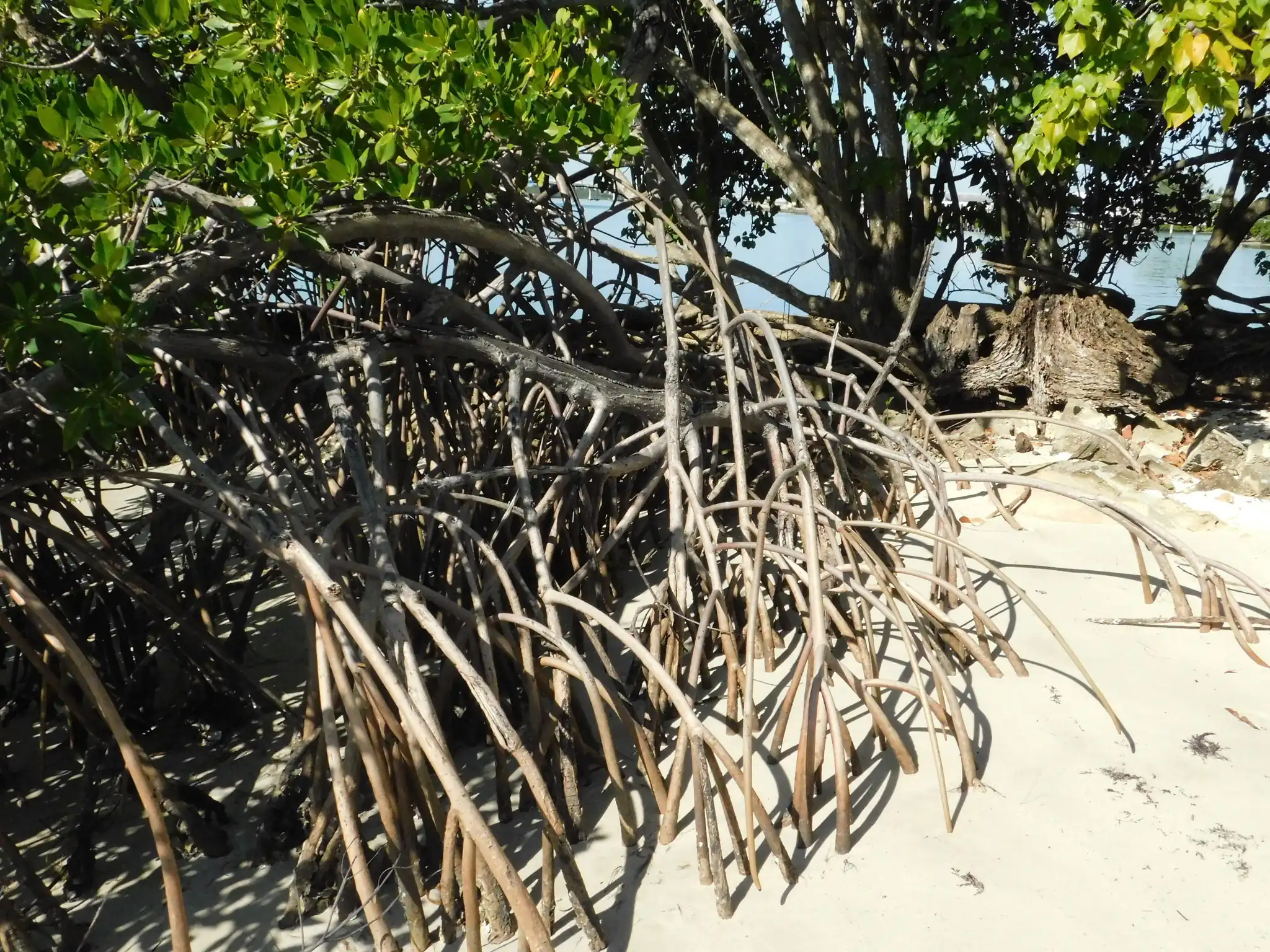
Rhizophora mangle, commonly known as red mangrove, is an evergreen arborescent tree native to tropical coastal shorelines and estuarine intertidal zones. It is distinguished by a thick, arching network of stilt roots dropping from the trunk and lower branches to anchor the tree in shifting tidal sediments.
The thick, leathery, dark green leaves feature pale yellow-green undersides marked with minute dark dots. Small yellowish-green flowers yield torpedo-shaped viviparous propagules that germinate while still attached to the parent tree before dropping into the water to float.
Uses & Benefits:
Essentials
At a Glance
Plant Type
Tree
Height
236"
Width
236"
Light
Full Sun, Partial Sun
Zones
10
Water
High (permanently saturated/flooded)
Humidity
High
Lifespan
Perennial
Native To
Americas, West Tropical Africa
Toxicity
Non-toxic
Bloom period
Early summer – Year round
In flower about 7 months of the year
Planting
How to Grow
- Select an intertidal site, pond margin, or saturated container where the root zone remains submerged in brackish or salt water.
- Plant propagules vertically with the lower third pushed firmly into wet mud, or transfer containerized trees keeping the soil line level with the surrounding sediment.
- Maintain full sun to light shade, ensuring the root environment remains constantly wet and protected from freezing drafts.
- Monitor water salinity and flow, avoiding total stagnant drying out or exposure to cold temperatures below freezing.
Pro Tip
Grow in permanently saturated brackish or saline soil; attempting to cultivate red mangrove in standard dry garden soil causes rapid decline.
Keep It Thriving
Care Guide
Do
- Keep the root zone permanently inundated or saturated with saline or brackish water.
- Provide bright full sun to maintain dense canopy growth and strong root arching.
- Protect young established stems from frost exposure.
Don't
- Never prune into old, bare, leafless wood, as stems fail to regenerate from structural timber.
- Do not allow the growing medium to dry out completely at any point.
- Do not plant in dry terrestrial soils with standard garden drainage.
Seasonal Care Calendar
| Task | Jan | Feb | Mar | Apr | May | Jun | Jul | Aug | Sep | Oct | Nov | Dec |
|---|---|---|---|---|---|---|---|---|---|---|---|---|
| Pest Check | ||||||||||||
| Propagate | ||||||||||||
| Prune | ||||||||||||
| Winter Prep |
Watch Out For
Pests & Diseases
Common Pests
Common Diseases
In the Garden
Landscape Uses & Companions
Landscape Uses
Companion Plants
Multiply
Propagation Methods
Good to Know
Common Questions
Red Mangrove questions
What zones can Red Mangrove grow in?
Red Mangrove is hardy in USDA Zone 10. Inside that range it survives winter in the ground; outside it, grow it as an annual or a container plant you protect.
When does Red Mangrove bloom?
Red Mangrove typically blooms in early summer through year round. Exact timing shifts a week or two with your zone — Sow's bloom calendar maps it to your garden.
Does Red Mangrove need full sun?
Red Mangrove does best in full sun to part shade. In hot climates, afternoon shade keeps blooms fresher longer.
Keep exploring
Explore the genus
Hardy in your zone?
Grow Red Mangrove with confidence
See it in a design of your actual yard, get zone-matched care reminders, and track it season by season in your garden journal.