

The Story
Plant Bio
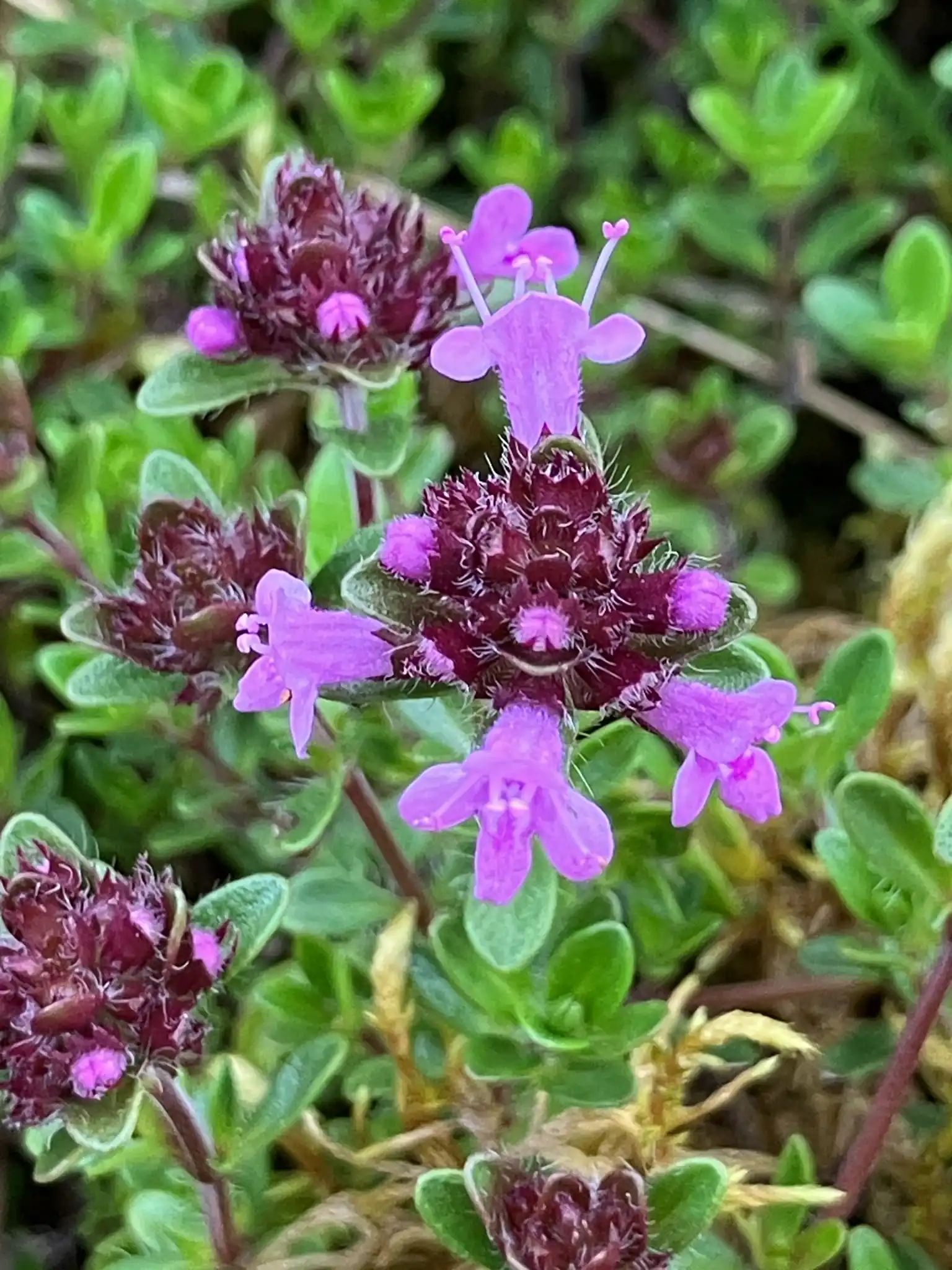
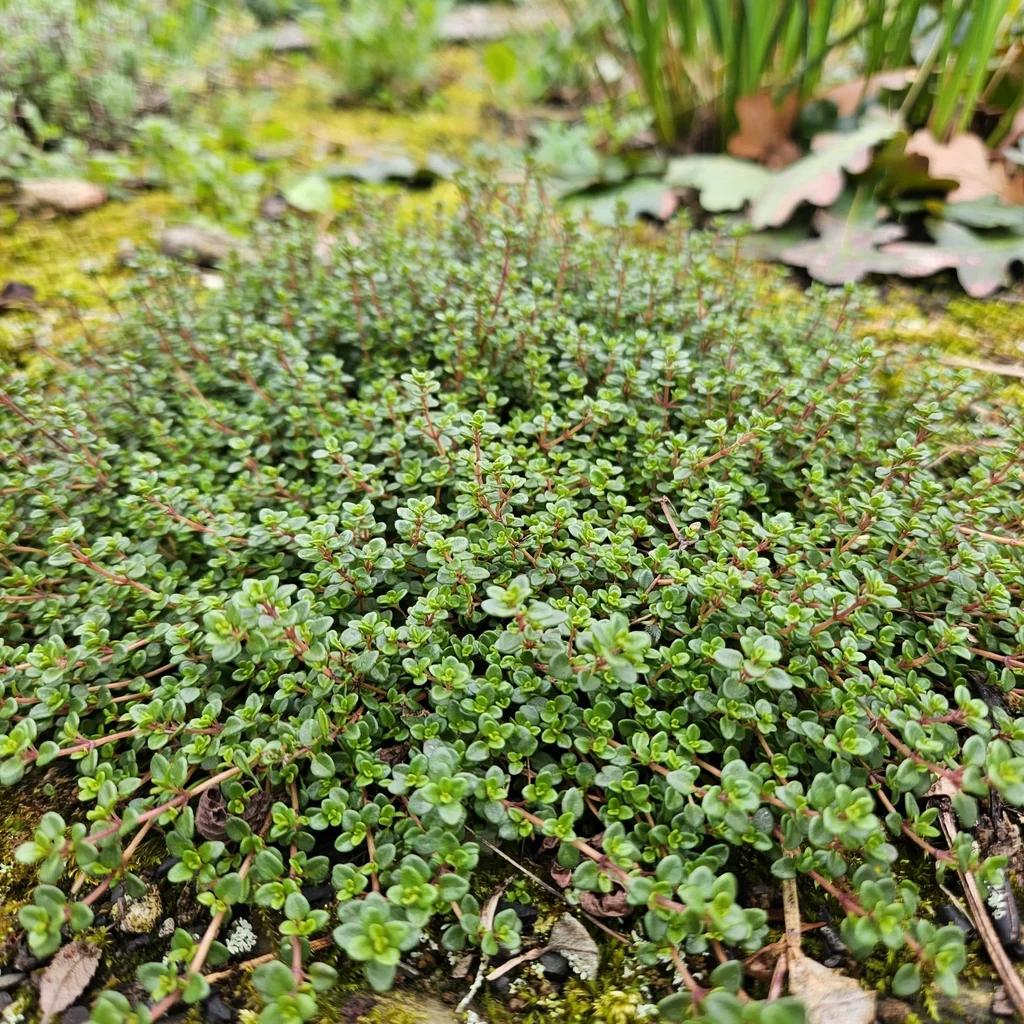
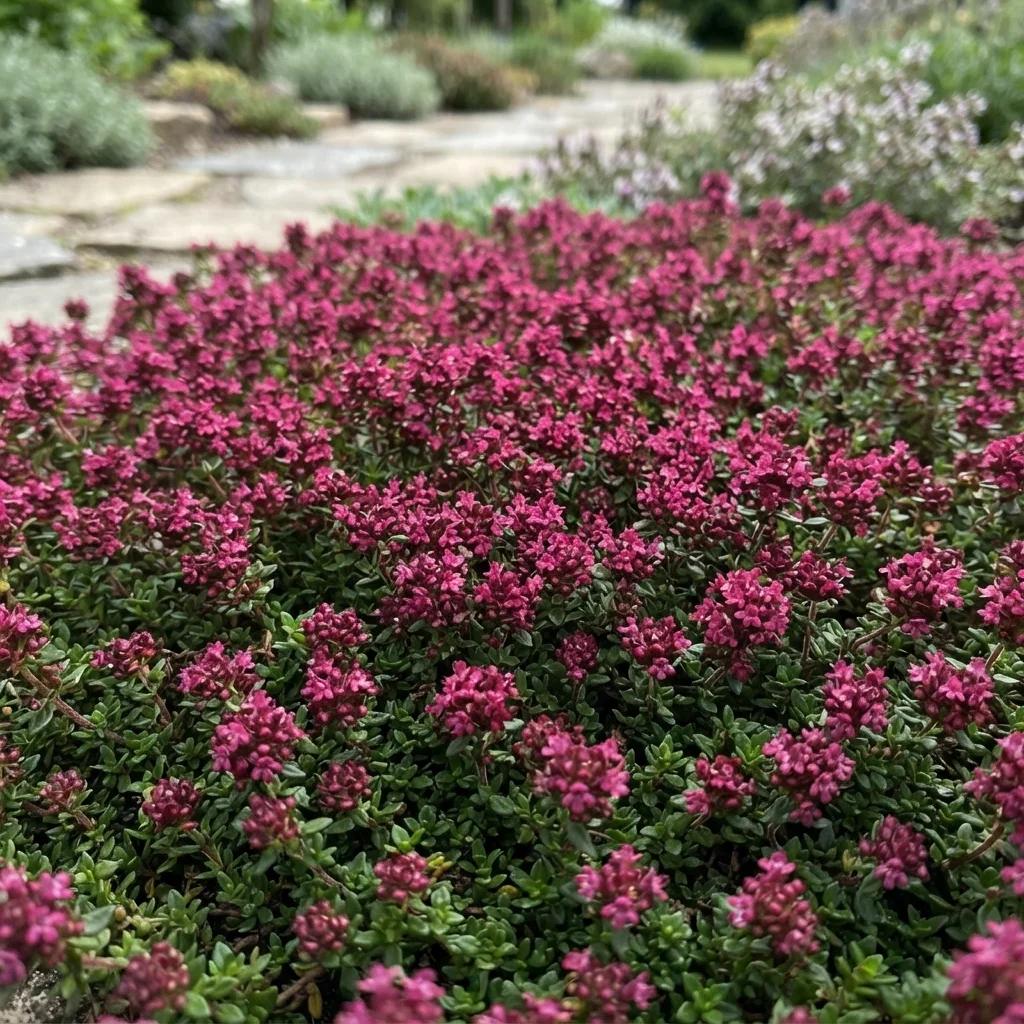
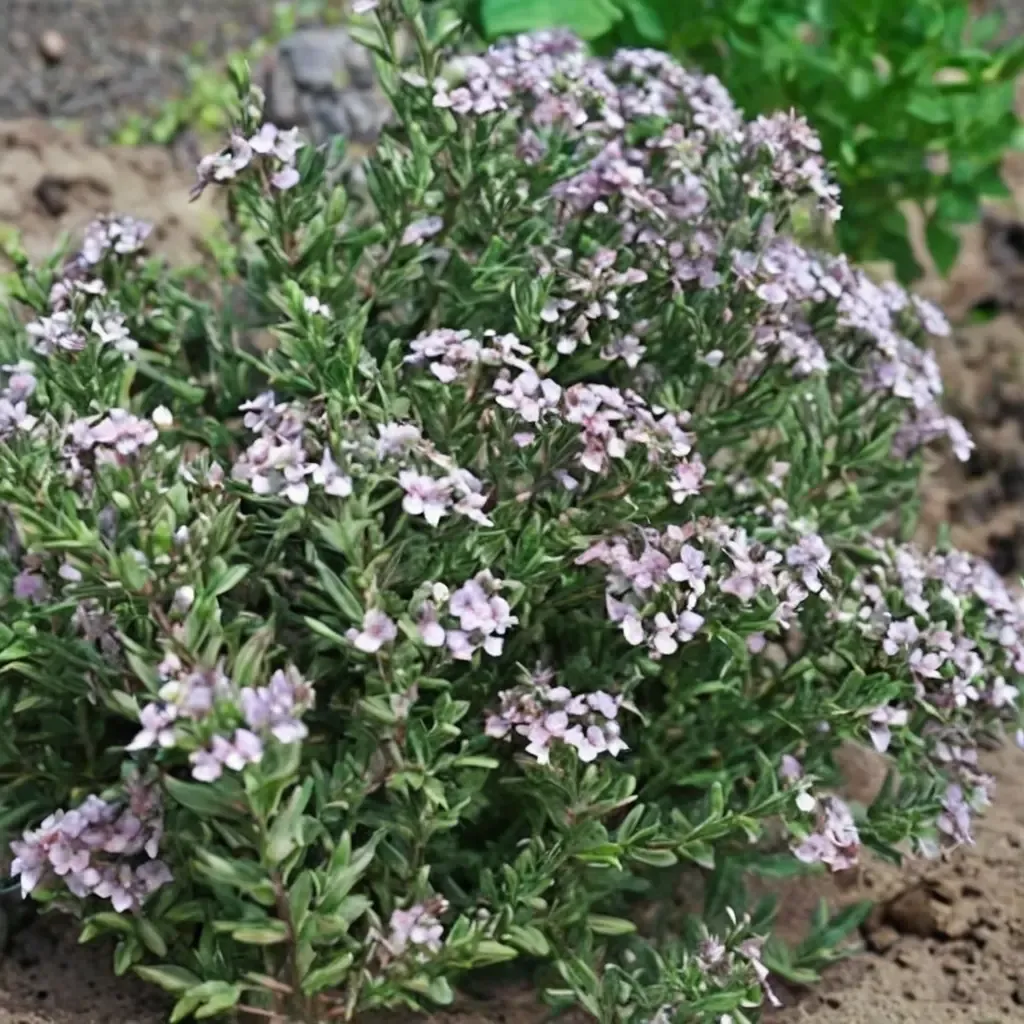
Thymus praecox, creeping thyme, is a low mat-forming woody perennial from Europe and Turkey, three to six inches high and spreading up to a foot. Tiny fuzzy blue-green oval leaves clothe woody stems that run horizontally across the soil surface, and dense heads of small tubular pink-purple flowers smother the mat in summer.
It takes light foot traffic and releases scent when trodden on, which makes it one of the few plants worth putting between paving stones or along a path edge deliberately. Note that this is the ornamental creeping thyme rather than the culinary one — NCSU records it as rarely used in the kitchen, so plant Thymus vulgaris if you want cooking thyme.
Uses & Benefits:
Essentials
At a Glance
Plant Type
Groundcover
Height
4"
Width
12"
Light
Full Sun
Zones
4, 5, 6, 7, 8, 9
Water
Low
Humidity
Low
Lifespan
Perennial
Native To
Europe to Turkey
Toxicity
Non-toxic; rarely used as a culinary herb
Planting
How to Grow
- Plant in full sun in gritty, sharply drained soil.
- Use it between paving and along path edges.
- Water while establishing, then rarely.
- Do not feed; lean soil keeps growth tight.
- Shear lightly after flowering to keep it dense.
- Replace patches that go woody and bare.
Pro Tip
Plant it where people actually walk — the scent only releases when the mat is trodden on, which is the whole point of it in paving.
Keep It Thriving
Care Guide
Do
- Give it full sun and sharp drainage ☀️
- Plant it where it will be walked on 👣
- Shear lightly after flowering ✂️
- Leave it unfed 🚫
Don't
- Plant it in heavy or wet ground ❌
- Use it as a culinary thyme ❌
- Let winter wet sit on the mat ❌
Seasonal Care Calendar
| Task | Jan | Feb | Mar | Apr | May | Jun | Jul | Aug | Sep | Oct | Nov | Dec |
|---|---|---|---|---|---|---|---|---|---|---|---|---|
| Plant | ||||||||||||
| Shear |
Watch Out For
Pests & Diseases
Common Pests
Common Diseases
In the Garden
Landscape Uses & Companions
Landscape Uses
Companion Plants
Multiply
Propagation Methods
Good to Know
Common Questions
Creeping Thyme questions
What zones can Creeping Thyme grow in?
Creeping Thyme is hardy in USDA Zones 4–9. Inside that range it survives winter in the ground; outside it, grow it as an annual or a container plant you protect.
Is Creeping Thyme deer resistant?
Yes — Creeping Thyme is rated deer-resistant. Deer typically pass it over, though extreme hunger can override any plant's defenses.
When does Creeping Thyme bloom?
Creeping Thyme typically blooms in late spring to summer through early summer. Exact timing shifts a week or two with your zone — Sow's bloom calendar maps it to your garden.
Does Creeping Thyme need full sun?
Creeping Thyme does best in full sun (6+ hours).
Is Creeping Thyme drought tolerant?
Yes — once established (usually after the first full season), Creeping Thyme handles dry spells with minimal watering. Water deeply its first year to build the root system that makes that possible.
More Thymus to compare
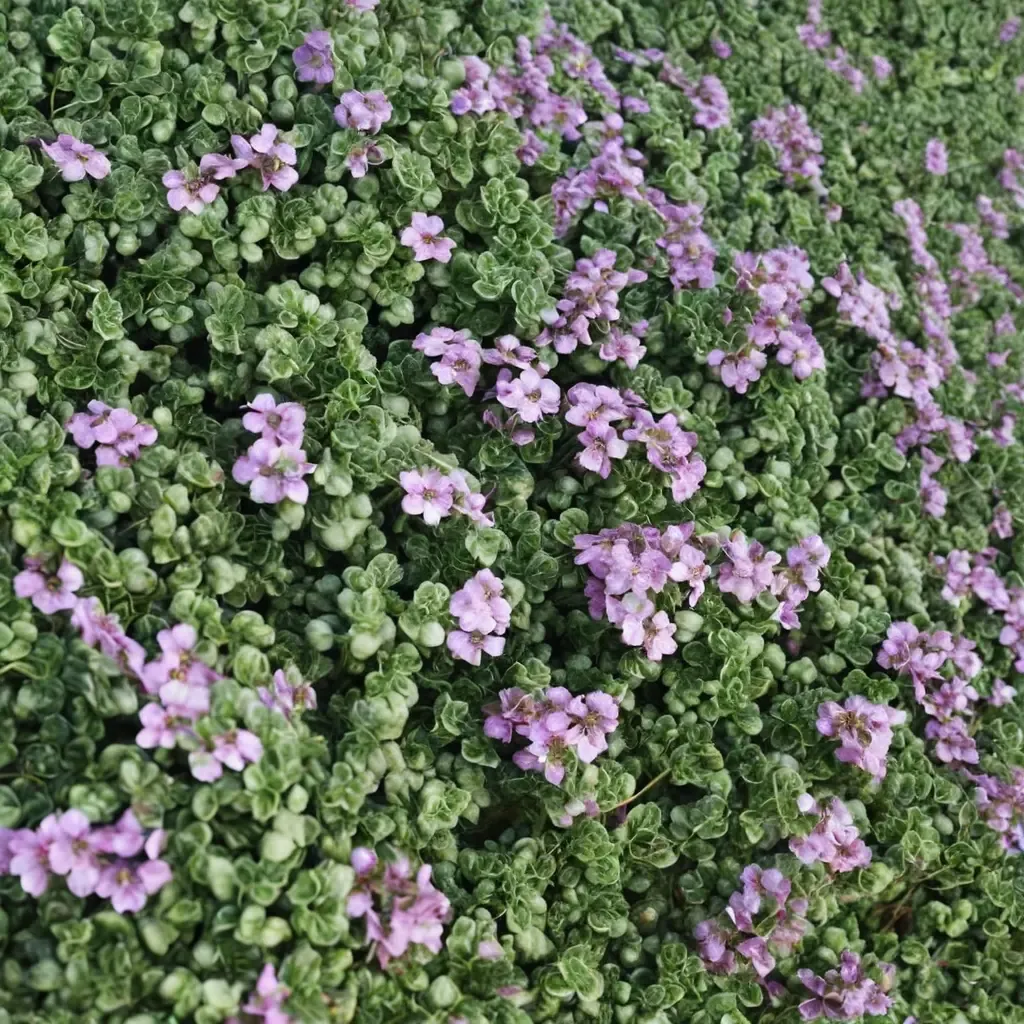
Elfin Creeping Thyme
Thymus serpyllum 'Elfin'
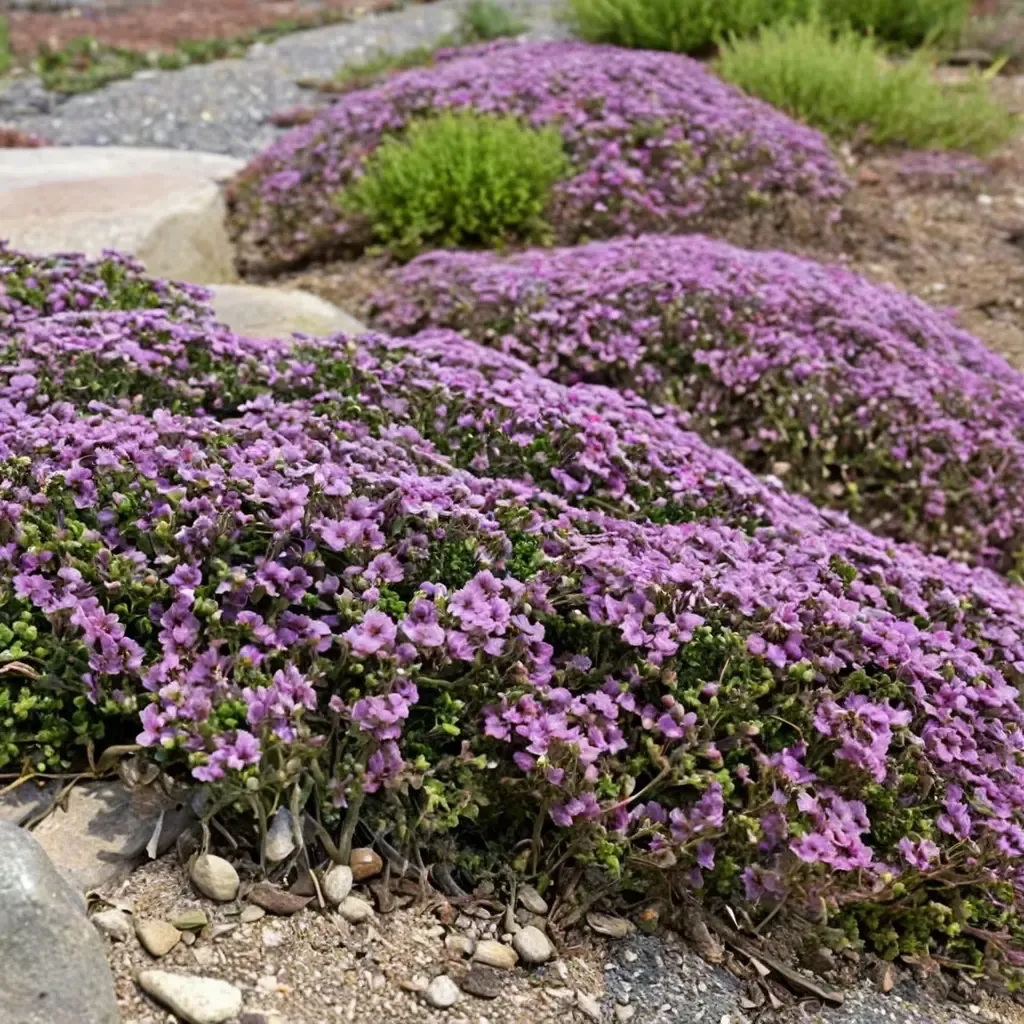
Red Creeping Thyme
Thymus praecox 'Coccineus'
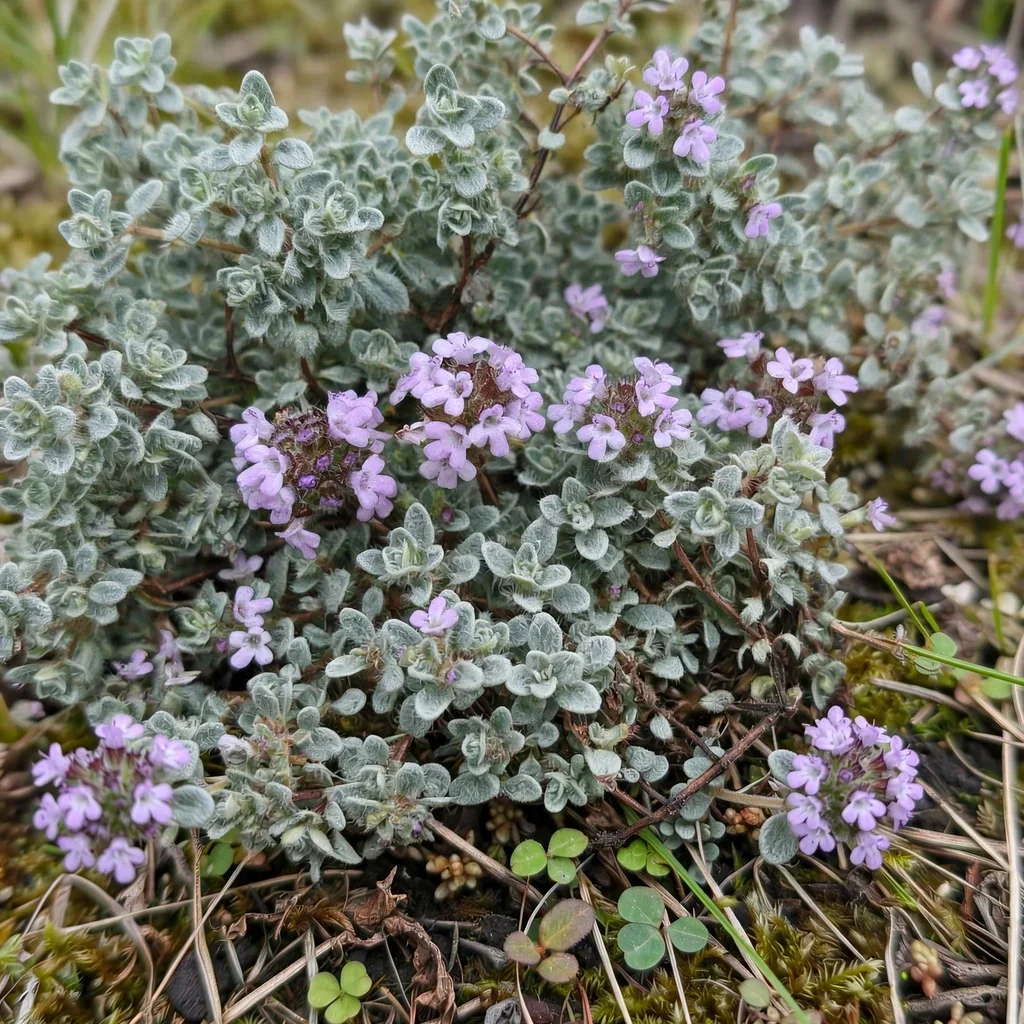
Woolly Thyme
Thymus lanuginosus
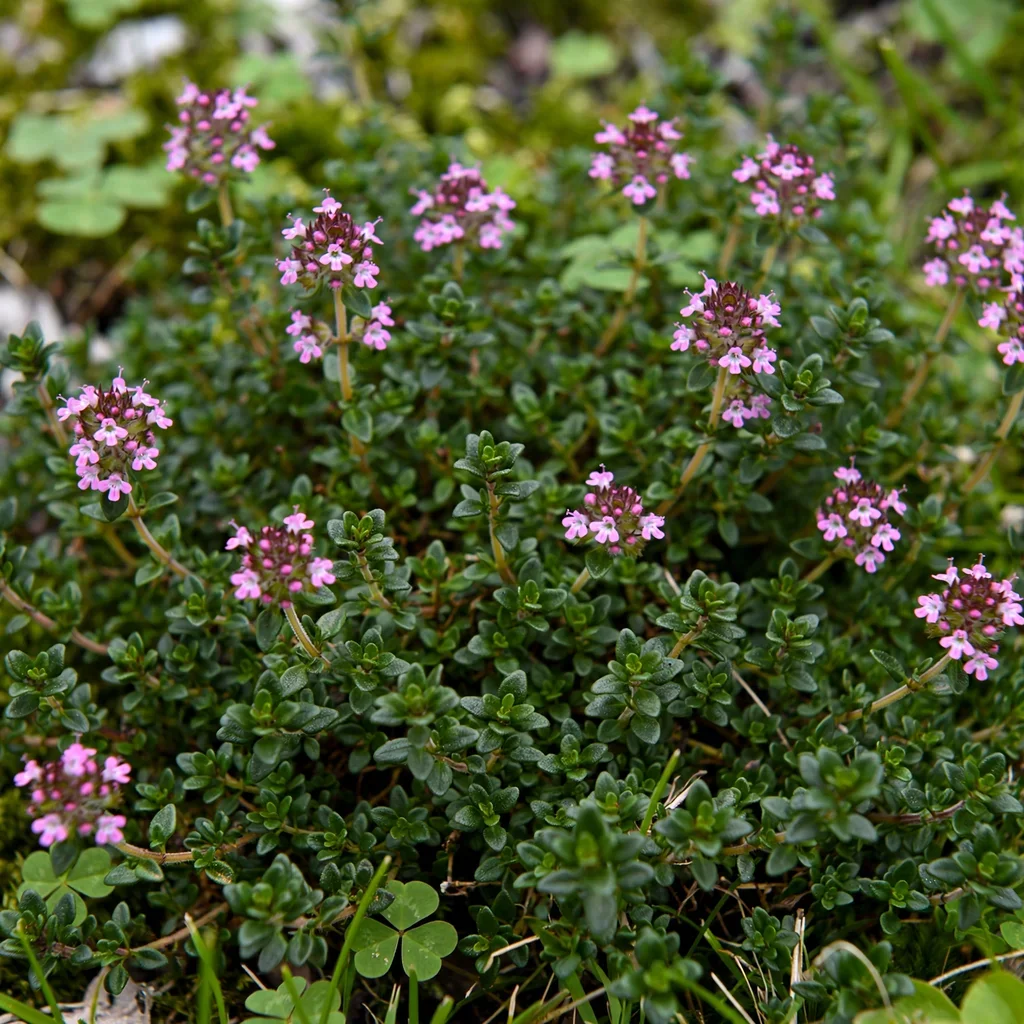
Magic Carpet Thyme
Thymus serpyllum 'Magic Carpet'
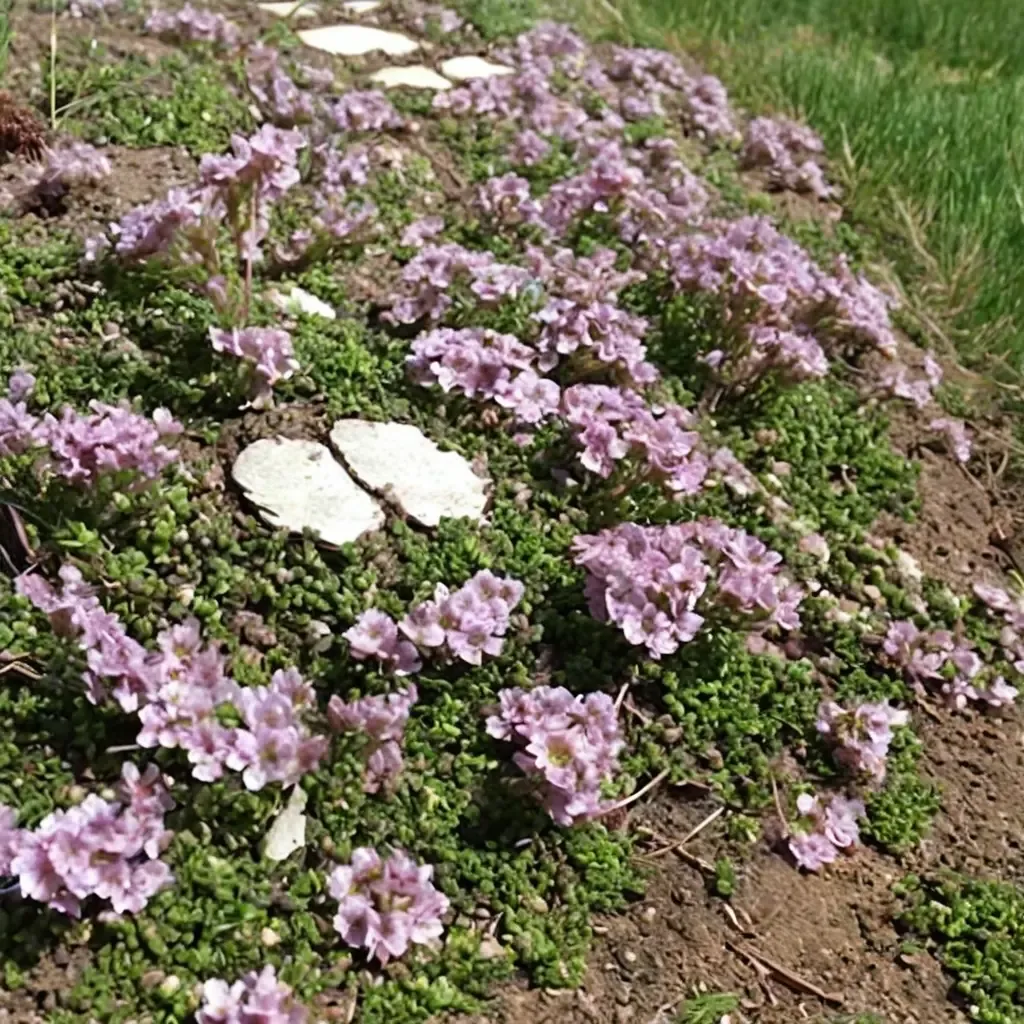
Annie Hall Creeping Thyme
Thymus serpyllum 'Annie Hall'
Common Thyme Garden Thyme
Thymus vulgaris
Keep exploring
Explore the genus
Grow Creeping Thyme with confidence
See it in a design of your actual yard, get zone-matched care reminders, and track it season by season in your garden journal.