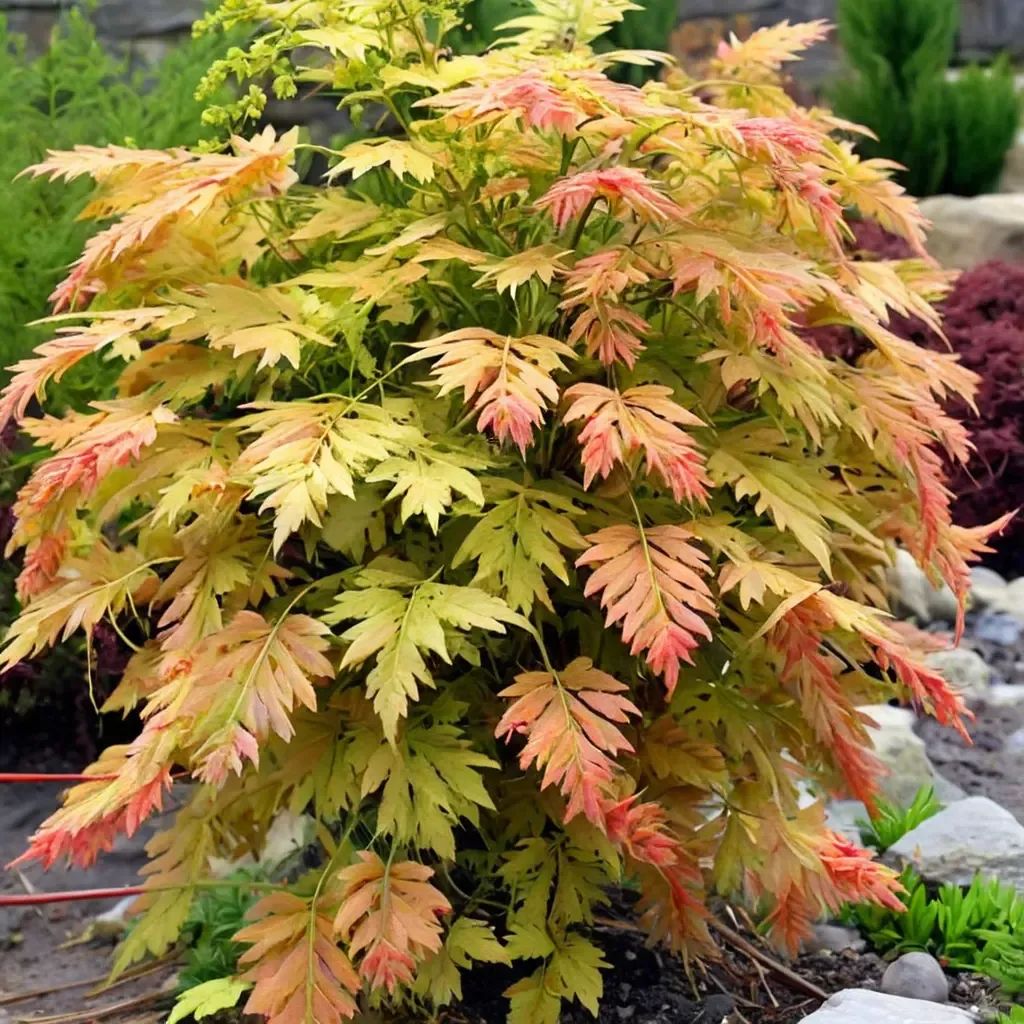
Moonrise Japanese Maple
Acer palmatum 'Moonrise'
Not currently listed at our partner nurseries.
Essentials
At a Glance
Plant Type
Tree
Height
120 inches
Width
120 inches
Light
Full Sun, Partial Sun
Zones
5, 6, 7, 8, 9
Water
Moderate
Humidity
Moderate
Lifespan
50+ years
Native To
Japan, Korea, China
Toxicity
Non-toxic
The Story
Plant Bio
Acer 'Moonrise' is a small deciduous tree prized for its spectacular foliage. Leaves emerge bright red in spring, mature to chartreuse in summer, and turn brilliant orange-red in fall. This cultivar features uniquely lobed leaves and a graceful, layered branching structure that adds visual interest to the landscape.
Bloom Period:
Uses & Benefits:
Marketplace
Where to Buy
We couldn't find this plant listed online right now.
Shipping costs Year-round shipping Free shipping
Planting
How to Grow
- Select a well-drained, slightly acidic soil with organic matter.
- Plant in a location with partial shade to protect from harsh afternoon sun.
- Tuck roots into moist soil, ensuring the root collar is at soil level.
- Water thoroughly after planting to settle soil around roots.
- Mulch around base to retain moisture and regulate temperature.
- Mist leaves regularly during dry periods to maintain humidity.
Pro Tip
Use a layer of organic mulch to keep roots cool and moist, especially in warmer climates.
Keep It Thriving
Care Guide
Do
- Water regularly to keep soil evenly moist 🌱
- Apply a balanced, slow-release fertilizer in early spring
- Prune lightly to maintain shape and remove dead branches
Don't
- Avoid overwatering to prevent root rot ❌
- Do not expose to full, harsh afternoon sun in hot climates
- Refrain from heavy pruning during late fall or winter
Seasonal Care Calendar
| Task | Jan | Feb | Mar | Apr | May | Jun | Jul | Aug | Sep | Oct | Nov | Dec |
|---|---|---|---|---|---|---|---|---|---|---|---|---|
| Fertilize | ||||||||||||
| Mulch | ||||||||||||
| Pest Check | ||||||||||||
| Plant | ||||||||||||
| Prune | ||||||||||||
| Winter Prep |
Watch Out For
Pests & Diseases
Common Pests
Common Diseases
In the Garden
Landscape Uses & Companions
Landscape Uses
Companion Plants
Multiply
Propagation Methods
Good to Know