The Story
Plant Bio
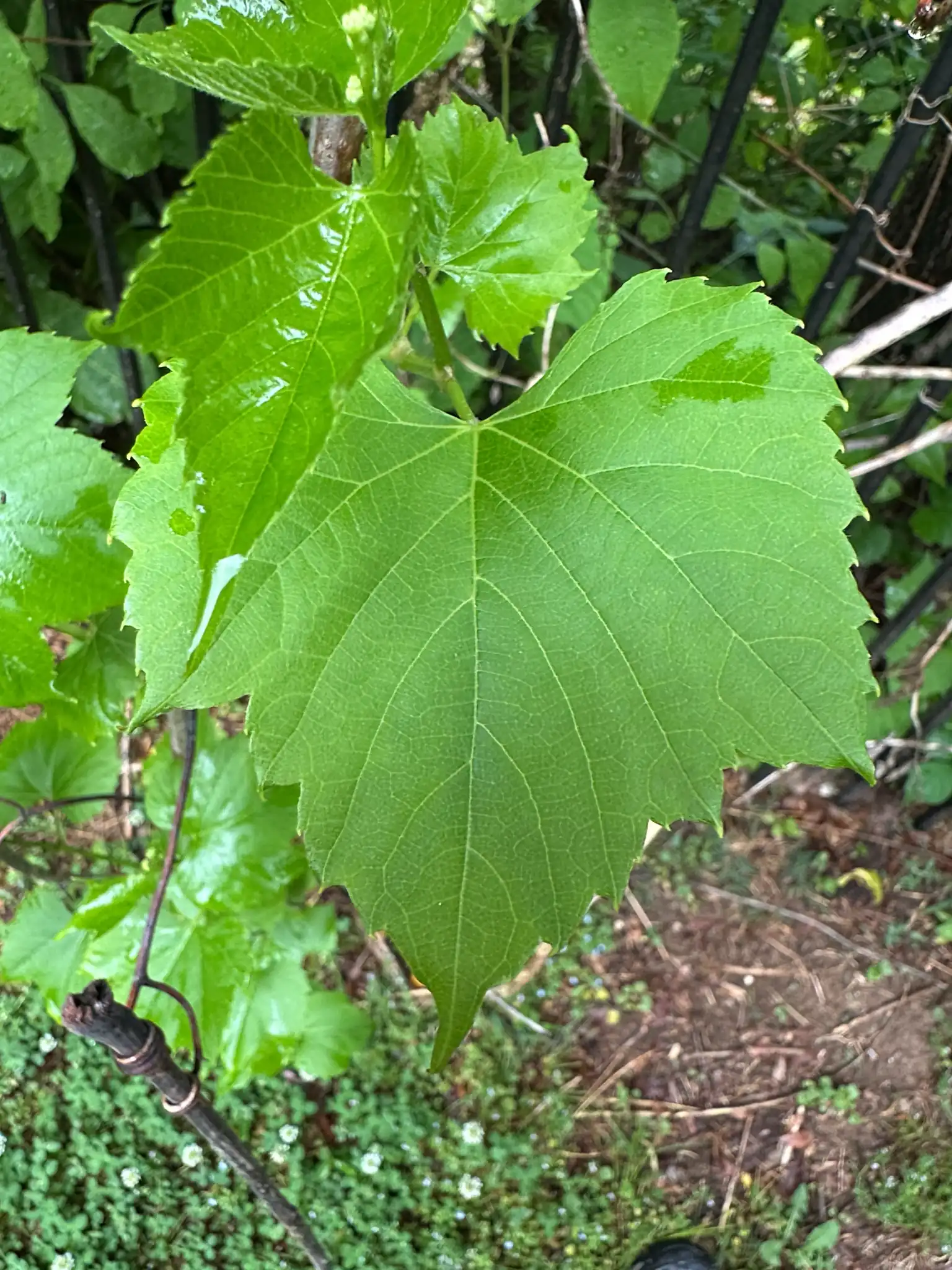
Ampelopsis cordata is a deciduous, woody perennial vine native to North American river bottoms and floodplains, climbing up to thirty feet by tendrils. The alternate, heart-shaped leaves are coarsely toothed with extended tips, carrying inconspicuous clusters of greenish-white flowers opposite the foliage in late spring and summer.
This species is distinguished from true grapes by its solid white stem pith that runs continuously through the nodes, whereas wild grapes feature brown, interrupted pith. Unlike the invasive exotic porcelain berry, its young stems and leaves are completely smooth and hairless, and its leaves lack deep lobes.
Uses & Benefits:
Essentials
At a Glance
Plant Type
Vine
Height
360"
Width
120"
Light
Full Sun, Partial Sun
Zones
5, 6, 7, 8, 9
Water
Medium
Humidity
High
Lifespan
Perennial
Native To
North America
Toxicity
Inedible berries (causes digestive upset)
Bloom period
Late spring – Summer
In flower about 4 months of the year
Marketplace
Where to Buy
Shipping costs Year-round shipping Free shipping
Planting
How to Grow
- Select a planting site in full sun to partial shade with moist, well-drained soil, though clay and wet floodplain sites are also tolerated.
- Provide a sturdy trellis, arbor, or fence to support the vigorous climbing habit of the tendril-bearing stems.
- Water regularly after planting to establish the root system, maintaining medium moisture thereafter.
- Prune back annually in late winter or early spring to manage the spread and prevent the vine from smothering adjacent vegetation.
Pro Tip
Prune the vine hard in late winter to control its rapid, smothering growth and prevent it from overtaking host trees or garden structures.
Keep It Thriving
Care Guide
Do
- Prune annually in late winter to control the aggressive vining habit.
- Provide strong physical support like a fence or trellis for the climbing tendrils.
- Grow in wet or poorly drained areas where other vines fail.
Don't
- Do not over-fertilize, as this encourages excessive, invasive vegetative growth.
- Do not ingest the grape-like berries, which cause severe digestive upset in humans.
- Do not plant near delicate trees or structures that can be easily smothered by rapid growth.
Seasonal Care Calendar
| Task | Jan | Feb | Mar | Apr | May | Jun | Jul | Aug | Sep | Oct | Nov | Dec |
|---|---|---|---|---|---|---|---|---|---|---|---|---|
| Mulch | ||||||||||||
| Pest Check | ||||||||||||
| Plant | ||||||||||||
| Propagate | ||||||||||||
| Prune |
Watch Out For
Pests & Diseases
Common Pests
Common Diseases
In the Garden
Landscape Uses & Companions
Landscape Uses
Companion Plants
Multiply
Propagation Methods
Good to Know
Common Questions
Heartleaf Peppervine questions
What zones can Heartleaf Peppervine grow in?
Heartleaf Peppervine is hardy in USDA Zones 5–9. Inside that range it survives winter in the ground; outside it, grow it as an annual or a container plant you protect.
Is Heartleaf Peppervine deer resistant?
Not reliably. Deer may browse Heartleaf Peppervine, especially tender spring growth — plan on repellents or fencing where pressure is high.
When does Heartleaf Peppervine bloom?
Heartleaf Peppervine typically blooms in late spring through summer. Exact timing shifts a week or two with your zone — Sow's bloom calendar maps it to your garden.
Does Heartleaf Peppervine need full sun?
Heartleaf Peppervine does best in full sun to part shade. In hot climates, afternoon shade keeps blooms fresher longer.
Is Heartleaf Peppervine drought tolerant?
Yes — once established (usually after the first full season), Heartleaf Peppervine handles dry spells with minimal watering. Water deeply its first year to build the root system that makes that possible.
Keep exploring
Explore the genus
Hardy in your zone?
Grow Heartleaf Peppervine with confidence
See it in a design of your actual yard, get zone-matched care reminders, and track it season by season in your garden journal.