The Story
Plant Bio
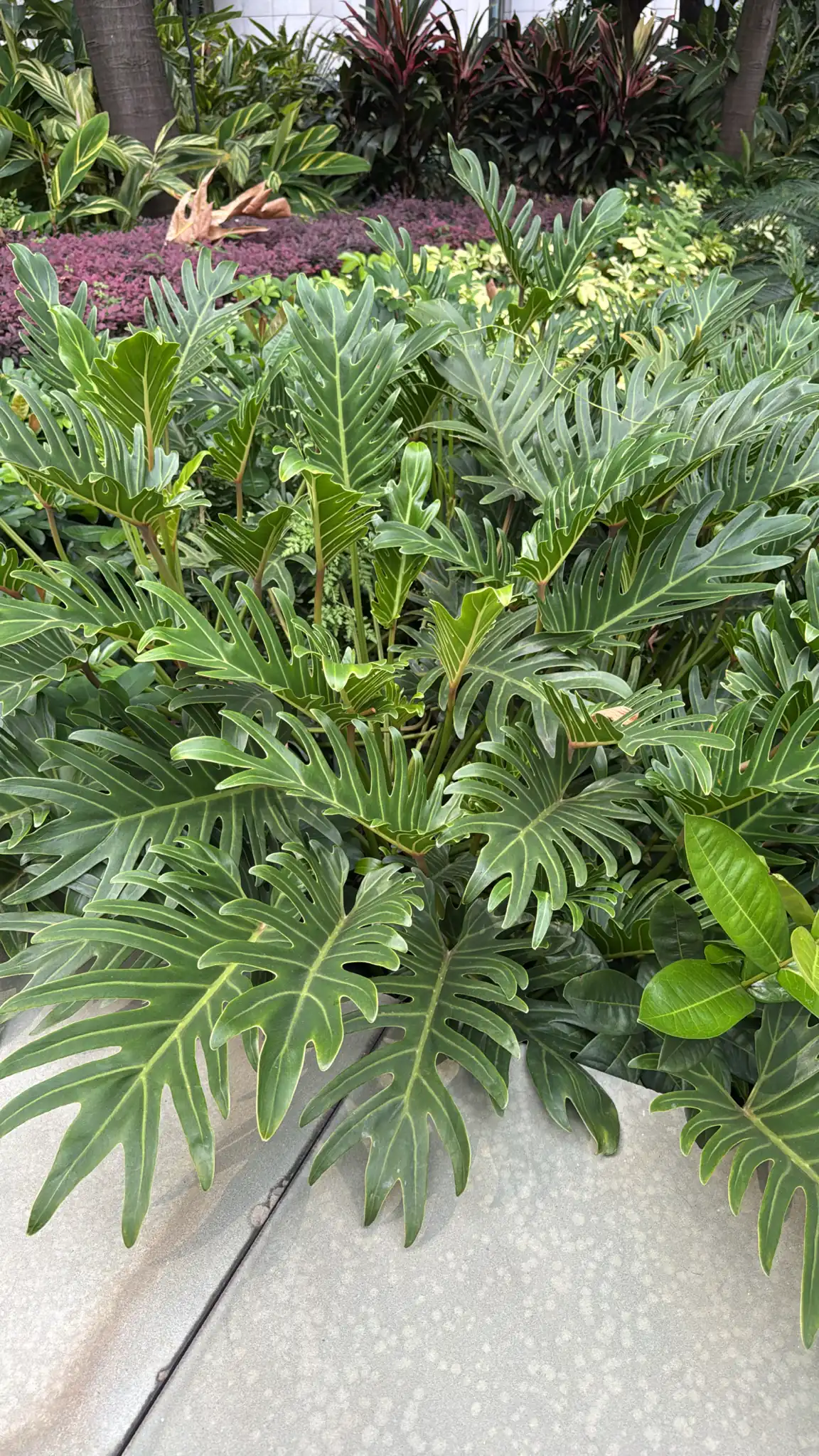
Thaumatophyllum xanadu is an evergreen, self-heading tropical perennial that forms a dense, rounded, pillow-like mound of deeply lobed, leathery foliage. Over time, the plant develops a thick, woody upright stem, displaying glossy dark green leaves with fifteen to twenty distinct lobes on long, smooth petioles.
Unlike climbing members of its family, this species remains compact and non-climbing, spreading wider than it grows tall. The inconspicuous summer inflorescences consist of a spadix enclosed in a dark red to reddish-brown spathe, though these are rarely produced when grown indoors.
Uses & Benefits:
Essentials
At a Glance
Plant Type
Tropical
Height
59"
Width
83"
Light
Partial Sun, Shade
Zones
9, 10
Water
Low to moderate
Humidity
High
Lifespan
Perennial
Native To
South America (Brazil and Paraguay)
Toxicity
Toxic to pets and children (calcium oxalate)
Bloom period
Summer – Fall
In flower about 6 months of the year
Planting
How to Grow
- Select a location with bright, indirect light indoors, or partial to full shade outdoors where it is protected from harsh midday sun.
- Plant in an organically rich, humus-dense soil mix that retains moisture but drains exceptionally well.
- Water thoroughly when the top inch of soil feels dry, ensuring excess water drains away completely to prevent root rot.
- Apply a balanced liquid fertilizer monthly during the active spring and summer growing seasons, then suspend feeding in winter.
Pro Tip
Never cut back into the old, leafless woody stems, as this species does not regenerate from old wood and hard pruning can permanently ruin or kill the plant.
Keep It Thriving
Care Guide
Do
- Keep the soil consistently moist but well-drained.
- Provide high humidity to mimic its native tropical habitat.
- Prune away yellowing or damaged lower leaves at the base of their petioles.
Don't
- Do not expose the foliage to direct, harsh midday sun, which causes leaf scorching.
- Do not attempt to train this self-heading, non-climbing plant up a moss pole or stake.
- Do not overwater or allow the pot to sit in standing water, as this leads to fatal root rot.
Seasonal Care Calendar
| Task | Jan | Feb | Mar | Apr | May | Jun | Jul | Aug | Sep | Oct | Nov | Dec |
|---|---|---|---|---|---|---|---|---|---|---|---|---|
| Fertilize | ||||||||||||
| Pest Check | ||||||||||||
| Prune | ||||||||||||
| Winter Prep |
Watch Out For
Pests & Diseases
Common Pests
Common Diseases
In the Garden
Landscape Uses & Companions
Landscape Uses
Multiply
Propagation Methods
Good to Know
Common Questions
Xanadu philodendron questions
What zones can Xanadu philodendron grow in?
Xanadu philodendron is hardy in USDA Zones 9–10. Inside that range it survives winter in the ground; outside it, grow it as an annual or a container plant you protect.
When does Xanadu philodendron bloom?
Xanadu philodendron typically blooms in summer through fall. Exact timing shifts a week or two with your zone — Sow's bloom calendar maps it to your garden.
Does Xanadu philodendron need full sun?
Xanadu philodendron does best in part shade.
Keep exploring
Explore the genus
Hardy in your zone?
Grow Xanadu philodendron with confidence
See it in a design of your actual yard, get zone-matched care reminders, and track it season by season in your garden journal.