The Story
Plant Bio
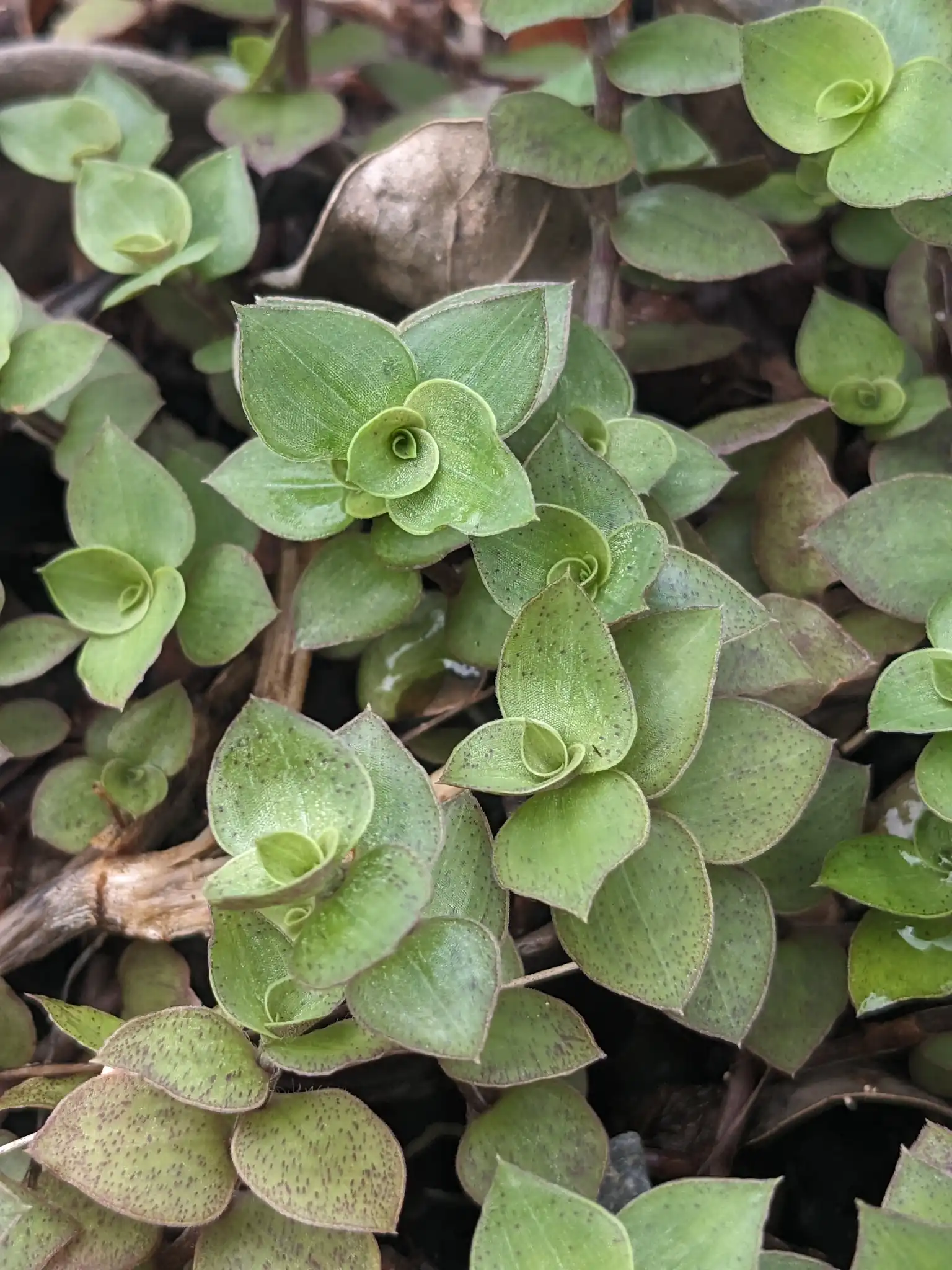
Callisia repens, commonly known as turtle vine, is a low-growing, mat-forming succulent perennial native to the Americas. It produces slender, branching, purple-tinged stems that root immediately upon contact with the soil, creating a dense cascading carpet of tiny, fleshy leaves.
The species foliage is glossy green on top and deep purple underneath, arranged alternately in two neat ranks along the stems. Variegated cultivars display striking cream, white, and pink striping, though they require brighter light to maintain this coloration.
Uses & Benefits:
Essentials
At a Glance
Plant Type
Cactus Succulent
Height
6"
Width
24"
Light
Partial Sun, Shade
Zones
8, 9, 10
Water
Moderate
Humidity
Moderate to high
Lifespan
Perennial
Native To
North and South America
Toxicity
Toxic to pets
Bloom period
Late spring – Summer
In flower about 4 months of the year
Planting
How to Grow
- Select a container with multiple drainage holes and fill it with a sandy, well-draining potting mix amended with perlite.
- Position the plant in bright, indirect light indoors, or in a dappled, partially shaded spot outdoors to prevent leaf scorch.
- Water thoroughly when the top inch of soil feels dry, allowing excess water to drain away completely to prevent root rot.
- Maintain moderate to high humidity levels, especially during winter when indoor heating dries the air.
Pro Tip
Pinch the growing tips every few weeks during the active spring and summer growth phases to prevent the center of the plant from balding and to force dense, bushy lateral branching.
Keep It Thriving
Care Guide
Do
- Pinch back stem tips regularly to maintain a compact, mounded form.
- Use a highly aerated, acidic to slightly acidic potting medium.
- Allow the soil to dry out slightly between waterings to protect the succulent roots.
Don't
- Do not expose the plant to direct, intense midday sun, which bleaches and burns the foliage.
- Do not let the plant sit in standing water or waterlogged soil.
- Do not cut back into old, bare, leafless wood, as it will fail to regenerate.
Seasonal Care Calendar
| Task | Jan | Feb | Mar | Apr | May | Jun | Jul | Aug | Sep | Oct | Nov | Dec |
|---|---|---|---|---|---|---|---|---|---|---|---|---|
| Fertilize | ||||||||||||
| Pest Check | ||||||||||||
| Pinch | ||||||||||||
| Propagate |
Watch Out For
Pests & Diseases
Common Pests
Common Diseases
In the Garden
Landscape Uses & Companions
Landscape Uses
Companion Plants
Multiply
Propagation Methods
Good to Know
Common Questions
Turtle Vine questions
What zones can Turtle Vine grow in?
Turtle Vine is hardy in USDA Zones 8–10. Inside that range it survives winter in the ground; outside it, grow it as an annual or a container plant you protect.
When does Turtle Vine bloom?
Turtle Vine typically blooms in late spring through summer. Exact timing shifts a week or two with your zone — Sow's bloom calendar maps it to your garden.
Does Turtle Vine need full sun?
Turtle Vine does best in part shade.
Is Turtle Vine drought tolerant?
Yes — once established (usually after the first full season), Turtle Vine handles dry spells with minimal watering. Water deeply its first year to build the root system that makes that possible.
Keep exploring
Explore the genus
Hardy in your zone?
Grow Turtle Vine with confidence
See it in a design of your actual yard, get zone-matched care reminders, and track it season by season in your garden journal.