The Story
Plant Bio
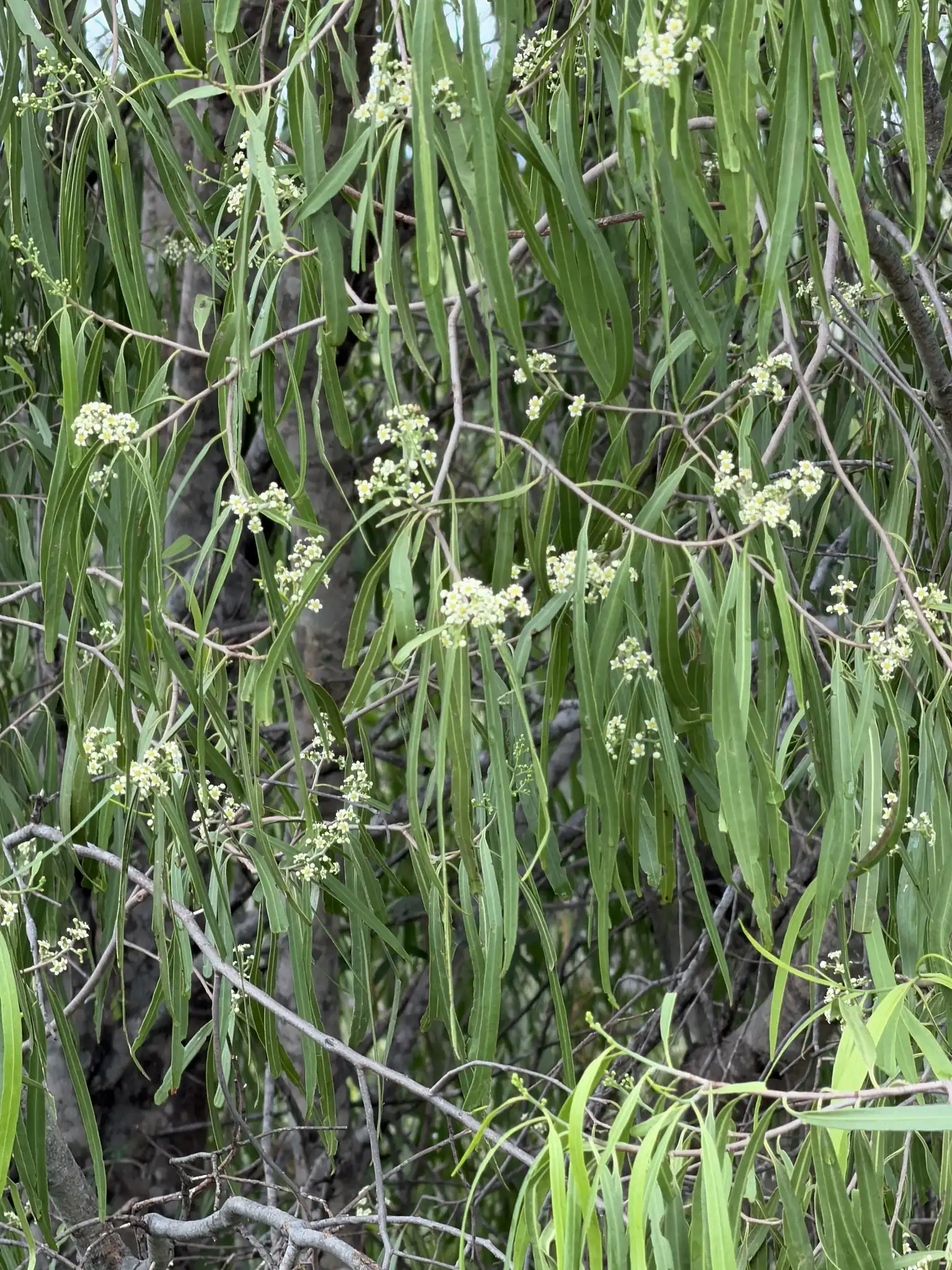
Geijera parviflora, known as the Australian willow, is an evergreen tree reaching thirty feet in height, featuring a dense, weeping form with branches that often sweep the ground. The narrow, linear leaves are highly aromatic, releasing a distinct citrus scent when crushed, and are accompanied by small clusters of cream-colored flowers from spring through early fall.
This species is highly drought-resistant and thrives in hot, dry climates where true willows fail. Its pendulous habit and fine-textured, olive-green foliage provide a soft, architectural silhouette without the aggressive, invasive root systems typical of riparian trees.
Uses & Benefits:
Essentials
At a Glance
Plant Type
Tree
Height
360"
Width
300"
Light
Full Sun, Partial Sun
Zones
8, 9, 10
Water
Low
Humidity
Low to Moderate
Lifespan
Long-lived
Native To
Australia
Toxicity
Non-toxic
Bloom period
Spring – Early fall
In flower about 7 months of the year
Planting
How to Grow
- Select a planting site in full sun with excellent drainage, avoiding low spots or areas near lawn irrigation.
- Dig a hole twice as wide as the root ball but no deeper, ensuring the root flare sits slightly above the surrounding soil grade.
- Backfill with native soil without amendments, tamping lightly to remove air pockets, and water thoroughly to settle.
- Establish a deep, infrequent watering schedule during the first two seasons, allowing the soil to dry completely between applications.
Pro Tip
Never prune the lower weeping branches of the canopy skirt, as removing them permanently destroys the tree's natural pendulous form and exposes bare, non-regenerative wood.
Keep It Thriving
Care Guide
Do
- Water deeply but infrequently to encourage deep root systems.
- Ensure the soil drains rapidly to prevent root rot.
- Protect young trees from strong, cold winds until established.
Don't
- Do not plant in damp lawns or poorly draining sumps where water accumulates.
- Do not shear or head back branches into old, leafless wood.
- Do not over-fertilize, especially with high-phosphorus formulas.
Seasonal Care Calendar
| Task | Jan | Feb | Mar | Apr | May | Jun | Jul | Aug | Sep | Oct | Nov | Dec |
|---|---|---|---|---|---|---|---|---|---|---|---|---|
| Fertilize | ||||||||||||
| Mulch | ||||||||||||
| Pest Check | ||||||||||||
| Prune |
Watch Out For
Pests & Diseases
Common Pests
Common Diseases
In the Garden
Landscape Uses & Companions
Landscape Uses
Multiply
Propagation Methods
Good to Know
Common Questions
Australian Willow questions
What zones can Australian Willow grow in?
Australian Willow is hardy in USDA Zones 8–10. Inside that range it survives winter in the ground; outside it, grow it as an annual or a container plant you protect.
Is Australian Willow deer resistant?
Yes — Australian Willow is rated deer-resistant. Deer typically pass it over, though extreme hunger can override any plant's defenses.
When does Australian Willow bloom?
Australian Willow typically blooms in spring through early fall. Exact timing shifts a week or two with your zone — Sow's bloom calendar maps it to your garden.
Does Australian Willow need full sun?
Australian Willow does best in full sun to part shade. In hot climates, afternoon shade keeps blooms fresher longer.
Is Australian Willow drought tolerant?
Yes — once established (usually after the first full season), Australian Willow handles dry spells with minimal watering. Water deeply its first year to build the root system that makes that possible.
Keep exploring
Explore the genus
Hardy in your zone?
Grow Australian Willow with confidence
See it in a design of your actual yard, get zone-matched care reminders, and track it season by season in your garden journal.