The Story
Plant Bio
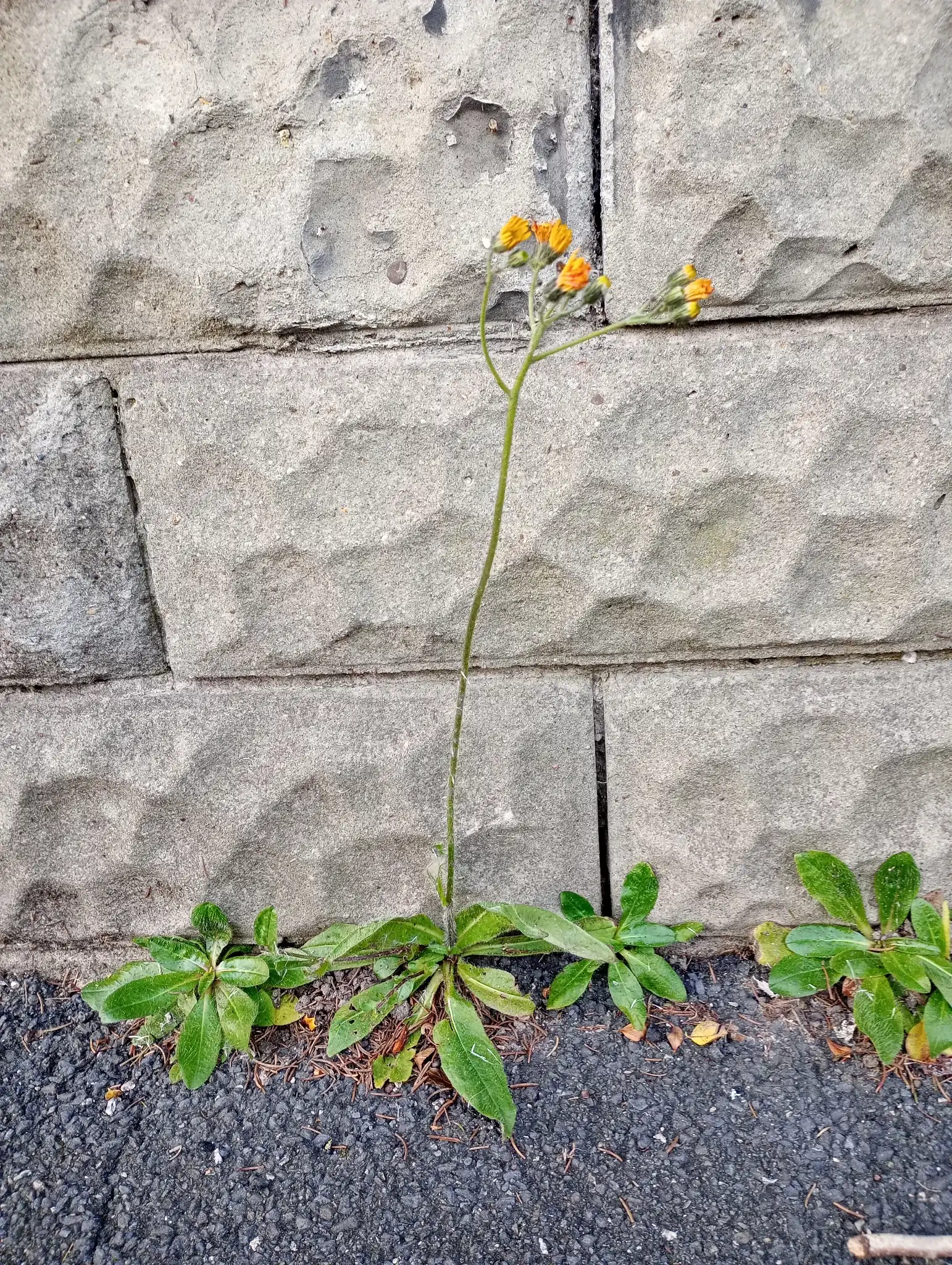
Pilosella aurantiaca is a mat-forming herbaceous perennial native to the mountains of northern and central Europe, characterized by dense basal rosettes of hairy leaves. The species spreads aggressively via above-ground leafy stolons and underground rhizomes, quickly colonizing poor, acidic, or disturbed soils.
This species is distinguished by its upright, nearly leafless flowering stalks covered in dark, glandular hairs that exude a milky latex sap when broken. The stalks support compound clusters of five to twenty-five vibrant orange-to-red, dandelion-like flower heads that fade to purple as they dry.
Uses & Benefits:
Essentials
At a Glance
Plant Type
Perennial
Height
24"
Width
12"
Light
Full Sun, Partial Sun
Zones
4, 5, 6, 7, 8
Water
Low to moderate
Humidity
Moderate
Lifespan
Perennial
Native To
Europe
Toxicity
Mild skin irritant
Bloom period
Summer – Autumn
In flower about 6 months of the year
Planting
How to Grow
- Select a site with full sun to partial shade and poor, well-drained soil, avoiding fertile garden beds where the plant will spread uncontrollably.
- Plant container-grown specimens in spring, ensuring the crown sits level with the soil surface.
- Water moderately until established, after which the plant exhibits high drought tolerance.
- Monitor the planting area weekly to manually remove runners and prevent the plant from escaping into surrounding landscapes.
Pro Tip
Manual eradication requires extracting every fragment of the underground rhizomes and surface stolons, as any root segments left in the soil will rapidly regenerate new plants.
Keep It Thriving
Care Guide
Do
- Deadhead spent flower stalks immediately to prevent seed dispersal.
- Grow only in secure, fully contained planters if cultivation is attempted.
- Wear gloves when handling the plant to avoid irritation from the milky latex sap.
Don't
- Do not apply fertilizer, as nutrient-rich soils accelerate aggressive vegetative spreading.
- Do not plant near natural areas, pastures, or open meadows where it can displace native flora.
- Do not compost pulled plants, as root fragments and seeds can survive the composting process.
Seasonal Care Calendar
| Task | Jan | Feb | Mar | Apr | May | Jun | Jul | Aug | Sep | Oct | Nov | Dec |
|---|---|---|---|---|---|---|---|---|---|---|---|---|
| Deadhead | ||||||||||||
| Pest Check | ||||||||||||
| Prune | ||||||||||||
| Spring Cleanup |
Watch Out For
Pests & Diseases
Common Pests
Common Diseases
In the Garden
Landscape Uses & Companions
Landscape Uses
Companion Plants
Multiply
Propagation Methods
Good to Know
Common Questions
Orange Hawkweed questions
What zones can Orange Hawkweed grow in?
Orange Hawkweed is hardy in USDA Zones 4–8. Inside that range it survives winter in the ground; outside it, grow it as an annual or a container plant you protect.
When does Orange Hawkweed bloom?
Orange Hawkweed typically blooms in summer through autumn. Exact timing shifts a week or two with your zone — Sow's bloom calendar maps it to your garden.
Does Orange Hawkweed need full sun?
Orange Hawkweed does best in full sun to part shade. In hot climates, afternoon shade keeps blooms fresher longer.
Is Orange Hawkweed drought tolerant?
Yes — once established (usually after the first full season), Orange Hawkweed handles dry spells with minimal watering. Water deeply its first year to build the root system that makes that possible.
More Pilosella to compare
Keep exploring
Explore the genus
Hardy in your zone?
Grow Orange Hawkweed with confidence
See it in a design of your actual yard, get zone-matched care reminders, and track it season by season in your garden journal.