The Story
Plant Bio
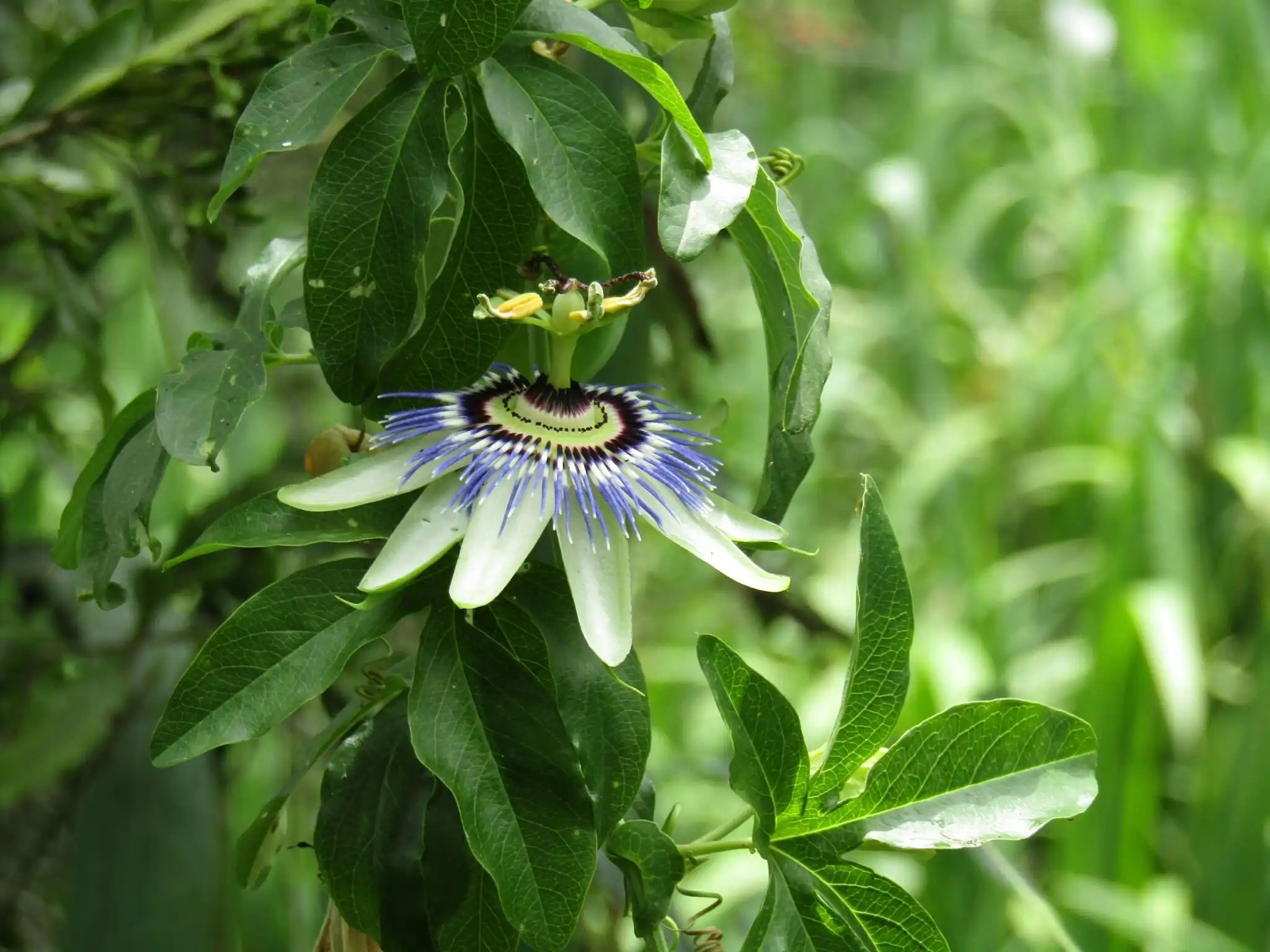
Passiflora caerulea, blue passionflower, is a vigorous semi-evergreen climber from Bolivia, Brazil and northern Argentina, reaching ten to forty feet by tendrils. Deeply lobed palmate leaves cover the stems, and the extraordinary saucer-shaped flowers carry white petals beneath a fringed corona banded in blue, white and purple.
The flower structure is the reason it is grown — the fringed corona and the prominent stamens and styles above it gave rise to its religious symbolism and are unlike anything else in a hardy climber. It is the hardiest passionflower, surviving to zone 6 with dieback, and it hosts fritillary butterfly larvae. The orange fruit is edible but bland.
Uses & Benefits:
Essentials
At a Glance
Plant Type
Vine
Height
300"
Width
60"
Light
Full Sun, Partial Sun
Zones
6, 7, 8, 9, 10
Water
Moderate
Humidity
Moderate
Lifespan
Perennial
Native To
Bolivia, Brazil and northern Argentina
Toxicity
Ripe fruit edible; unripe fruit and leaves are not
Planting
How to Grow
- Plant in full sun to partial shade against a support.
- Give it freely draining soil; it dislikes wet feet.
- Expect dieback in zone 6 and cut back in spring.
- Water while establishing, then only in drought.
- Cut back hard each spring to control size.
- Remove suckers, which appear some distance away.
Pro Tip
It suckers from the roots and comes up feet from the parent, so pull those shoots early rather than letting them establish.
Keep It Thriving
Care Guide
Do
- Give it a support to climb 🏗️
- Cut back hard each spring ✂️
- Pull root suckers early 🌱
- Let fritillary caterpillars feed 🦋
Don't
- Plant it in heavy wet soil ❌
- Expect the fruit to taste of much ❌
- Let suckers establish ❌
Seasonal Care Calendar
| Task | Jan | Feb | Mar | Apr | May | Jun | Jul | Aug | Sep | Oct | Nov | Dec |
|---|---|---|---|---|---|---|---|---|---|---|---|---|
| Enjoy | ||||||||||||
| Prune |
Watch Out For
Pests & Diseases
Common Pests
Common Diseases
In the Garden
Landscape Uses & Companions
Landscape Uses
Companion Plants
Multiply
Propagation Methods
Good to Know
Common Questions
Passionflower questions
What zones can Passionflower grow in?
Passionflower is hardy in USDA Zones 6–10. Inside that range it survives winter in the ground; outside it, grow it as an annual or a container plant you protect.
Is Passionflower deer resistant?
Yes — Passionflower is rated deer-resistant. Deer typically pass it over, though extreme hunger can override any plant's defenses.
When does Passionflower bloom?
Passionflower typically blooms in summer to fall through mid-summer. Exact timing shifts a week or two with your zone — Sow's bloom calendar maps it to your garden.
Does Passionflower need full sun?
Passionflower does best in full sun to part shade. In hot climates, afternoon shade keeps blooms fresher longer.
More Passiflora to compare
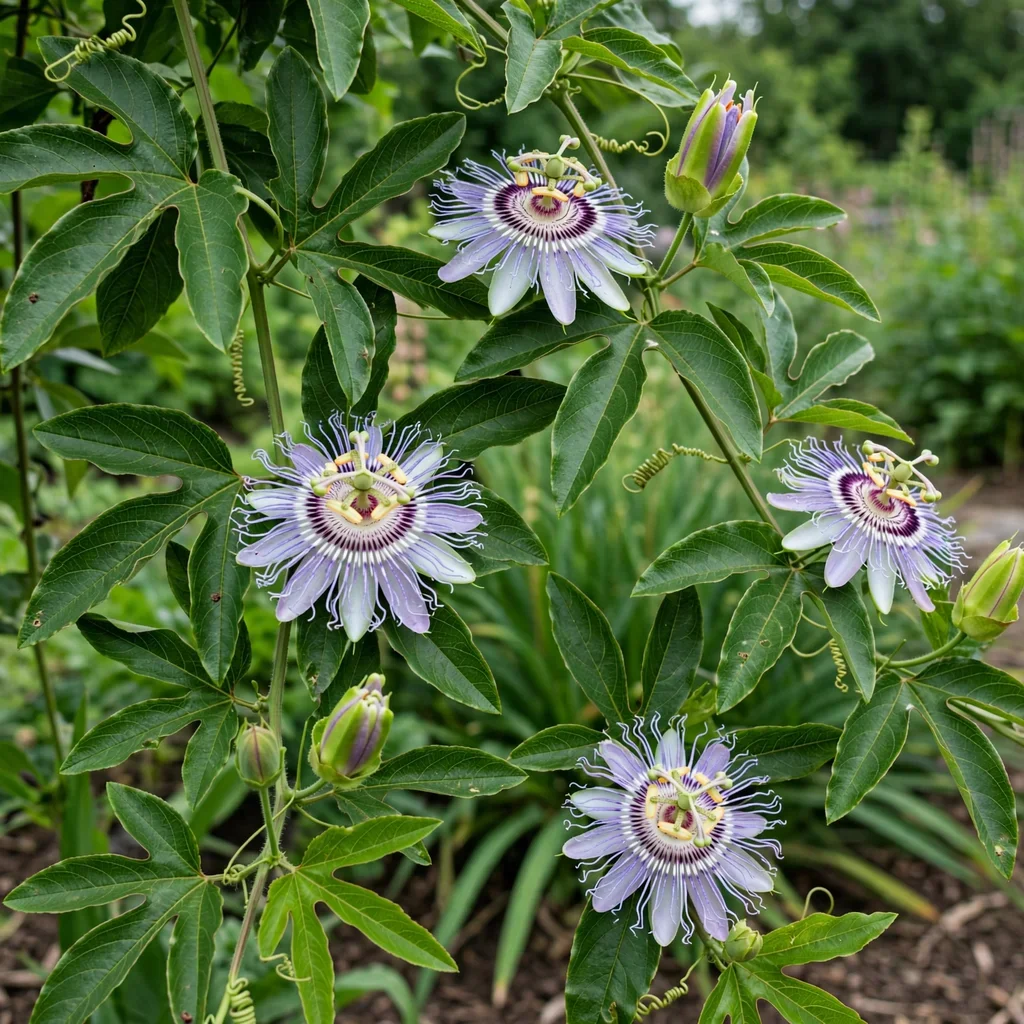
Purple Passionflower
Passiflora incarnata
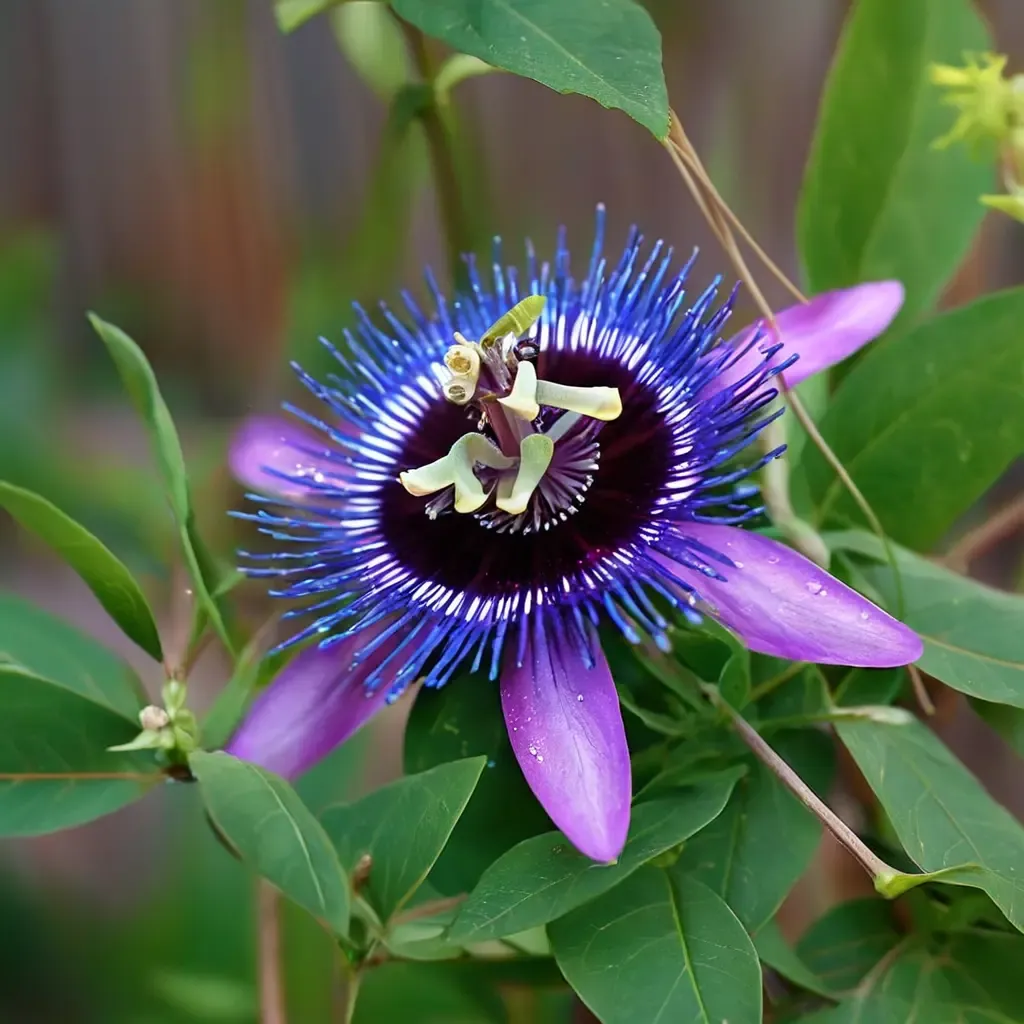
Blue Passionflower
Passiflora loefgrenii
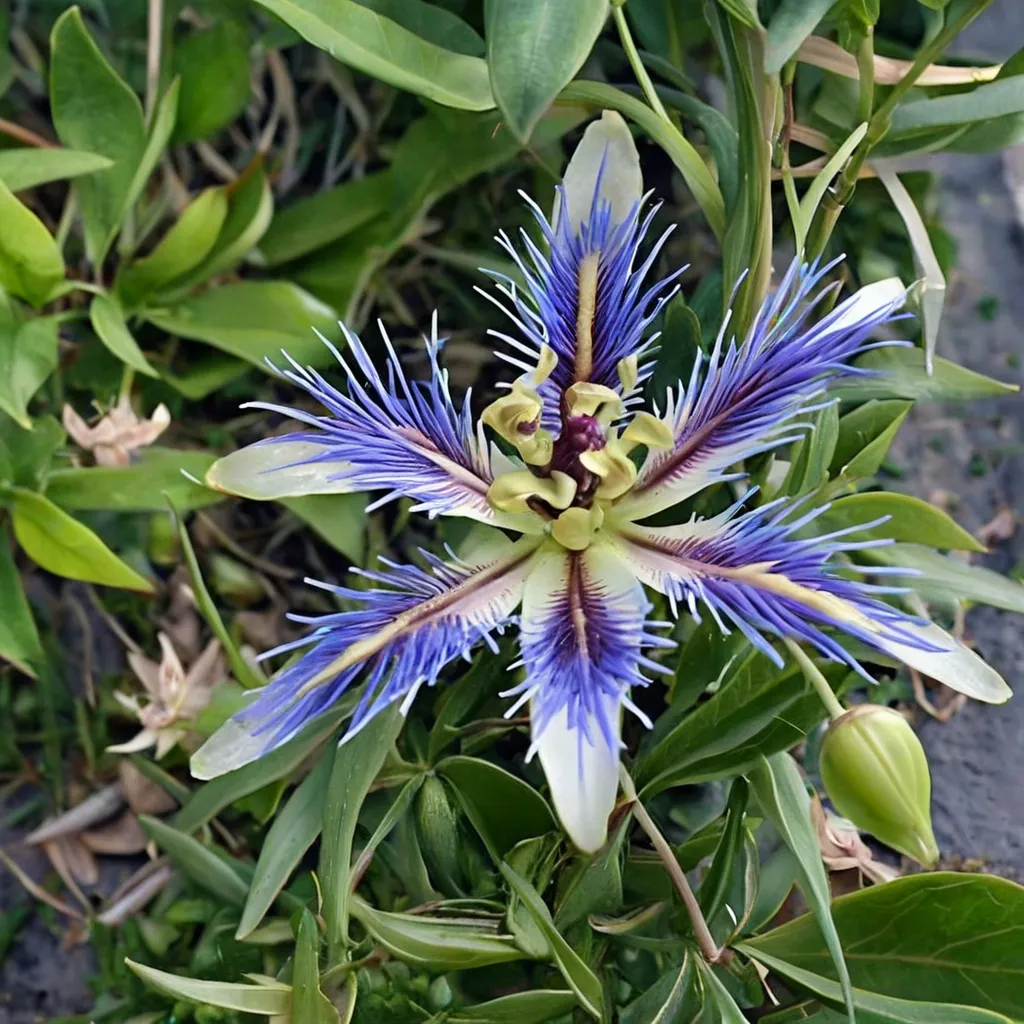
Waterloo Blue Passionflower
Passiflora caerulea 'Waterloo Blue'
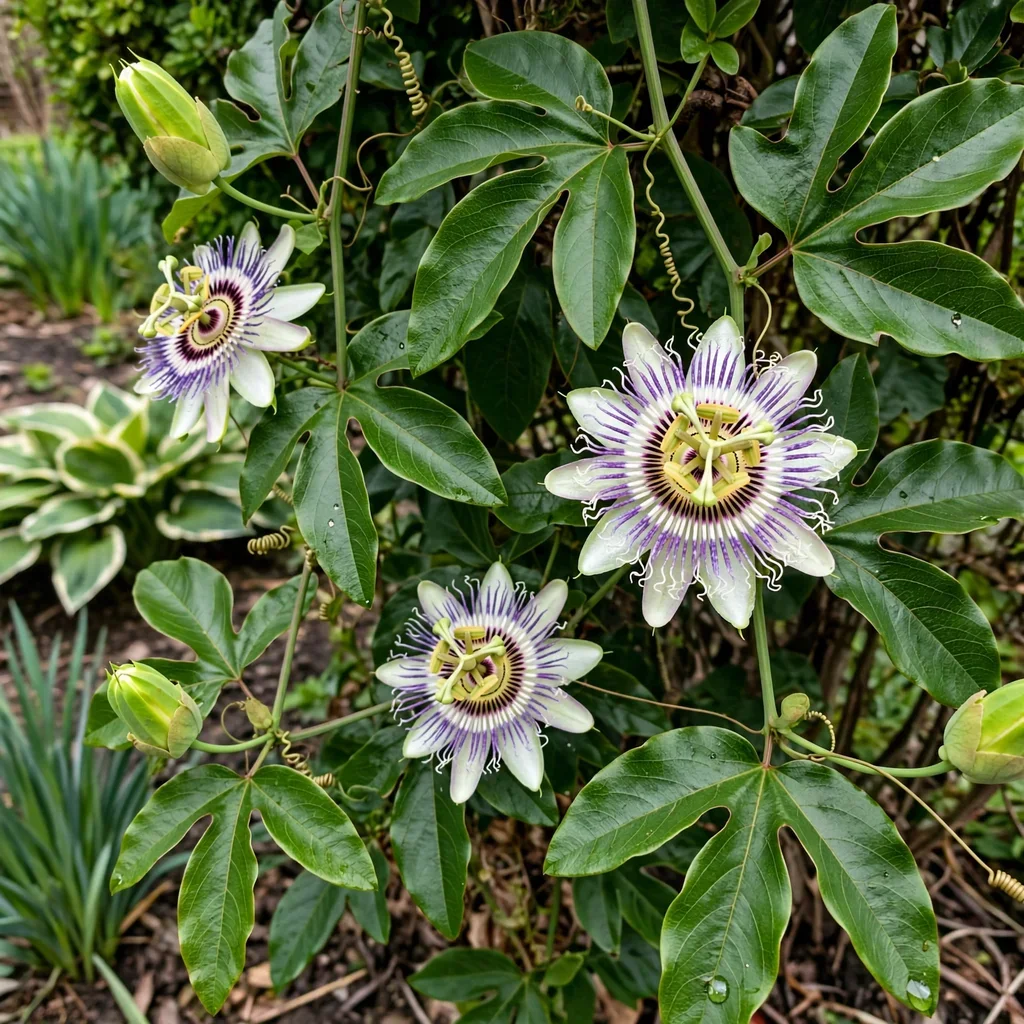
Sea Anemone Passion Flower
Passiflora actinia
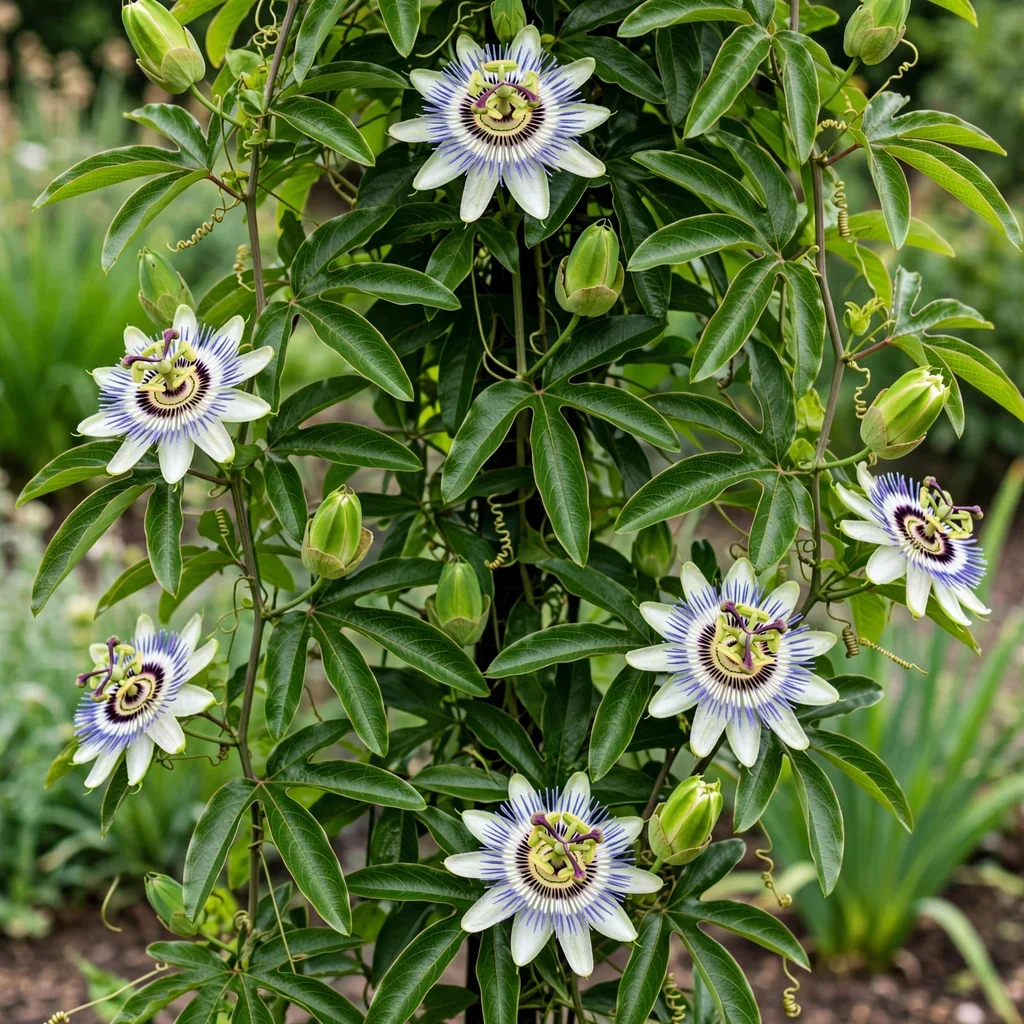
White Passionflower
Passiflora alba 'Blue Horizon'
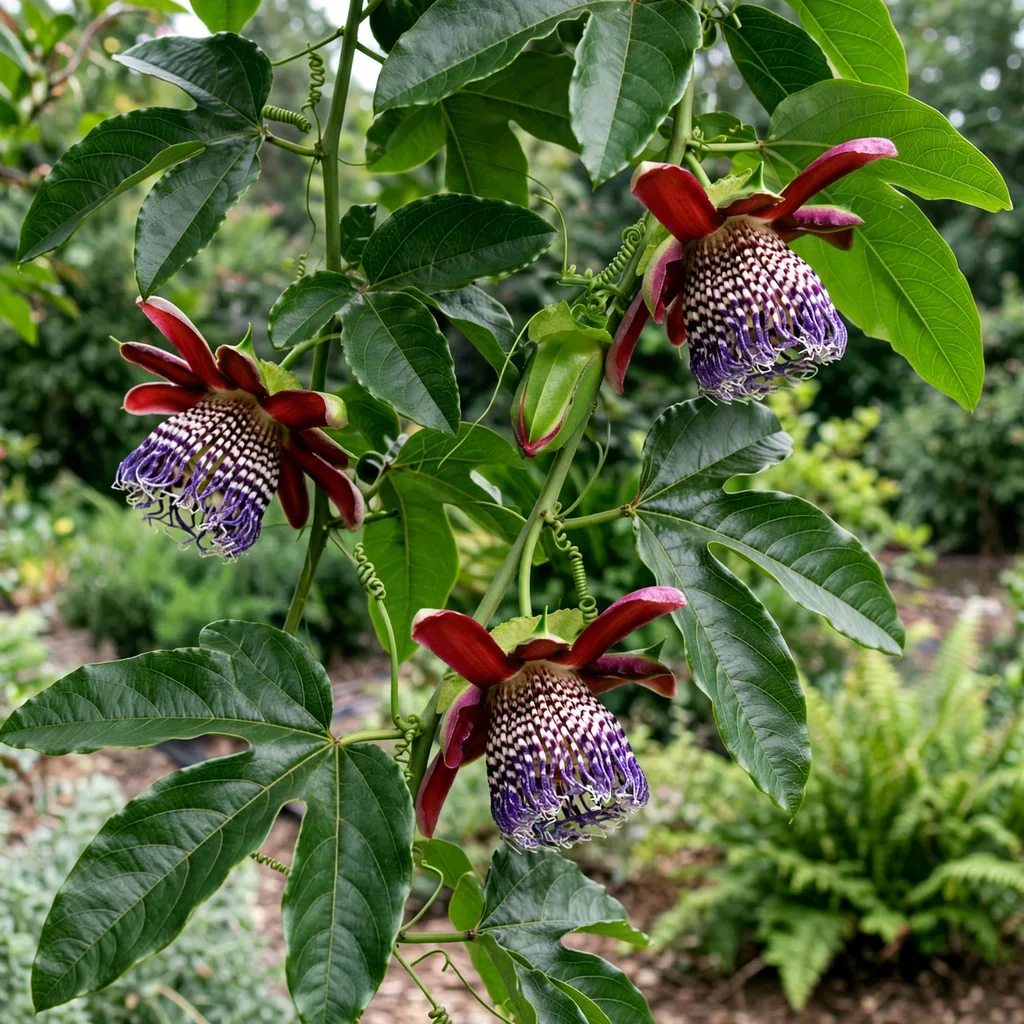
Red Passion Flower
Passiflora x tarminiana 'manicata'
Keep exploring
Explore the genus
Hardy in your zone?
Grow Passionflower with confidence
See it in a design of your actual yard, get zone-matched care reminders, and track it season by season in your garden journal.