1 named cultivar
The Story
Plant Bio
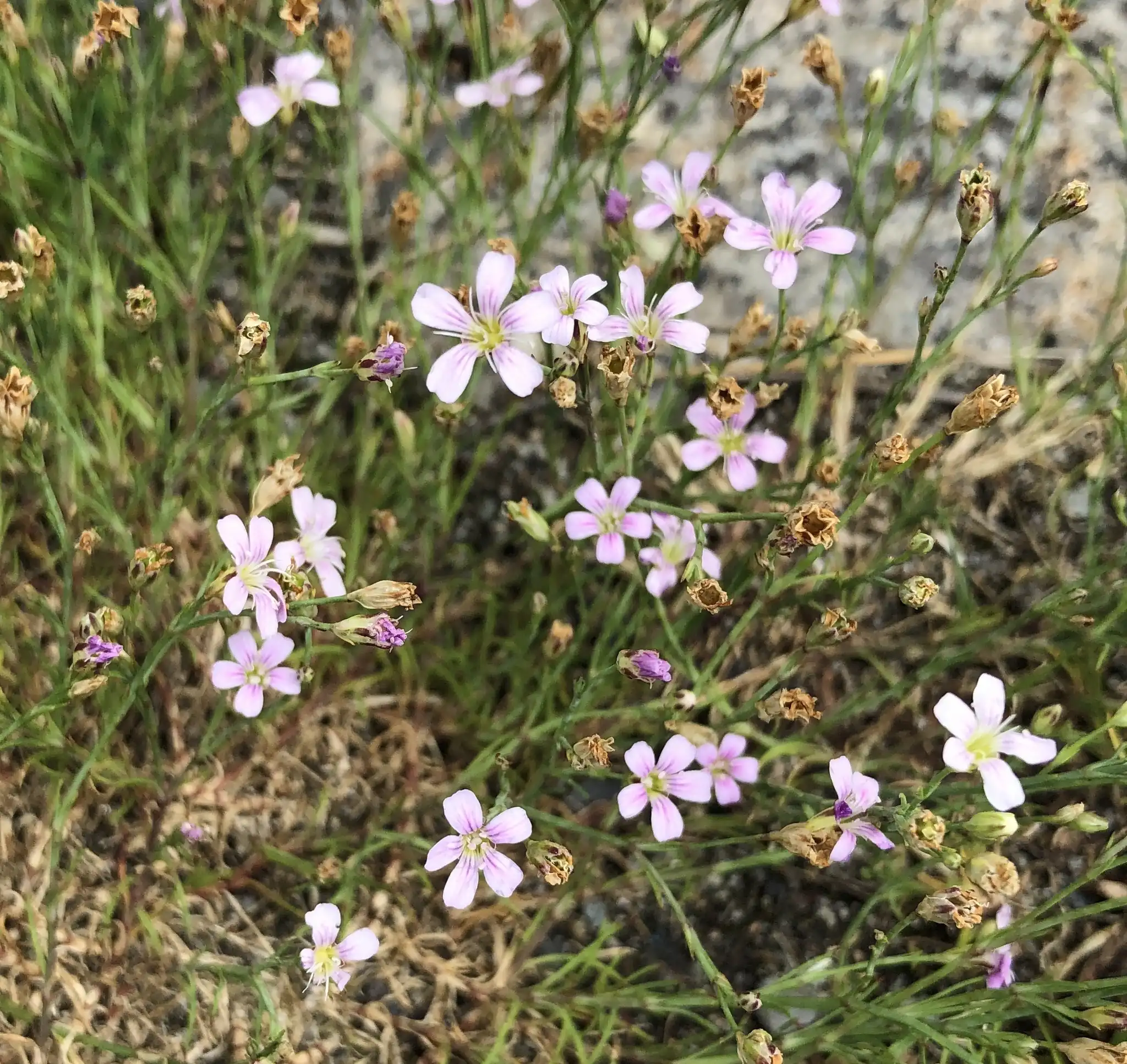
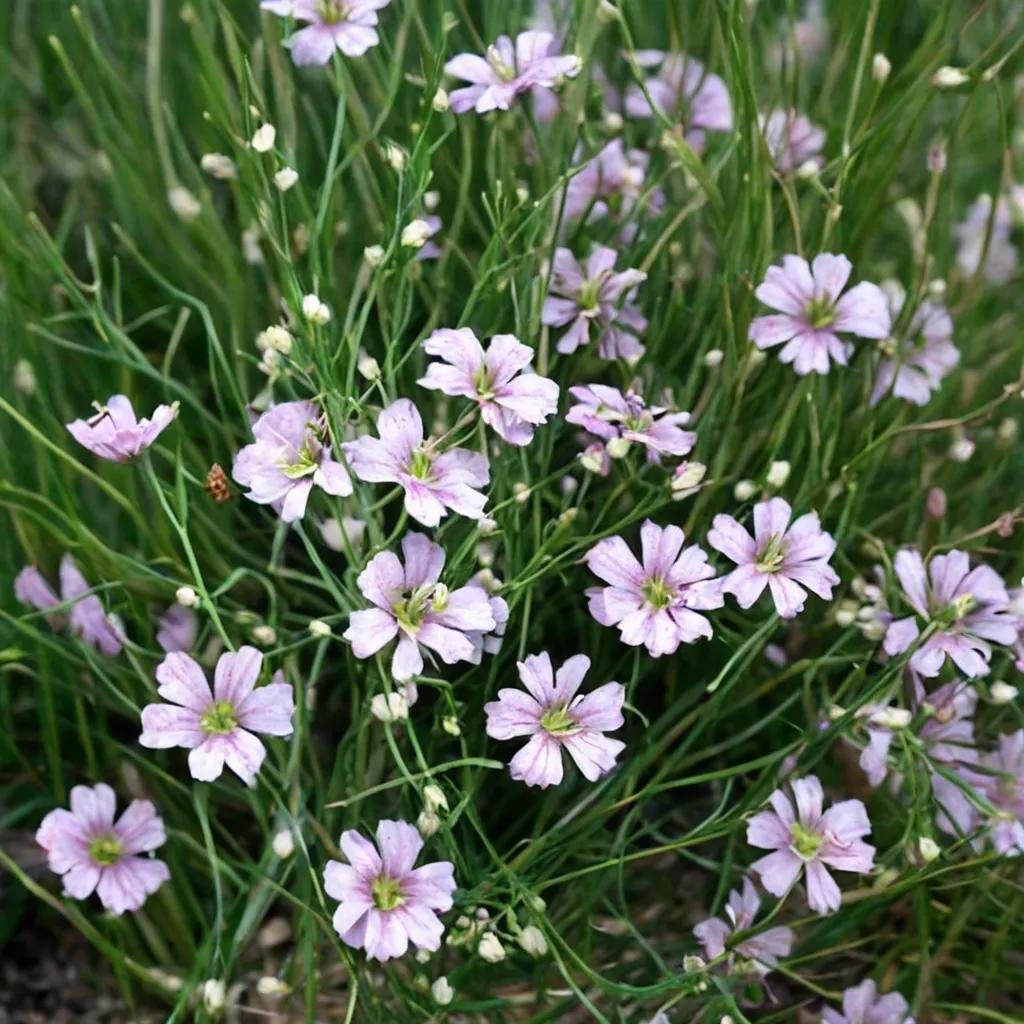
Petrorhagia saxifraga, the tunic flower, is a mat-forming perennial of the pink family from the rocky limestone soils of southern and central Europe. It makes a fine grass-like cushion six to twelve inches high, spreading to eighteen inches, from which wiry branching stems carry small pale pink flowers from May right through August.
The airy stems and tiny flowers give a haze effect that reads best cascading over a wall or edging a path rather than viewed from above. It self-seeds steadily in the gritty open ground it prefers, which keeps a planting going, but means it will appear in nearby gravel and paving if you leave the seed to fall.
Uses & Benefits:
Essentials
At a Glance
Plant Type
Perennial
Height
6"
Width
12"
Light
Full Sun, Partial Sun
Zones
5, 6, 7, 8, 9
Water
Low to medium
Humidity
Low
Lifespan
Perennial
Native To
Southern and central Europe
Toxicity
Non-toxic
Planting
How to Grow
- Plant in spring in full sun.
- Choose sharply drained rocky, sandy or limy soil.
- Space plants about a foot apart to knit together.
- Water lightly until established, then rarely.
- Shear lightly after the main flush to tidy the mat.
- Remove unwanted seedlings from paving and gravel.
Pro Tip
Poor stony soil gives the tight cushion it is grown for; in richer ground it makes loose growth and flowers less freely.
Keep It Thriving
Care Guide
Do
- Give it full sun and sharp drainage ☀️
- Use lean, gritty, limy soil 🪨
- Let it cascade over walls and raised beds 🧱
- Shear lightly after the main flush ✂️
Don't
- Plant it in rich or wet soil ❌
- Water it freely once established ❌
- Let it seed unchecked into paving ❌
Seasonal Care Calendar
| Task | Jan | Feb | Mar | Apr | May | Jun | Jul | Aug | Sep | Oct | Nov | Dec |
|---|---|---|---|---|---|---|---|---|---|---|---|---|
| Shear | ||||||||||||
| Weed |
Watch Out For
Pests & Diseases
Common Pests
Common Diseases
In the Garden
Landscape Uses & Companions
Landscape Uses
Companion Plants
Multiply
Propagation Methods
Good to Know
Common Questions
Tunic Flower questions
What zones can Tunic Flower grow in?
Tunic Flower is hardy in USDA Zones 5–9. Inside that range it survives winter in the ground; outside it, grow it as an annual or a container plant you protect.
Is Tunic Flower deer resistant?
Not reliably. Deer may browse Tunic Flower, especially tender spring growth — plan on repellents or fencing where pressure is high.
When does Tunic Flower bloom?
Tunic Flower typically blooms in late spring to late summer through late summer. Exact timing shifts a week or two with your zone — Sow's bloom calendar maps it to your garden.
Does Tunic Flower need full sun?
Tunic Flower does best in full sun to part shade. In hot climates, afternoon shade keeps blooms fresher longer.
Is Tunic Flower drought tolerant?
Yes — once established (usually after the first full season), Tunic Flower handles dry spells with minimal watering. Water deeply its first year to build the root system that makes that possible.
Keep exploring
Explore the genus
Hardy in your zone?
Grow Tunic Flower with confidence
See it in a design of your actual yard, get zone-matched care reminders, and track it season by season in your garden journal.