The Story
Plant Bio
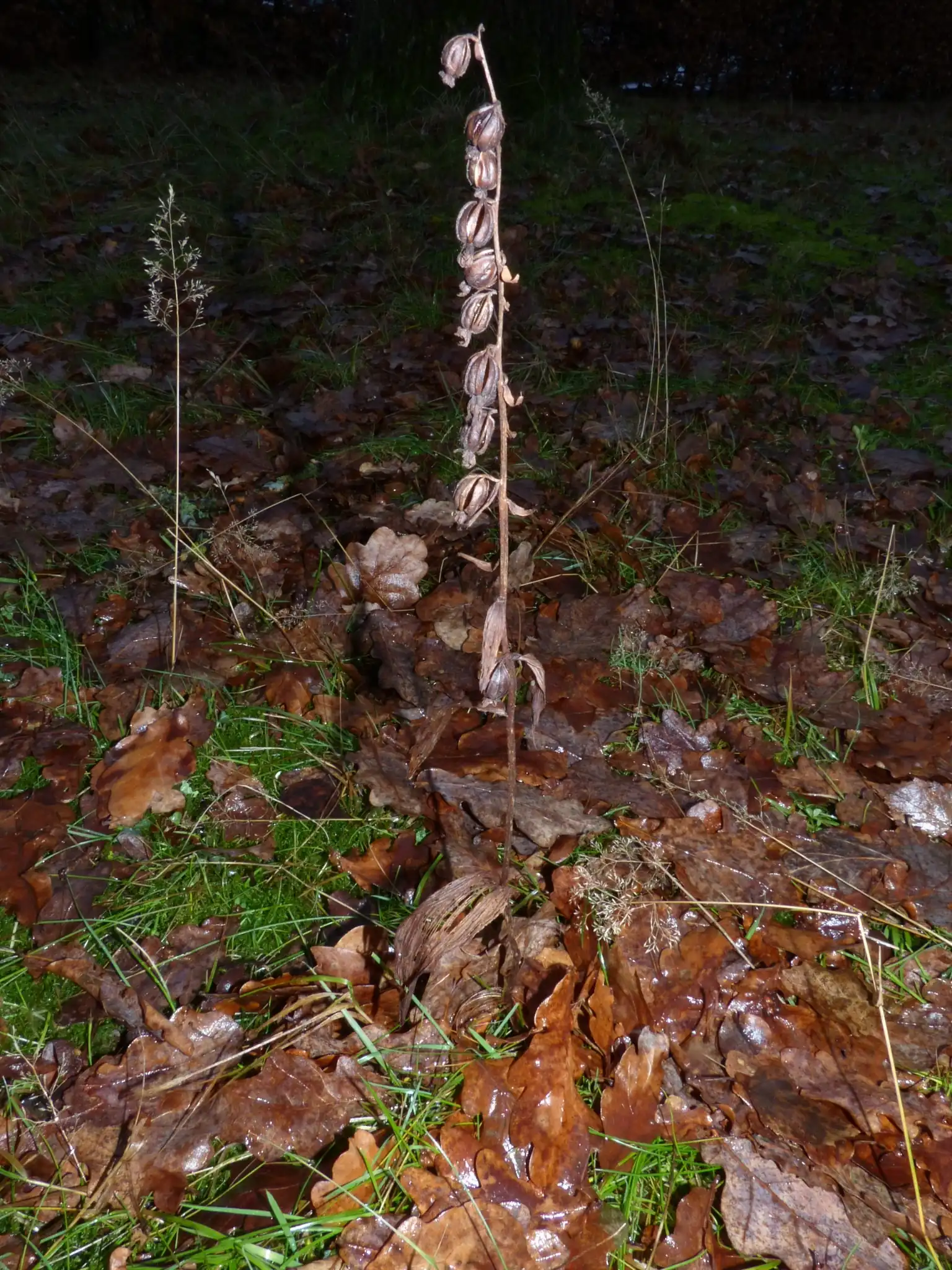
Epipactis helleborine, the broadleaf helleborine, is a terrestrial perennial orchid forming small colonies of unbranching upright stems from short underground rhizomes. The stems bear alternate, clasping, dull green leaves with prominent parallel veins, topped by long, somewhat one-sided drooping racemes of up to fifty small flowers.
The flowers display a subtle blend of dull green suffused with pink, purple, or brown, featuring a lower lip with a dark, nectar-filled basal sac. This highly adaptable orchid spreads readily via wind-dispersed seeds and vegetative expansion, often naturalizing in disturbed soils, lawns, and woodlands.
Uses & Benefits:
Essentials
At a Glance
Plant Type
Perennial
Height
39"
Width
12"
Light
Partial Sun, Shade
Zones
4, 5, 6, 7, 8, 9
Water
Low to moderate
Humidity
Moderate to high
Lifespan
Perennial
Native To
Europe, North Africa, temperate and subtropical Asia
Toxicity
Non-toxic
Bloom period
Summer – Fall
In flower about 6 months of the year
Planting
How to Grow
- Select a planting site in partial to full shade with moist, organic-rich soil.
- Plant dormant root plugs or potted specimens in spring, ensuring the crown sits just below the soil surface.
- Water regularly during the first growing season to maintain consistent moisture.
- Leave the upright stems undisturbed through summer and early fall to allow natural seed dispersal.
Pro Tip
Allow the foliage to die back completely naturally in late fall; cutting down the green stems prematurely in summer deprives the underground rootstock of vital energy.
Keep It Thriving
Care Guide
Do
- Provide consistent moisture during the active summer growing season.
- Allow foliage to yellow and die back naturally in late fall.
- Grow in shaded woodland gardens or areas with organic-rich soil.
Don't
- Do not apply heavy fertilizers, as supplemental feeding is unnecessary and counterproductive.
- Do not plant in waterlogged or poorly drained soils where stagnant water collects.
- Do not cut back green stems prematurely during the summer months.
Seasonal Care Calendar
| Task | Jan | Feb | Mar | Apr | May | Jun | Jul | Aug | Sep | Oct | Nov | Dec |
|---|---|---|---|---|---|---|---|---|---|---|---|---|
| Pest Check | ||||||||||||
| Propagate | ||||||||||||
| Spring Cleanup | ||||||||||||
| Winter Prep |
Watch Out For
Pests & Diseases
Common Pests
Common Diseases
In the Garden
Landscape Uses & Companions
Landscape Uses
Companion Plants
Multiply
Propagation Methods
Good to Know
Common Questions
Broadleaf Helleborine questions
What zones can Broadleaf Helleborine grow in?
Broadleaf Helleborine is hardy in USDA Zones 4–9. Inside that range it survives winter in the ground; outside it, grow it as an annual or a container plant you protect.
Is Broadleaf Helleborine deer resistant?
Not reliably. Deer may browse Broadleaf Helleborine, especially tender spring growth — plan on repellents or fencing where pressure is high.
When does Broadleaf Helleborine bloom?
Broadleaf Helleborine typically blooms in summer through fall. Exact timing shifts a week or two with your zone — Sow's bloom calendar maps it to your garden.
Does Broadleaf Helleborine need full sun?
Broadleaf Helleborine does best in part shade.
Keep exploring
Explore the genus
Grow Broadleaf Helleborine with confidence
See it in a design of your actual yard, get zone-matched care reminders, and track it season by season in your garden journal.